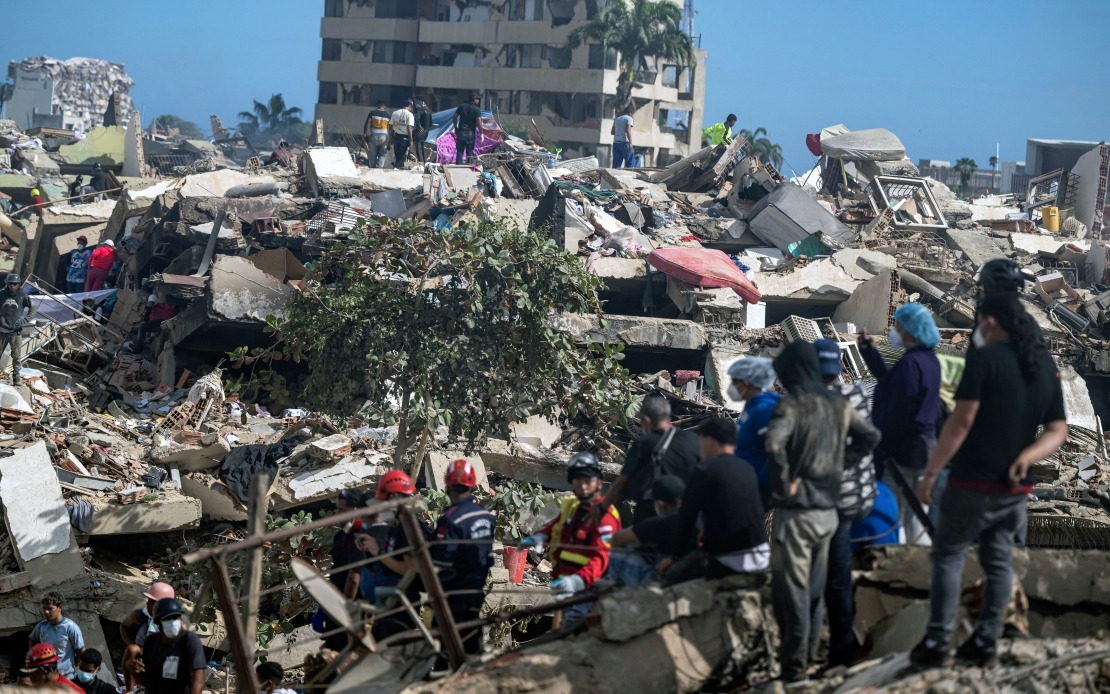
The catastrophic twin earthquakes that struck northern Venezuela on June 24 have left a trail of destruction affecting tens of thousands of people, with the confirmed death toll now reaching 2,295 according to an official statement delivered by National Assembly President Jorge Rodriguez during a broadcast on state television channel Venezolana de Television on Wednesday. The scale of the humanitarian crisis has expanded considerably since the initial seismic events, reflecting the magnitude of the disaster and the challenges faced by emergency responders across the affected regions.
The devastating impact extends beyond fatalities, with authorities documenting 11,267 confirmed injuries and officially registering the displacement of 12,841 people from their homes and communities. These figures underscore the widespread nature of the damage, affecting families across multiple urban and rural areas that bore the brunt of the initial seismic shocks. The displacement crisis poses significant challenges for provincial authorities and humanitarian organisations attempting to provide shelter, medical care, and essential services to those who have lost their residences.
Emergency personnel deployed throughout the affected zones have undertaken extraordinarily intensive rescue operations, with more than 4,000 workers successfully extracting 6,461 individuals from collapsed or severely damaged structures. These rescue efforts represent one of the most significant immediate interventions, bringing survivors out from beneath rubble and wreckage. The successful extraction rate reflects both the dedication of the rescue workforce and the continuing deterioration of buildings that continues to pose life-threatening risks to both survivors and rescuers alike.
The seismic event itself involved a powerful twin sequence, with magnitudes of 7.2 and 7.5 respectively, producing waves of intense ground shaking that caused widespread structural failure across the region. Since the initial earthquakes, the region has experienced 782 recorded aftershocks, though seismologists have noted an encouraging trend over the previous two days. The declining frequency and decreasing intensity of these secondary tremors suggest that the immediate seismic threat may be gradually diminishing, though Rodriguez emphasised that the danger has not been completely eliminated.
Authorities have warned residents to exercise continued caution around buildings with visible structural compromise, particularly those constructed from reinforced concrete masonry that may be vulnerable to sudden collapse. This warning reflects the practical reality that damaged buildings remain hazardous throughout the recovery period, potentially for weeks or months as structural engineers assess what can be salvaged and what must be demolished. The psychological impact of living in compromised structures adds another layer of stress to communities already traumatised by the initial disaster.
Satellite analysis conducted by NASA has revealed the staggering extent of physical destruction across the affected landscape. The preliminary assessment indicates that more than 58,000 buildings sustained either significant damage or complete destruction, a figure that encompasses residential, commercial, medical, and governmental facilities. This unprecedented level of infrastructure damage suggests that reconstruction will require sustained international investment and technical expertise over an extended period.
The international response has been substantial, with rescue and recovery teams from more than 30 countries actively participating in ongoing search and rescue operations on Wednesday. These international brigades bring specialised equipment, trained personnel, and experience in managing large-scale disaster scenarios. The deployment of international resources represents a critical supplement to Venezuelan emergency services, which have been stretched to their operational limits by the scale of the crisis.
The United Nations has begun acquiring 10,000 body bags in preparation for the ongoing recovery process, a sobering indication of the humanitarian dimensions of the disaster and the possibility that the final death toll may increase as search teams continue to recover remains from collapsed structures. The provision of proper burial facilities and dignified treatment of deceased victims remains a priority for both Venezuelan authorities and international humanitarian organisations working in the region.
For Malaysia and other Southeast Asian nations, the Venezuela earthquake serves as a stark reminder of the vulnerability of densely populated regions near tectonic boundaries. The region's seismic activity, while distinct from the subduction zone patterns that define much of Southeast Asia, nonetheless demonstrates the importance of robust building codes, early warning systems, and well-coordinated emergency management protocols. Malaysian engineers and disaster management specialists monitor such major earthquakes closely, incorporating lessons learned into ongoing efforts to strengthen resilience across our own earthquake-prone regions.

