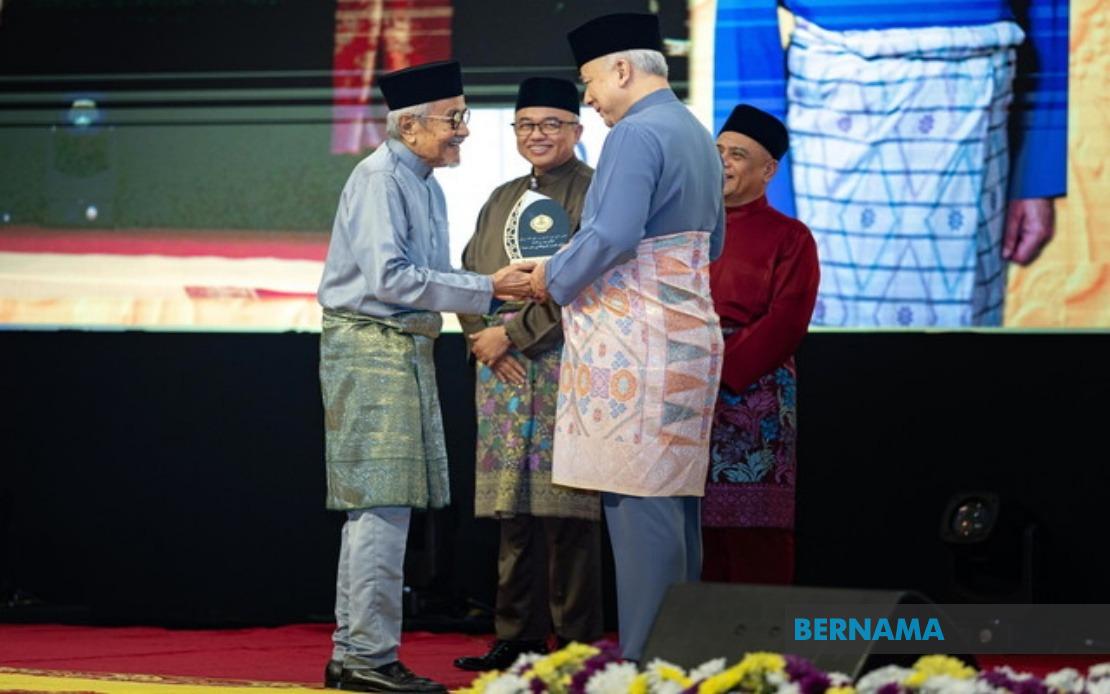
Datuk Rahim Razali, one of Malaysia's most celebrated filmmakers and actors, has been honoured with the 'Tokoh Zaid Bin Thabit' Media and Communications Practitioner Icon Award at Perak's state-level Maulidur Rasul celebration held in Ipoh. The 87-year-old veteran, whose distinguished career spans more than half a century in broadcasting and cinema, received the accolade from Sultan Nazrin Shah along with a monetary award of RM5,000 and a commemorative plaque, recognising his enduring impact on Malaysia's cultural landscape.
Abdul Rahim Mohd Razali, as he is formally known, hails from Batu Gajah in Perak, where he spent his formative years before embarking on a career that would significantly shape Malaysian media and entertainment. His professional journey commenced in broadcasting, where he served as a technical assistant at RTM, Malaysia's national television station, gaining foundational knowledge of production and storytelling during the nascent years of Malaysian television. This early exposure to the medium proved pivotal in honing his directorial sensibilities and understanding of audience engagement across diverse demographics.
Beyond his work in cinema, Rahim has carved out a notable reputation as a sports commentator, bringing his narrative expertise and engaging delivery to live sporting events and broadcasts. This multifaceted career trajectory demonstrates his versatility as a media practitioner and his adaptability across different genres and formats. His ability to transition seamlessly between drama direction, feature filmmaking, and sports commentary reflects a rare command of audiovisual storytelling and audience communication.
In 1981, Rahim took a pivotal entrepreneurial step by establishing his own production company, Angkatan Seniman Abad XX Sdn Bhd, which became instrumental in producing content for Malaysia's broadcasting ecosystem. Through this venture, he has spearheaded the creation of 50 dramas for RTM, contributing substantially to the network's drama programming schedule and helping define the aesthetic and narrative conventions of Malaysian television drama during formative decades. His prolific output in television drama established benchmarks for production quality and storytelling ambition within the local industry.
His feature film work has earned international recognition, a distinction rarely achieved by Malaysian filmmakers of his generation. Rahim has directed 15 feature films, eight of which were selected for screening at the prestigious Tokyo Film Festival, one of Asia's most significant cinema venues. This international exposure brought Malaysian cinema to distinguished festival audiences and underscored the artistic merit and cultural sophistication of his filmmaking approach. Notable among his feature works are Abang and Abang 92, films that achieved prominence within Malaysian cinema and contributed to the nation's evolving film culture.
The recognition accorded to Rahim at the Maulidur Rasul celebration reflects broader acknowledgment within Malaysian society of the cultural significance and artistic contributions of veteran media practitioners. His award sits alongside other honours presented during the ceremony, highlighting the state government's commitment to celebrating individuals who embody excellence and service across diverse fields. The presentation of these awards by Sultan Nazrin Shah underscores the royal family's engagement with cultural and social matters affecting the Perak community.
Several other recipients received recognition at the same ceremony, each representing exemplary contributions within their respective domains. Yang Walat, an 82-year-old single mother of 15 children from Kuala Kurau, received the Exemplary Family Icon Award along with RM10,000, an Umrah pilgrimage package, and a plaque. This award acknowledges the extraordinary resilience and dedication required to nurture a large family, often under challenging circumstances, and represents the state's recognition of family-oriented values and social cohesion within communities.
The Preacher Icon Award, designated as the 'Ibnu Abbas' award, went to Radhi Kamarul Hailan, aged 56, recognising contributions to Islamic religious education and community spiritual development. Meanwhile, Saharuddin Hassim and Yahya Man, both advanced in age at 74 and 83 respectively, received recognition for their service as mosque officials, representing the backbone of institutional religious administration throughout Perak. The Imam Award was presented to Mohd Hanafiah Idris, 56, acknowledging the spiritual leadership and pastoral responsibilities inherent in this role within Muslim communities.
The Maulidur Rasul celebration, which marks the birthday of the Prophet Muhammad, provides an important annual occasion for Malaysian states to recognise and honour individuals whose lives exemplify values aligned with Islamic teachings and community service. Perak's iteration of this observance demonstrates how state governments integrate cultural celebration with public recognition of meritorious citizens across multiple sectors. The awards programme encompasses media practitioners, family caregivers, religious educators, and civil society organisations, reflecting a holistic approach to recognising diverse forms of social contribution.
For Malaysian cinema and media practitioners, Rahim Razali's recognition carries particular significance as it validates the artistic and cultural contributions of filmmakers working within a region where cinema often occupies contested cultural and commercial terrain. The award acknowledges not merely commercial success or entertainment value, but sustained artistic endeavour and commitment to expanding the boundaries of Malaysian visual storytelling. His trajectory from RTM assistant to internationally-recognised filmmaker provides a model of professional development and creative ambition that remains relevant to emerging generations of Malaysian media professionals navigating an increasingly complex media ecosystem.
Pertubuhan Wanita Prihatin Perak, a women's civil society organisation, also received recognition through the Non-Governmental Organisation Award, underscoring the state's appreciation for grassroots organisations addressing social welfare and community development issues. This diversification of award categories reflects contemporary understanding that national progress emerges not solely from individual achievement but from the collective contributions of families, institutions, religious leaders, and organised civil society working in complementary ways throughout communities.

