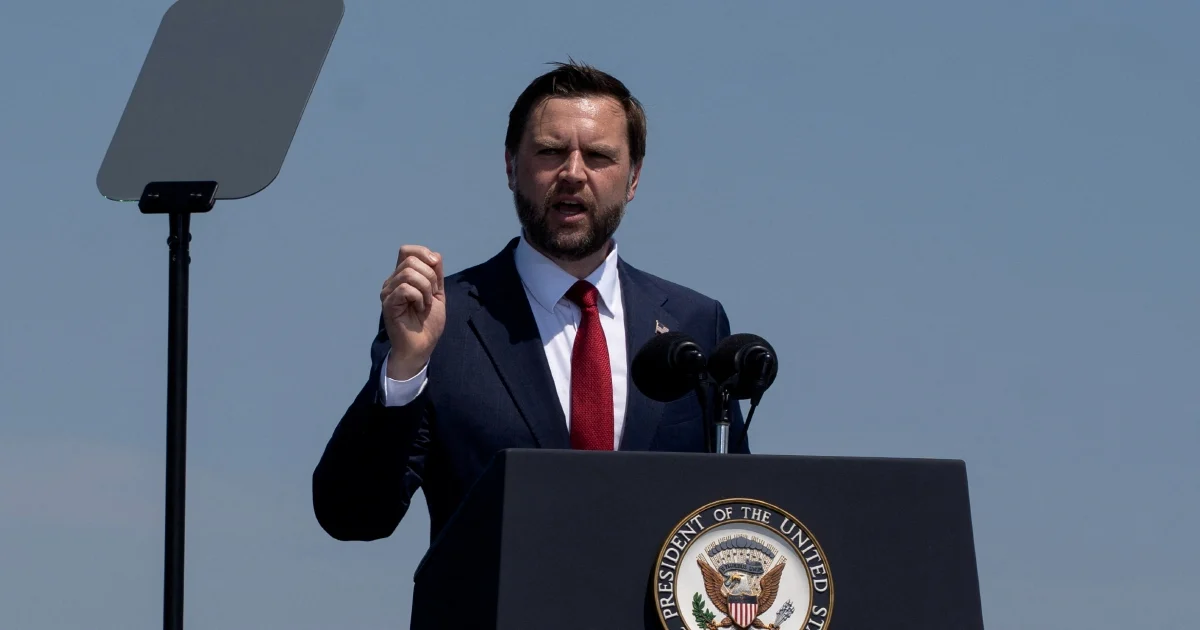
US Vice President JD Vance has delivered a blunt assessment of Britain's political health, suggesting the country has been undermined by persistent failures at the leadership level and requires fundamental reform to address voter discontent. Speaking in London, Vance indicated that he hopes the incoming prime minister will take decisive steps to restructure British governance and restore public confidence following an extended period marked by political upheaval and policy reversals.
Vance's comments reflect broader American diplomatic engagement with British political transitions and suggest the incoming administration in Washington intends to maintain close scrutiny of governance developments across its closest ally. The remarks, made during a visit to Britain, signal that the US Vice President sees opportunities for alignment between Washington and a reformed British leadership willing to pursue structural changes that might address some of the systemic issues that have frustrated the electorate.
The context for Vance's observations lies in Britain's experience of multiple prime ministerial changes, fractious parliamentary relations, and policy uncertainty that has left many voters feeling let down by their political representatives. The succession of different administrations, each bringing distinct priorities and reversing previous commitments, has created a sense of directionlessness that Vance's comments directly address. His suggestion that the next prime minister must deliver "structural change" implies that cosmetic adjustments or incremental reforms will prove insufficient to restore public trust.
British political observers have noted that voter frustration cuts across traditional party lines, with considerable sections of the electorate expressing disappointment in how successive governments have handled major policy challenges. Vance's willingness to voice this concern publicly represents an unusually forthright assessment from a senior US official, though it aligns with broader concerns about democratic legitimacy and government effectiveness that resonate internationally.
The Vice President's optimism about incoming leadership suggests the incoming US administration may be preparing to establish fresh working relationships with new British political figures, potentially on terms that reflect changed policy priorities. This signals continuity in the US-UK relationship while hinting that American policymakers are evaluating how structural reforms in Britain might create opportunities for closer alignment on shared strategic interests, particularly regarding defence, trade, and regional security in Europe.
For Malaysian and Southeast Asian observers, Vance's remarks carry significance beyond the immediate British context. They demonstrate how US officials are increasingly willing to comment directly on governance challenges facing longstanding allies, reflecting broader American thinking about how political stability and institutional effectiveness influence strategic partnerships. The emphasis on structural change rather than merely electoral rotation suggests Washington views the health of democratic institutions as central to alliance management.
The reference to voters seeking change resonates with similar patterns visible across multiple democracies, including several Southeast Asian nations where citizens have periodically expressed frustration with incumbent administrations. Vance's suggestion that voters want substantive institutional reform rather than simply new faces in familiar positions reflects a recognition that modern electorates increasingly demand tangible improvements in governance outcomes and responsiveness.
Britain's historical importance as an economic and defence partner to the US, combined with its influence within international institutions and its role in European security architecture, makes its internal governance a matter of genuine American concern. Vance's public remarks indicate the incoming administration will maintain engaged oversight of how Britain's political transition proceeds and how effectively new leadership addresses the institutional weaknesses that have contributed to public disaffection.
The phrase "structural change" carries particular weight in international diplomacy, suggesting something beyond routine policy adjustments. It implies modifications to how government operates fundamentally, potentially encompassing electoral systems, parliamentary procedures, civil service reform, or institutional relationships. Such changes would require significant political commitment and likely parliamentary consensus, raising questions about whether incoming British leadership will prioritise such demanding reforms or focus on more immediately deliverable policy objectives.
Vance's timing in making these observations publicly appears deliberate, suggesting the incoming US administration intends to shape expectations around what it hopes the British government will accomplish. By framing structural reform as essential to meeting voter demands, rather than as an optional improvement, the Vice President has placed implicit pressure on Britain's next political leadership to demonstrate commitment to meaningful institutional change rather than merely continuing with modified versions of existing approaches.
The relationship between Washington and London remains foundational to both nations' foreign policy frameworks, and Vance's comments reflect recognition that the effectiveness of this partnership depends partly on how well each government functions internally. British political instability creates complications for joint strategic planning, trade negotiations, and coordination on international security matters, providing practical justification for American concern about governance quality alongside broader democratic principles.
As Britain moves toward new political leadership, Vance's message suggests that US expectations extend beyond immediate policy alignment to encompassing how comprehensively the incoming government addresses underlying institutional weaknesses. This frames the British political transition not merely as a routine democratic process but as a moment of potential strategic consequence with implications for the international relationships Britain maintains and the roles it plays in broader geopolitical arrangements.

