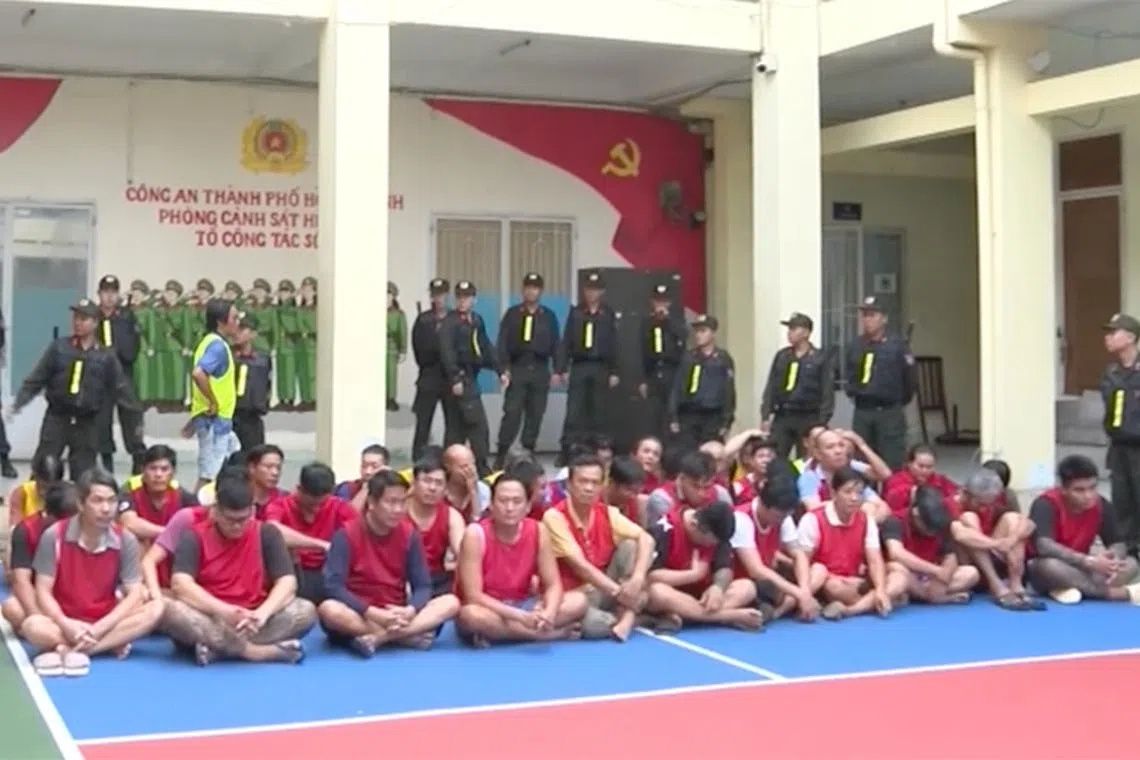
Vietnamese law enforcement authorities have dismantled two exceptionally large-scale betting networks and arrested 85 people involved in coordinating what police described as organisational structures with remarkably sophisticated hierarchies and tight operational controls. The operations, which generated combined illegal transactions totalling US$133 million—equivalent to RM534 million—were targeted in raids conducted during late June, according to a statement released by police in Ho Chi Minh City. The enforcement action represents part of a broader government campaign to suppress underground gambling activities that intensify during major international sporting events, particularly football tournaments.
The timing of these arrests coincides with intensified regulatory scrutiny surrounding the 2026 FIFA World Cup, which will be co-hosted by Canada, Mexico, and the United States, with the tournament final scheduled for July 19. Vietnamese authorities have indicated that illegal gambling operations proliferate during such high-profile events, as the surge in public interest in sports betting creates lucrative opportunities for criminal syndicates. The government's response has been notably forceful, with police mounting simultaneous operations across multiple jurisdictions to disrupt networks operating across provincial boundaries.
According to official documentation, the two dismantled operations had been conducting illegal transactions since October 2025, accumulating approximately US$133 million in turnover during the interim period. This figure underscores the remarkable scale and profitability of underground betting markets in Vietnam, where strict legal prohibitions on gambling have failed to eliminate demand. The sheer volume of capital flowing through these illicit channels highlights the persistent challenge authorities face in controlling shadow financial activity linked to sports wagering.
Investigators uncovered a complex operational framework through which the betting rings functioned. Ring leaders confessed to obtaining what they termed "master-level betting accounts" from intermediaries based in Cambodia, which they then subdivided into numerous subsidiary agent and member accounts. These fragmented accounts were subsequently distributed to individual gamblers operating within Vietnam, creating a multi-tiered structure that obfuscated the connection between end users and the criminal organisers. This method of account layering and distribution represents a sophisticated approach to money laundering and regulatory evasion, allowing operators to distance themselves from the underlying illegal transactions.
The cross-border dimension of this operation deserves particular scrutiny for Malaysian observers. The involvement of Cambodian intermediaries in supplying master accounts to Vietnamese operators reveals how regional networks facilitate illegal gambling ecosystems across Southeast Asia. Such transnational arrangements exploit jurisdictional gaps and lighter regulatory enforcement in certain countries to service demand in more strictly regulated markets. This pattern mirrors similar illegal gambling operations documented in other Southeast Asian nations, suggesting that regional organised crime syndicates have developed sophisticated methods for circumventing national gambling prohibitions.
The breadth of Vietnam's enforcement campaign extends considerably beyond these two cases. The public security ministry disclosed that police had dismantled a total of 73 separate gambling operations across the country during the initial 20 days of the World Cup period, resulting in the arrest of 346 individuals suspected of involvement in illegal gambling and football betting activities. The accumulated transaction volumes from these 73 cases reached figures described as "thousands of billions of dong," translating to several hundred million dollars in illegal turnover. Colonel Bui Tuan Anh of the public security ministry characterised these figures as evidence of the substantial scale of underground gambling infrastructure operating within Vietnamese territory.
The intensity and coordination of these enforcement operations reflect a strategic decision by Vietnamese authorities to utilise high-profile sporting events as focal points for intensified crackdowns. This enforcement pattern is not unique to Vietnam; multiple Southeast Asian governments employ similar tactics, treating international tournaments as windows of opportunity to demonstrate regulatory control and dismantle criminal networks. However, the Vietnamese operation appears to have achieved particularly significant scale, suggesting either exceptionally high underlying illegal gambling activity or particularly effective intelligence gathering and coordinated enforcement execution.
For Malaysia and other regional neighbours, the Vietnamese crackdown carries several implications. First, it demonstrates that even countries with stringent gambling prohibitions struggle to eliminate illegal operations, particularly during internationally televised sporting events. Second, the cross-border elements of the Vietnamese case indicate that Southeast Asian nations must develop enhanced regional cooperation mechanisms to address transnational gambling networks. Third, the sophisticated account subdivision and distribution methods identified in the investigation suggest that criminal operators are continuously innovating to evade detection, requiring law enforcement to maintain technological sophistication and intelligence capabilities.
The distinction between online and offline gambling operations merits consideration. Vietnam's explicit prohibition on online gambling contrasts with varying regulatory frameworks across Southeast Asia, where some jurisdictions permit regulated online betting while others maintain comprehensive bans. The Vietnamese experience suggests that prohibition alone, without robust enforcement and effective regional cooperation, creates conditions in which criminal organisations can thrive by moving operations to more permissive jurisdictions while servicing prohibited markets. This enforcement-evasion dynamic likely drives the transnational character of networks operating throughout the region.
Looking forward, the success of these enforcement operations will substantially depend on Vietnam's capacity to sustain enforcement intensity beyond the World Cup period. Historical patterns in regional enforcement suggest that crackdowns often diminish when international sporting events conclude, allowing criminal networks to reconstitute and resume operations. The Vietnamese government's public security ministry will need to maintain staffing levels, intelligence gathering capabilities, and prosecutorial resources to achieve lasting disruption rather than temporary displacement of gambling activities.

