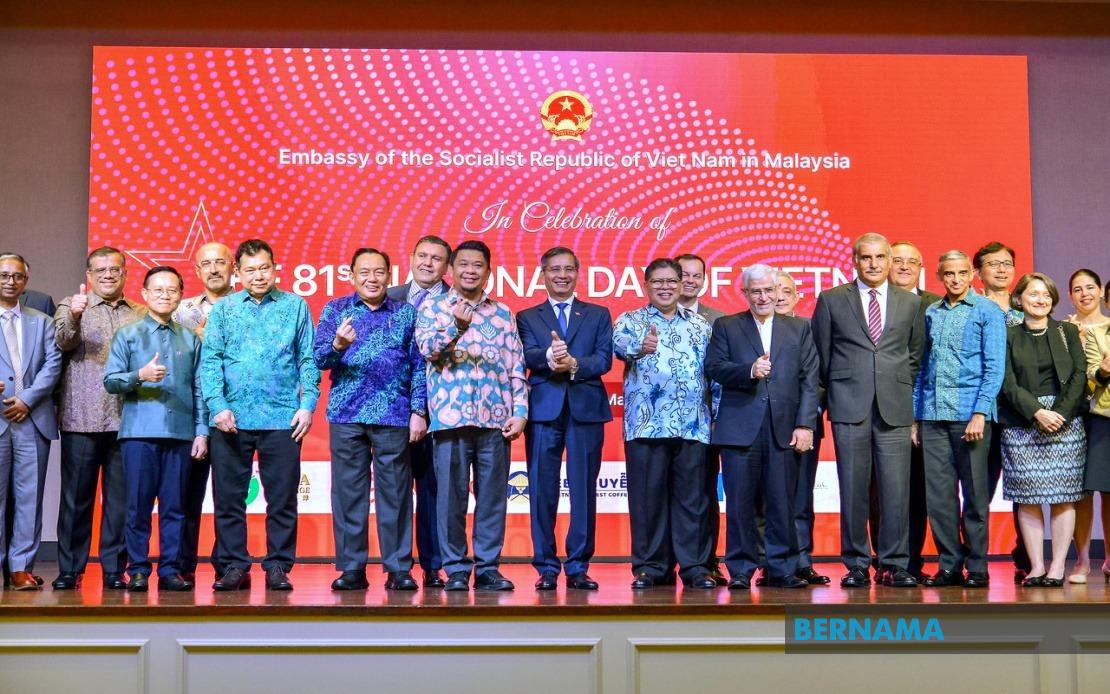
Vietnam and Malaysia are entering a new phase of diplomatic cooperation, with strengthened bilateral relations spanning multiple sectors under their Comprehensive Strategic Partnership framework. Speaking at Vietnam's 81st National Day celebration in Kuala Lumpur on Thursday evening, Vietnam's Ambassador to Malaysia Dinh Ngoc Linh outlined the breadth and depth of current engagement between the two nations, underscoring Malaysia's significance as a key partner in an era marked by geopolitical flux and economic uncertainty.
The elevation of relations to CSP status in November 2024 represents the culmination of decades of steady diplomatic progress since Vietnam and Malaysia first established formal ties in 1973. This upgrade reflects a maturation of the relationship beyond traditional bilateral commerce into comprehensive strategic alignment. Ambassador Dinh characterised this framework as evidence of deepening political trust and convergent national interests, positioning both countries to navigate regional challenges more effectively through coordinated action and mutual support.
Bilateral engagement has expanded significantly across multiple dimensions over the past year. Trade and investment flows have grown, reflecting business confidence in both economies and the removal of structural barriers to commerce. Agricultural collaboration has opened new avenues for knowledge exchange and market access, while educational partnerships are building the human capital necessary for sustained economic development. Cultural and tourism initiatives further strengthen people-to-people bonds, creating constituencies within each nation invested in maintaining strong ties with the other.
Defence and security cooperation occupies particular importance within this strategic framework. Ambassador Dinh emphasised that military-to-military engagement and shared security interests contribute materially to regional peace and stability. This dimension carries special significance given the complex security environment in Southeast Asia, where multiple powers maintain competing strategic interests and maritime disputes periodically surface tensions. Vietnam and Malaysia's defence partnership helps anchor regional predictability and reduces the risk of miscalculation among major powers operating in contested waters.
Parliamentary exchanges represent another critical pillar of the relationship, facilitating dialogue between legislators and strengthening mutual comprehension of each nation's domestic priorities and international positioning. These people-to-people connections at the political level help prevent misunderstandings and build consensus on regional issues requiring coordinated responses. The frequency and quality of such exchanges signal confidence in the relationship and commitment to sustained engagement across electoral cycles.
Regionally, Vietnam has consistently aligned itself with Malaysia in advocating for ASEAN unity, institutional resilience, and the bloc's continued centrality in regional architecture. Both nations recognise that ASEAN's ability to maintain strategic autonomy and shape regional outcomes depends on internal cohesion and collective resolve in the face of external pressures. Ambassador Dinh's reiteration of this commitment reflects Vietnam's understanding that its long-term interests are best served through a strong, unified ASEAN capable of exercising meaningful agency in regional geopolitics.
The ambassador's remarks also touched on the broader transformation engulfing the regional and global environment. Rising geopolitical competition, technological disruption, and shifting power balances create both opportunities and vulnerabilities for smaller nations. Vietnam and Malaysia, despite their different geopolitical circumstances, share common interests in maintaining open trade routes, peaceful dispute resolution, and a rules-based international order that constrains the exercise of raw power. These convergences provide a foundation for continued cooperation even as global dynamics shift.
As Ambassador Dinh prepares to conclude his three-year posting in Malaysia, his expression of enduring commitment to strengthening bilateral ties carries symbolic weight. Ambassadors serve as crucial bridges between nations, embodying continuity and personal investment in relationship-building. His personal affection for Malaysia and pledge to remain engaged with Vietnamese-Malaysian relations during future postings signal institutional continuity in Hanoi's commitment to this partnership. Such consistency matters significantly in diplomatic practice, where personal relationships often facilitate smooth collaboration.
For Malaysian readers and policymakers, the deepening Vietnam-Malaysia relationship carries several implications. Enhanced security cooperation contributes to maritime stability in waters crucial to Malaysia's economic interests. Trade and investment growth creates employment and technology transfer opportunities within the Malaysian economy. Alignment with Vietnam on regional issues strengthens Malaysia's voice within ASEAN and provides useful leverage in managing relationships with major powers. Cooperation on transnational challenges such as environmental protection and public health demonstrates the practical benefits of strong bilateral ties.
The CSP framework also reflects both countries' navigation of the contemporary great power competition affecting Southeast Asia. By strengthening their bilateral relationship and coordinating within ASEAN, Vietnam and Malaysia preserve space for manoeuvre and limit the influence of external actors seeking to exploit regional divisions. This strategic autonomy, increasingly valuable as Washington, Beijing, Moscow, and New Delhi compete for influence, enables both nations to pursue their interests more effectively than would be possible if forced to align rigidly with any single external power.
Looking forward, the CSP provides institutional mechanisms for addressing emerging challenges requiring coordinated responses. Climate change, pandemic preparedness, cybersecurity threats, and economic integration demands will shape the regional agenda over coming years. Vietnam and Malaysia's commitment to addressing these issues together, rather than separately or in opposition, enhances the likelihood of constructive outcomes benefiting both populations. The partnership's emphasis on people-centred development ensures that cooperation serves the interests of ordinary citizens, not merely state elites.

