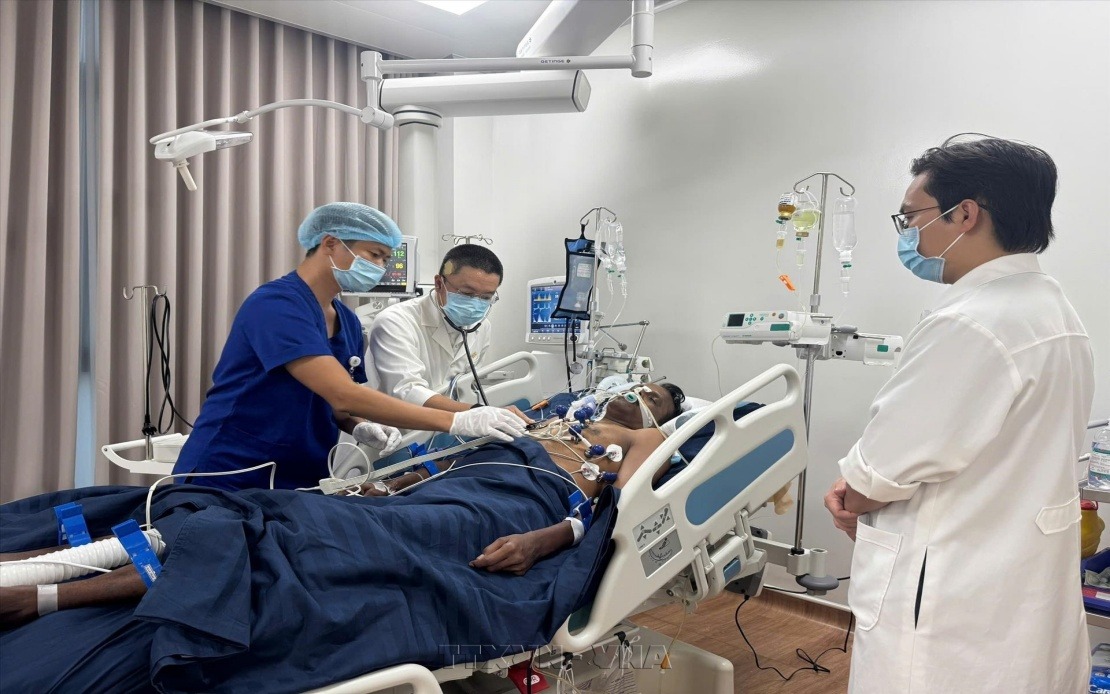
Vietnamese authorities in the Phu Quoc Special Zone have declared a full mobilisation of medical and rescue resources following a speedboat accident on July 11 that claimed lives and left numerous Indian tourists injured. The incident, which occurred in the Mekong Delta province of An Giang, has prompted coordinated action across government agencies, private healthcare providers, and diplomatic channels to address the immediate crisis and support ongoing treatment for survivors.
The emergency response was activated with remarkable speed. Sun Group International Hospital, the primary treatment facility, implemented its maximum alert protocol within moments of receiving notification about the accident. Medical teams dispatched ambulances to the scene immediately while the institution's full complement of staff mobilised to handle what would become one of the region's significant maritime incidents. This rapid deployment reflects established procedures for managing mass casualty events in the special economic zone, which regularly accommodates international tourists.
The hospital's intensive care capabilities proved critical in stabilising the most severely injured. Two patients in critical condition underwent nearly two hours of continuous resuscitation efforts before achieving stability. Both subsequently regained consciousness and were transferred to the intensive care unit, where they continued recovery under close medical supervision. This outcome demonstrates the hospital's capacity to handle major trauma cases, though the incident also exposed the limits of single-facility response to mass casualty scenarios.
By evening on July 11, the hospital had admitted fifteen additional victims, all conscious upon arrival. These patients underwent comprehensive medical evaluations including trauma assessments and wound management. The hospital's systematic approach to sorting and treating casualties by severity allowed staff to efficiently process the large intake while prioritising those most at risk. Dr. Nguyen Quang Thang, the hospital's director, reported that two patients required extended respiratory support due to severe breathing complications, indicating the diversity of injuries sustained in the accident.
One respiratory failure patient has since improved sufficiently to approach discharge, representing a positive clinical trajectory. However, the second patient with respiratory complications required ongoing specialist intervention and coordination with Cho Ray Hospital in Ho Chi Minh City, one of Southeast Asia's leading medical institutions. This inter-hospital collaboration enabled access to advanced intensive care resources beyond what single facilities could provide, exemplifying regional healthcare cooperation patterns increasingly common across the Mekong Delta region.
Beyond medical response, the authorities have structured financial assistance packages for victims and bereaved families. The speedboat operator agreed to contribute 1,000 USD to each family that lost a member and 500 USD per injured passenger, establishing immediate compensation without requiring lengthy legal processes. This swift corporate response contrasts with regional patterns where liability disputes often delay victim support, suggesting either clear contractual frameworks or operator concern about regulatory consequences.
The local Phu Quoc Special Zone administration supplemented vessel operator payments with additional state compensation of 26 million VND—approximately 1,000 USD—per fatality. This dual compensation structure reflects Vietnamese policy distinguishing between operator responsibility and state obligation to nationals and visitors within its territory. The combined financial packages provide meaningful immediate relief while authorities pursue longer-term investigations and potential additional claims.
Chairman Tran Minh Khoa of the Phu Quoc Special Zone People's Committee emphasised that authorities prioritised victim support over other administrative considerations. This positioning reflects both humanitarian concern and strategic awareness that tourism-dependent economies cannot afford perceptions of inadequate crisis response. Phu Quoc has developed as a major regional tourism destination over the past decade, and incidents affecting international visitor safety carry significant economic implications beyond immediate humanitarian concerns.
The bureaucratic machinery supporting victims extends to expedited civil registration, death documentation, and legal formalities that typically slow repatriation of foreign nationals. Vietnamese authorities have committed to accelerating these procedures to facilitate prompt return of deceased individuals to their families and home countries. For Indian nationals, this coordination involves the Indian embassy and consular services, adding diplomatic complexity to an already demanding operational scenario.
The accident illuminates persistent safety challenges in Southeast Asia's rapidly expanding maritime tourism sector. Speedboat operations remain loosely regulated in many jurisdictions, with enforcement difficult across the Mekong Delta's extensive waterways. The Phu Quoc incident, while receiving comprehensive response once it occurred, raises questions about accident prevention and pre-incident safety standards that regulatory agencies throughout the region continue struggling to address.
For Malaysian readers, the incident offers perspective on how neighbouring countries manage major tourism crises and the financial implications of operating in Southeast Asian destinations. Malaysian tourism operators and insurers monitor such incidents closely as indicators of regional risk patterns. The rapid mobilisation by Vietnamese authorities demonstrates capabilities that competitors in the regional tourism market must match or exceed to maintain competitive positioning.
The response also reflects broader regional patterns of economic interdependence, where Indian tourists' presence in Vietnamese destinations involves complex cross-border financial flows and diplomatic relationships. As Southeast Asian nations compete for international tourism revenue, incidents affecting visitor safety acquire economic significance beyond immediate humanitarian response, influencing how governments allocate resources to both prevention and crisis management in tourism sectors.

