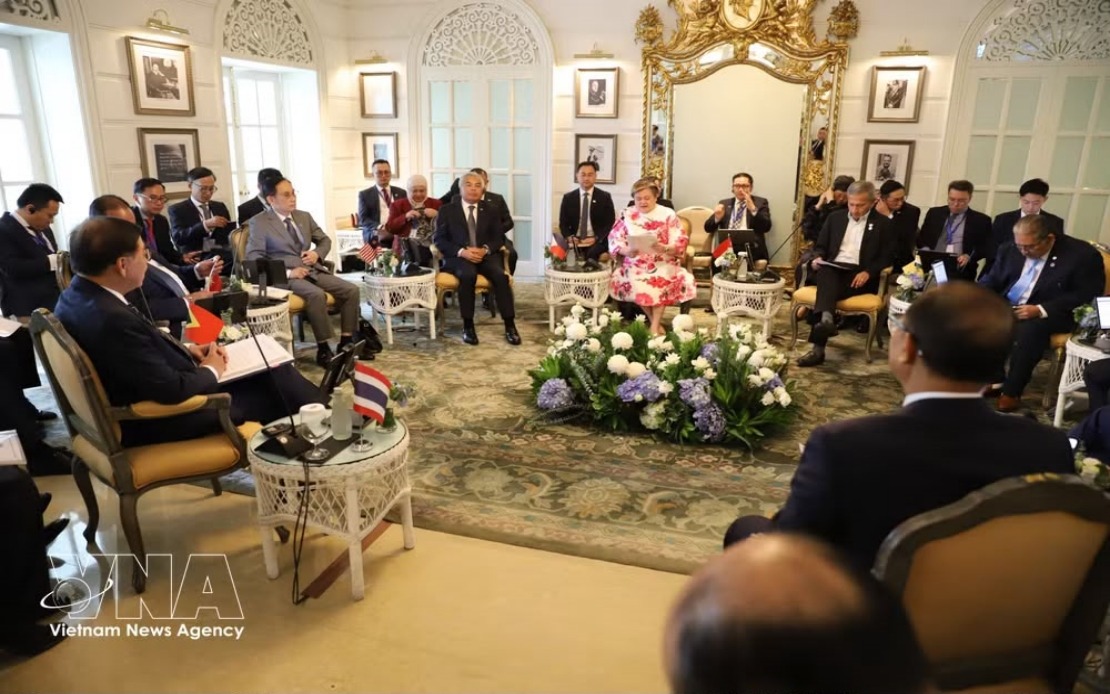
Vietnam has committed itself to close cooperation with ASEAN member states in supporting Myanmar's path toward economic recovery, political stability and regional integration, Vietnamese Foreign Minister Le Hoai Trung said during regional talks in Bangkok this week. Speaking at an informal gathering of Southeast Asian foreign ministers alongside Myanmar's Foreign Minister Tin Maung Swe on July 12, Trung underscored Hanoi's unwavering position that Myanmar remains a full member of the ten-nation bloc deserving of constructive engagement despite the country's turbulent political trajectory since 2021.
The meeting, convened under Philippine chairmanship as Manila prepares to assume the ASEAN Presidency in 2026, represented a significant milestone in the bloc's Myanmar diplomacy. It marked the first major in-person gathering between ASEAN's foreign ministers and their Myanmar counterpart in nearly five years, signalling the organisation's determination to maintain dialogue and prevent further regional isolation of the country. The symbolism of this engagement carries particular weight across Southeast Asia, where Myanmar's internal instability has created humanitarian challenges, security concerns and economic disruptions that reverberate throughout the subregion.
Trung's remarks centred on the Five-Point Consensus, ASEAN's principal diplomatic framework for assisting Myanmar through its transition. Adopted in 2021 following the military takeover, this framework emphasises dialogue, humanitarian aid, non-interference and Myanmar-led solutions to the country's governance crisis. By reaffirming this approach, Vietnam positioned itself as a champion of pragmatic engagement rather than isolation, a stance that aligns with ASEAN's broader philosophy of quiet diplomacy and dialogue-based problem-solving.
The Vietnamese Foreign Minister acknowledged recent initiatives undertaken by Myanmar's administration, including efforts to stabilise the political environment, rejuvenate economic activity, strengthen institutional governance and intensify crackdowns on cross-border criminal networks spanning drug trafficking and digital crime. These observations reflected ASEAN's recognition that Myanmar has taken tangible steps toward normalisation, even as significant challenges persist. For Malaysian policymakers and observers, such assessments are relevant because Myanmar's instability directly affects regional security cooperation, trade flows and the credibility of ASEAN's collective mechanisms.
Vietnam's willingness to spearhead concrete support mechanisms reflects broader Southeast Asian calculations about managing Myanmar's predicament without destabilising the bloc itself. Trung emphasised that ASEAN must move beyond symbolic gestures and implement substantive, practical measures that keep channels of communication open with Myanmar's authorities while facilitating genuine progress on governance, economic development and social cohesion. This approach suggests recognition that sustained isolation would prove counterproductive, potentially driving Myanmar further into the orbit of external powers while deepening internal fragmentation.
The foreign ministers received a detailed briefing from Myanmar's Tin Maung Swe regarding his government's 100-day plan and accompanying measures designed to advance peace, encourage national reconciliation and bolster stability throughout the country. ASEAN members took note of these initiatives and the administration's ongoing efforts to maintain contact with various domestic stakeholders. Such transparency, though limited in scope, provides ASEAN with at least a basis for continued engagement and incremental confidence-building.
Vietnam specifically committed to collaborating with the incoming Philippine ASEAN Chair and fellow member states to facilitate Myanmar's economic rehabilitation, address pressing social development needs and strengthen regional cooperation against transnational organised crime. This pledge encompasses both bilateral Vietnam-Myanmar initiatives and broader subregional mechanisms that could enhance interconnectivity and mutual prosperity. For the region's stability architecture, Vietnamese leadership on this file is significant because it anchors Myanmar's reintegration efforts to sustainable development objectives rather than purely security-focused containment strategies.
The ministers engaged in candid, constructive discussions about refining ASEAN's coordination mechanisms and support frameworks. They reaffirmed collective commitment to advancing the Five-Point Consensus through substantive implementation rather than rhetorical repetition, acknowledging that the framework requires constant calibration as Myanmar's internal situation evolves. This emphasis on practical action rather than abstract principles reflects growing recognition within ASEAN that the 2021 approach requires upgrading to address new challenges, including economic collapse, humanitarian deterioration and transnational security threats.
Underlying this diplomatic choreography is ASEAN's broader strategic dilemma: how to support Myanmar's stability and eventual democratic transition while respecting principles of non-interference and sovereignty that define the bloc's founding ethos. Vietnam's positioning as a constructive partner in this endeavour helps distribute responsibility and prevents any single nation from bearing diplomatic burden or reputational costs. This collective approach also strengthens ASEAN's claim to centrality in Southeast Asian affairs against external powers seeking to exploit Myanmar's crisis for geopolitical advantage.
The Bangkok meeting's significance extends beyond ceremonial solidarity. It signals to both Myanmar's government and the international community that ASEAN intends to maintain Myanmar within its institutional framework despite pressures for isolation or punitive measures. For Malaysia and other member states engaged in regional stability-building, this message carries implications for how ASEAN collectively manages internal crises and maintains organisational cohesion. The success or failure of ASEAN's Myanmar strategy will substantially influence the bloc's capacity to handle future member state difficulties.
Vietnam's commitment to support Myanmar's recovery and regional integration, articulated through the Five-Point Consensus framework, reflects Hanoi's strategic interest in maintaining a stable, prosperous Southeast Asian neighbourhood and preserving ASEAN's institutional integrity. Whether such engagement produces tangible improvements in Myanmar's governance, economic conditions and social stability remains to be seen. Yet the principle of sustained dialogue, championed by Vietnam at this week's talks, represents the regional bloc's clearest available pathway toward eventual normalisation and Myanmar's fuller participation in ASEAN's collective endeavours.

