Vietnam's Deputy Prime Minister Nguyen Van Thang has travelled to Washington to demonstrate the country's commitment to resolving a protracted trade dispute with the United States, meeting with US Trade Representative Jamieson Greer to advance stalled negotiations over a final tariff deal. The encounter represents Hanoi's latest attempt to break an impasse that has persisted for months, with Thang explicitly conveying Vietnam's openness to what he described as "open, constructive" dialogue on the contentious issues that have complicated bilateral commerce between the two nations.
At the heart of the discussion lay a fundamental challenge facing Vietnam's relationship with Washington: the country has emerged as the world's largest source of trade imbalance with America, posting a merchandise surplus of US$114 billion in the first half of 2026. This figure exceeds Vietnam's competitors in the US trade deficit rankings, surpassing even China, Mexico, and Taiwan by a significant margin. The scale of this imbalance has placed Vietnam squarely in the crosshairs of American trade policy makers determined to reduce what they view as unfair commercial practices that disadvantage domestic manufacturers and workers.
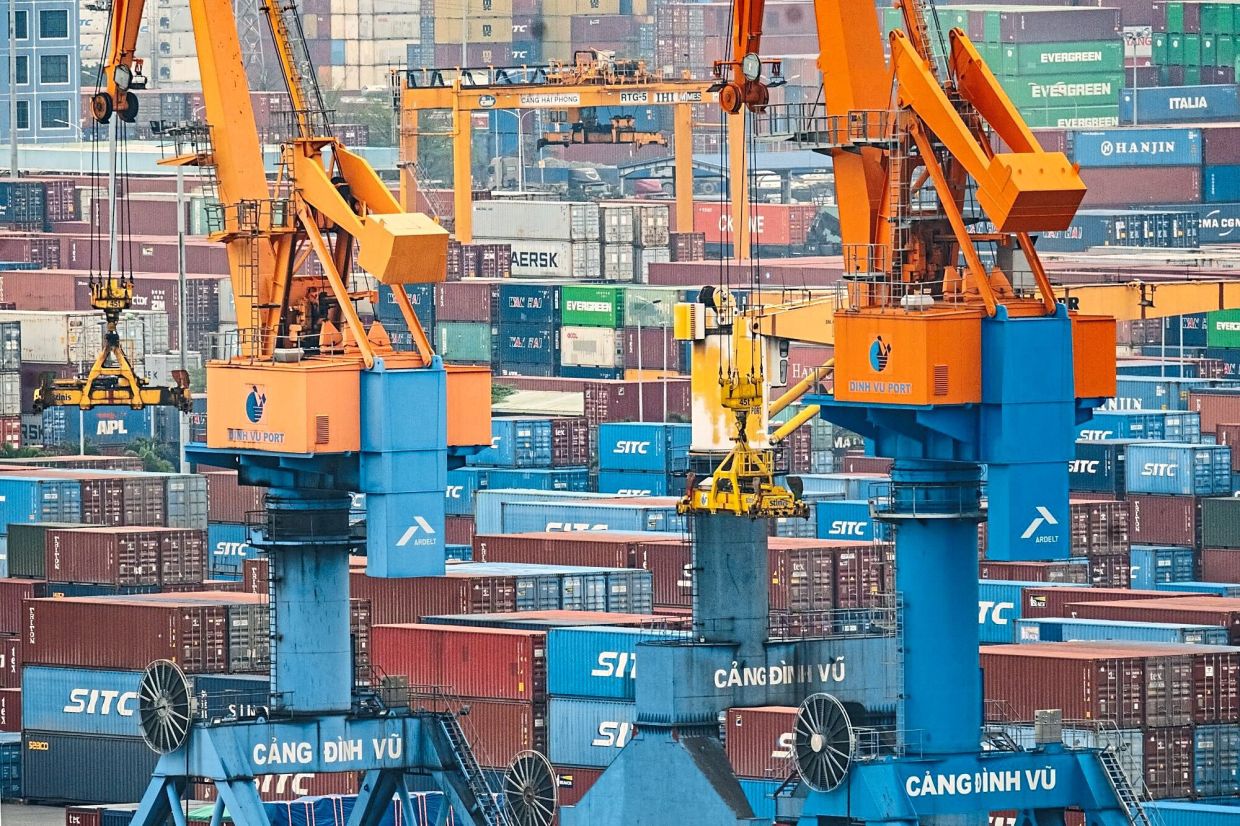
The crux of American grievances centres on Vietnam's role as a transshipment hub through which goods originating elsewhere—particularly from China—are routed into American markets. Washington contends that Vietnamese ports and logistics networks have been exploited to circumvent tariffs and regulatory scrutiny, effectively allowing Chinese manufacturers to bypass trade restrictions through the legal fiction of Vietnamese re-export. This transshipment mechanism has become increasingly sophisticated as manufacturers leverage Vietnam's lower labour costs and established supply chains while obscuring the true origins of their products. Thang's willingness to address these concerns directly, according to a statement issued by Vietnam's government, signals recognition that Hanoi cannot indefinitely deflect American pressure without jeopardising the bilateral relationship.
The bilateral effort to complete a comprehensive trade agreement began with a framework accord reached in October, yet negotiations have repeatedly stalled over technical details and substantive disagreements about implementation. Beyond transshipment, American officials have raised concerns about non-tariff barriers that they argue restrict market access for US companies, as well as inadequate Vietnamese border controls that permit counterfeit and pirated goods to transit through the country. These structural issues reflect deeper concerns about Vietnam's regulatory capacity and enforcement mechanisms, matters that cannot be resolved through diplomatic courtesy alone but require genuine institutional reform.
The US Trade Representative's office has already signalled the seriousness of its intentions by launching three simultaneous Section 301 investigations into Vietnamese trade practices, a formal mechanism that allows Washington to unilaterally impose tariffs if it determines unfair trading patterns have occurred. In April, Greer's office designated Vietnam a "priority foreign country" in a report that specifically cited failures to combat online piracy, insufficient controls over counterfeit merchandise, and inadequate border inspection protocols. These designations carry substantial weight because findings from the investigations, scheduled to be released in November, could trigger automatic tariff increases that would further damage Vietnam's export competitiveness and hurt its economy.
For Vietnam, the stakes in these negotiations extend beyond bilateral trade statistics. The country has built its modern economy on export-driven industrialisation, with manufacturing deeply integrated into global supply chains dominated by American consumption patterns. Electronics, textiles, and consumer goods produced in Vietnam reach American shoppers through established distribution networks, and tariff increases would make Vietnamese exports significantly less competitive. Moreover, Vietnam depends on continued foreign direct investment to sustain its development trajectory, and uncertainty over trade relations discourages multinational enterprises from committing capital to new facilities or expanding existing operations.
Thang's parallel meetings with representatives from major technology and industrial corporations including Qualcomm Inc., Visa Inc., Axon Enterprise Inc., and Caterpillar Inc. underscored a dual-track strategy aimed at both defusing political tensions and demonstrating Vietnam's attractiveness as an investment destination. These companies represent precisely the sectors in which Vietnam hopes to develop competitive advantages, and their willingness to expand operations or deepen commitments would signal confidence in Vietnam's long-term prospects despite trade tensions. The Deputy Prime Minister's engagement with business leaders served to reinforce that Vietnam remains open to American capital and partnership even as official negotiations proceed through more formal channels.
Underlying Vietnam's negotiating position is an uncomfortable economic reality: the country's imports from China have accelerated substantially as Vietnamese manufacturers ramp up production capacity for goods destined for American markets. This dependency creates a delicate balancing act, as Vietnam cannot afford to antagonise its largest supplier while simultaneously seeking to convince Washington that it has established meaningful barriers to Chinese transshipment. Resolving this tension requires Vietnam to demonstrate genuine enforcement mechanisms that make illicit routing prohibitively difficult or costly, an undertaking that demands significant investment in customs infrastructure, personnel training, and inter-agency coordination.
Greer's statement that the United States seeks to conclude negotiations expeditiously reflects American impatience with the pace of discussions and possibly a desire to achieve a settlement before potential changes in circumstances or negotiating leverage. From the American perspective, a successful agreement would validate the Trump administration's aggressive approach to bilateral trade relations while providing a template for other Southeast Asian nations accused of similar transshipment practices. From Vietnam's perspective, reaching agreement before November investigations are completed would allow the country to avoid automatic tariff increases and provide a framework within which to demonstrate compliance and rebuild trust.
The broader implications for Southeast Asia deserve consideration, as several nations in the region have similarly benefited from serving as alternative sourcing locations for American imports seeking to avoid tariffs or regulatory restrictions. Thailand, Indonesia, and Malaysia have also faced American scrutiny regarding their roles in facilitating indirect Chinese exports, and Vietnam's negotiations may establish precedents that Washington will seek to replicate across the region. A successful agreement demonstrating how Vietnam can address American concerns while maintaining its export competitiveness could provide a model for regional peers, or conversely, harsh tariffs could signal that Southeast Asian countries must undertake more dramatic restructuring of their trade policies and enforcement mechanisms.
For Malaysian observers and policymakers, Vietnam's experience offers cautionary lessons about the vulnerabilities of export-dependent economies in an era of heightened American protectionism. Vietnam's substantial trade surplus with the United States, while reflecting genuine competitive advantages in manufacturing, has made it a target for policy action in ways that benefit domestic American competitors. Malaysia's own trade relationship with the United States, though less imbalanced than Vietnam's, could face similar scrutiny if the bilateral trade deficit expands further or if evidence of transshipment through Malaysian ports emerges. The willingness of Vietnamese leadership to engage constructively on American concerns, combined with the implicit threat of unilateral tariff action through Section 301 investigations, represents the new template for trade relations in Southeast Asia under American administration priorities focused on deficit reduction and supply-chain reshoring.

