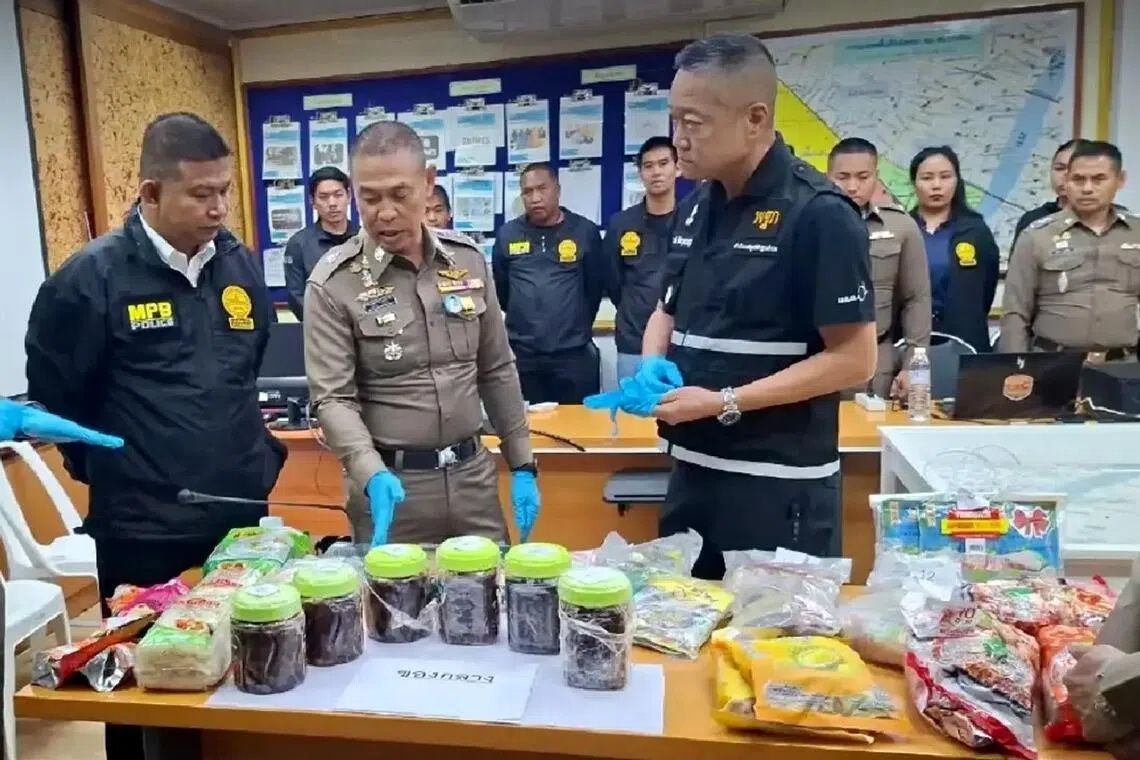
Bangkok police have uncovered an international crystal methamphetamine smuggling syndicate that methodically exploited Thailand's geographic position as a transportation corridor to move illicit drugs to Japan. The network, led by Vietnamese nationals, demonstrated sophisticated operational tradecraft by concealing more than two kilograms of crystal methamphetamine—locally known as ice—inside jars of tamarind paste bound for Tokyo. Metropolitan Police Bureau commissioner police lieutenant-general Siam Boonsom disclosed the investigation's findings on July 17, following months of surveillance and interrogation of suspects linked to the trafficking operation.
The breakthrough came when a courier contracted to transport packages expressed concern about the unusual weight of seemingly innocuous shipments. Acting on suspicions, the deliveryman handed over several jars of tamarind paste to authorities on July 13 for inspection. Investigators subsequently discovered six foil-wrapped packages concealed within the containers, each holding narcotics that laboratory analysis confirmed as crystal methamphetamine. The case exemplifies a troubling trend where transnational criminal organisations recruit unsuspecting or reluctant couriers, often ordinary citizens seeking additional income, to move contraband across borders without their full knowledge of the shipment's contents.
The investigation, conducted by officers from Bang Yi Khan Police Station and the Metropolitan Police Division 7 under the command of police major general Chaiya Phetpanya, revealed a meticulously compartmentalised operation designed to insulate the network's leadership from direct exposure. Intelligence indicated that a senior Vietnamese coordinator directed operations remotely from Hanoi, never directly communicating with street-level operatives. This hierarchical separation reflected deliberate operational security to frustrate investigative efforts by Thai and international law enforcement agencies seeking to dismantle the trafficking chain.
The syndicate's methodology relied on multiple layers of intermediaries to obscure the connection between organisers and final shipments. Vietnamese nationals based in Thailand would occupy residential properties that served as collection points for contraband destined for international delivery. The organisers then utilised anonymous Facebook accounts to recruit delivery riders—typically individuals unaware of what they were transporting—who collected packages from these safe houses and transferred them to Thai couriers hired specifically for international transport assignments. This deliberate fragmentation meant that individual participants possessed only partial knowledge of the broader operation, limiting intelligence value if arrested.
Financial flows provided investigators with crucial investigative leads that ultimately connected disparate elements of the network. Officers traced monetary transfers through a bank account registered to Sompong, a Thai national detained for questioning in relation to the conspiracy. The account showed a consistent pattern of withdrawals conducted by Vietnamese nationals, who repeatedly extracted sums ranging between 20,000 and 50,000 baht in cash before departing Thailand for Vietnam within short timeframes. This recycling of cash withdrawals and rapid repatriation of personnel appeared deliberately designed to minimise each individual's exposure to arrest and obscure the financial trail linking operational costs to network principals.
The investigation's scope has expanded considerably since the initial interception, with police now suspecting that more than four individuals participated in the identified smuggling segment. Arrest warrants have been issued for Sompong and three Vietnamese nationals implicated in money withdrawals, management of the social media recruitment accounts, or operational oversight of specific trafficking phases. Notably, Sompong has categorically denied the allegations against him, asserting his non-involvement in the suspected methamphetamine operation. The investigation has also extended to Sompong's girlfriend, whom authorities do not formally suspect but believe may have possessed knowledge of the conspiracy's existence and potentially facilitated certain logistical elements.
This case illustrates broader regional vulnerabilities that transnational drug networks systematically exploit across Southeast Asia. Thailand's positioning as a major transit corridor, combined with its extensive overland and maritime connections to producing regions and consumption markets, creates natural opportunities for trafficking organisations. The willingness of networks to invest in sophisticated compartmentalisation and recruitment techniques suggests substantial profit margins that justify operational complexity. The use of everyday commodities like tamarind paste—a staple ingredient in regional cuisine with legitimate demand—demonstrates how smugglers adapt to detection methods by embedding contraband within inconspicuous commercial goods.
The involvement of both Vietnamese and Thai nationals underscores the transnational character of regional drug trafficking, where criminal organisations leverage contacts across multiple national jurisdictions to execute trafficking schemes. Vietnamese criminal groups have increasingly expanded their footprint throughout Southeast Asia, establishing supply chains and distribution networks that rival established regional operators. The Hanoi-based leadership structure suggests a vertically integrated enterprise with strategic planning capabilities, distinguishing this operation from opportunistic trafficking by smaller criminal groups.
For Malaysia and other Southeast Asian nations, the case carries significant implications regarding border security and drug enforcement cooperation. The sophistication of concealment methods and the strategic use of transit countries demand enhanced intelligence sharing between regional law enforcement agencies. Thai authorities' success in unraveling the network depended on a vigilant courier who recognised suspicious weight distribution—a reminder that public awareness campaigns about the risks of transporting unfamiliar items remain valuable deterrents. The case also highlights the continued importance of financial investigation techniques, as banking records ultimately provided the investigative thread connecting network participants across geographic and organisational boundaries.
Regional governments face persistent challenges in combating transnational drug trafficking as criminal enterprises continually adapt methodologies to evade detection. The tamarind paste shipments represent just one tactic within a broader arsenal that includes concealment in commercial cargo, modification of chemical precursors, and exploitation of corrupt officials. Sustained commitment to cooperation agreements, technology sharing, and intelligence exchange remains essential to disrupt these networks effectively. The Metropolitan Police Bureau's investigation demonstrates that persistence and methodical investigative work can ultimately identify and neutralise even deliberately fragmented criminal operations, though the ongoing evolution of smuggling tactics ensures that law enforcement must continually innovate its countermeasures.

