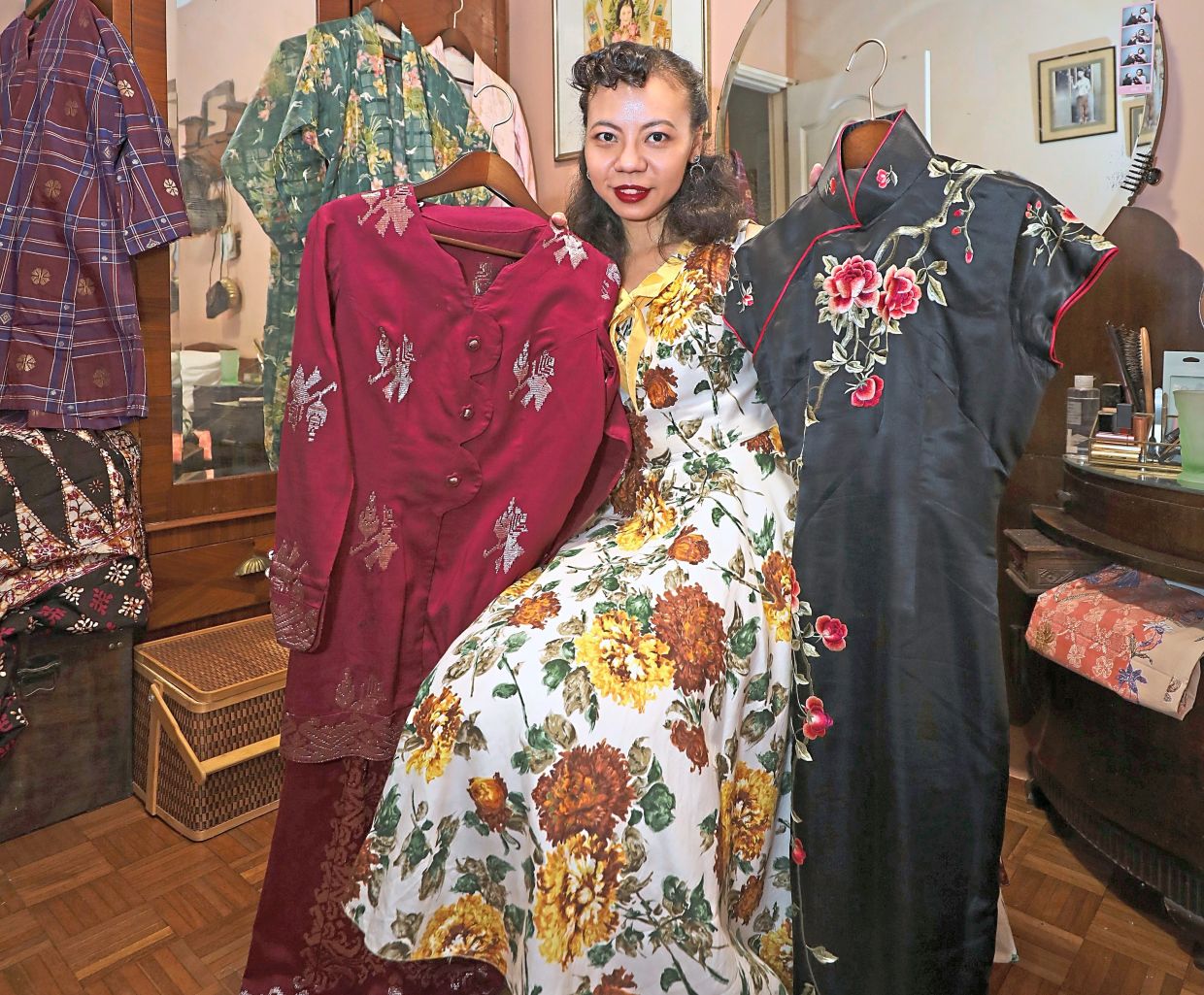
Suzanne Lim keeps a cherished photograph close at hand—a 1950s snapshot of her grandparents dancing in a dance hall, dressed immaculately and clearly enjoying themselves. That black and white image serves as more than family memorabilia; it is the starting point for her passionate engagement with vintage Malaysian clothing and the stories woven into fabric. At 33, the graphic designer has transformed an early fascination into a deliberate practice of collecting, documenting, and wearing pieces of the nation's sartorial past, from kebaya and cheongsam to batik and songket. Her work suggests something larger: that clothing functions as historical evidence, capable of revealing how people actually lived in ways that textbooks often cannot.
Lim's path toward this interest began with the formative influence of her grandparents' generation. Her grandfather's love of rock and roll and her grandmother's career as a taxi dancer exposed her to dancing culture from childhood. She took to the dance floor at age four and eventually pursued formal Latin and ballroom training. But it was her involvement in a secondary school cultural club, where she wore elaborate traditional costumes during performances, that sparked what would become a lifelong interest in how garments carry cultural meaning. Years passed before that spark ignited into deliberate collection, yet when she acquired her first vintage piece, she found herself unable to abandon the pursuit. Today, her social media presence documents these garments against heritage backdrops, offering viewers a visual interpretation of how Malaysians dressed in earlier eras.
What distinguishes Lim's approach is her recognition that fashion history opens windows onto social and economic conditions. Every garment reflects not just aesthetic choices but the lived reality of its time. She has become increasingly conscious that many young Malaysians no longer visit museums or consult reliable historical sources. This awareness drives her commitment to represent the past as accurately as possible, even when she occasionally adapts vintage pieces with contemporary styling. She acknowledges this tension explicitly, noting that authenticity matters most when she has access to genuine historical textiles, but that simply making certain local materials visible to audiences can render heritage more tangible and real.
Lim is not alone in this work. Mohamad Alif Daniel Mohammad Nor, a 25-year-old fresh graduate, approaches historical clothing through a different but complementary lens. His relationship with the past emerged through his late grandmother's stories, which eventually led him toward historical music, film, and uniforms. During his mid-teens, he began collecting items such as currency notes issued by the Japanese occupation forces. This personal collecting spiralled into involvement with Persatuan Reka Ulang Sejarah (PRUS), an organization dedicated to historical re-enactment, where he has deepened his engagement with material culture and its meanings.
For both collectors, clothing functions as a repository of identity and knowledge. Mohamad Alif Daniel reflects that passion for fashion and history teaches lessons about culture and thought patterns that textbooks simply do not provide. Historical re-enactment and curation become educational practices, ways of inhabiting the past and understanding how earlier generations saw themselves and their world. This represents a significant departure from passive consumption of history. Rather than merely reading about the past, these young people are engaging it tactilely, physically, and visually.
The broader context matters here: Malaysia's society is increasingly disconnected from its own recent history. Museums struggle with visitor numbers, and digital media dominates how information circulates. Within this environment, Lim has observed a notable trend among her generation—a growing appetite for vintage objects and clothing. She hypothesizes that life lived primarily in digital spaces creates a hunger for something tangible, something with weight and presence. There is nostalgia at work, certainly, but also a deliberate search for what she calls "escapism from the world we know today." Young Malaysians are reaching backward not to retreat from modernity but to find resources for meaning-making in the present.
Yet this recovery of the past need not mean literal replication. Lim is explicit that contemporary creativity and vintage inspiration can coexist. Young collectors appreciate the freedom to take historical elements and reimagine them through modern sensibilities, blending old and new rather than simply preserving. This creative hybrid appeals to a generation that sees innovation and tradition as complementary rather than opposed. However, Lim recognizes limits to this freedom. There exists a responsibility to maintain the fundamental integrity of historical garments so that they do not become distorted or misrepresented in ways that could threaten cultural identity itself. The balance between respectful reinterpretation and faithful preservation thus becomes central to this emerging practice.
The implications of this trend extend beyond individual enthusiasm. Mohamad Alif Daniel has noticed that his own posts featuring traditional attire have encouraged others, particularly those who previously felt shame about wearing such clothing publicly, to reclaim and celebrate their heritage. This suggests something important about social permission and visibility. When young people see their peers embracing traditional dress in contemporary contexts, cultural anxiety diminishes. The digital platform becomes a tool for normalizing and celebrating aspects of Malaysian identity that might otherwise be abandoned as outdated.
What emerges from these individual stories is a portrait of cultural reclamation happening outside institutional frameworks. Museums and heritage organizations remain important, but they are no longer the primary custodians of this knowledge. Instead, young Malaysians with cameras and social media accounts are becoming informal historians, curators, and advocates. Lim's concern that people no longer visit museums points to a genuine crisis in heritage transmission, yet her own work suggests grassroots solutions emerging organically. When clothing becomes a vehicle for connection across generations, when vintage textiles spark conversations about identity and belonging, heritage takes on renewed relevance for audiences who might never enter a museum.
This movement also reflects a distinctly Malaysian concern with how to preserve and honor cultural identity in a globalized world. In a nation of multiple ethnic groups and competing narratives about the past, these collectors' attention to specific garments—kebaya, songket, batik—becomes a form of cultural affirmation. By documenting and wearing these pieces, Lim and others like her are making a statement that these traditions matter, that they deserve visibility and respect, that they offer genuine value to contemporary life. The practice is simultaneously personal—rooted in family memory and individual taste—and political, contributing to broader conversations about what Malaysian identity means and how the past should inform the present.
Looking forward, the growing enthusiasm for vintage clothing and historical dress among young Malaysians suggests that heritage preservation need not depend entirely on formal institutions. Instead, it can flourish through passionate individuals who see their engagement as both personal fulfillment and cultural responsibility. As Lim continues documenting her collection and Mohamad Alif Daniel inspires others through historical re-enactment, they are quietly reshaping how their generation understands and relates to the past. In doing so, they offer a model for heritage transmission that feels contemporary, accessible, and rooted in genuine connection rather than obligation—precisely what might appeal to a digitally native generation searching for meaning and authenticity.

