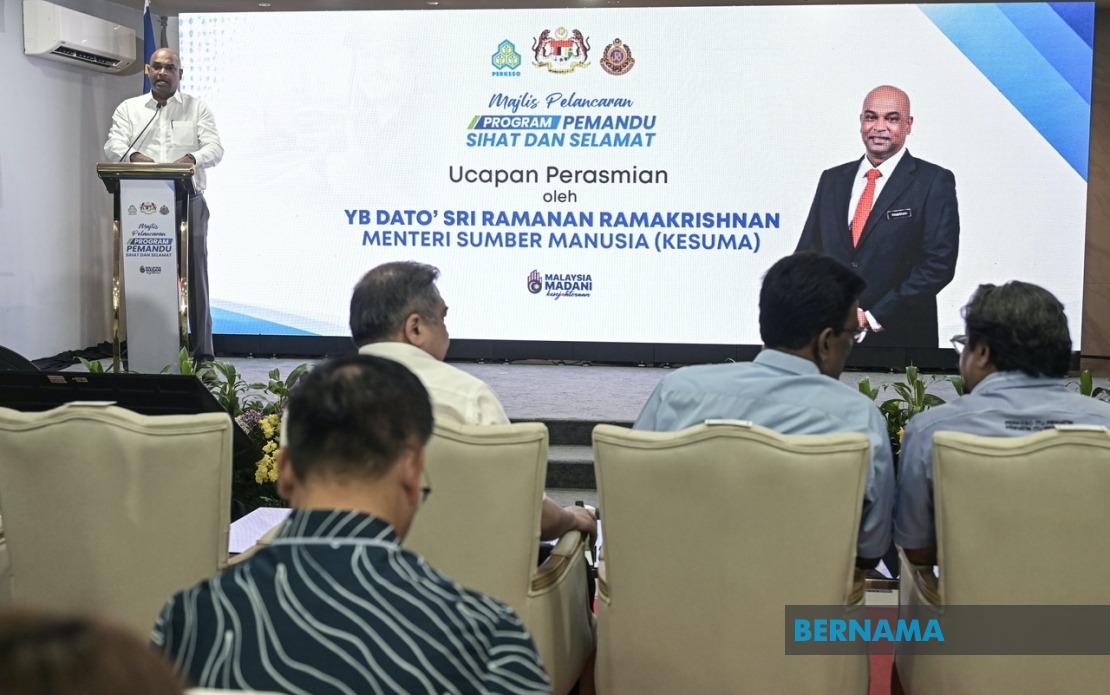
Malaysia's Human Resources Ministry has introduced mandatory health screening for all vocational drivers seeking to renew their professional licences, marking a significant shift in the country's approach to road safety. Announced by Human Resources Minister Datuk Seri R. Ramanan at the launch of the Healthy and Safe Driver Programme (PSS), the initiative aims to identify health conditions that could impair driving ability and reduce the alarming toll of workplace fatalities on Malaysian roads. The screening will be available at 500 panel clinics across the nation, with the government bearing most of the cost to ensure accessibility for the driving workforce.
The comprehensive nature of the health assessments reflects a sophisticated understanding of the medical factors that contribute to road accidents. Beyond standard physical examinations, the screening includes vision and hearing evaluations—both critical for safe driving—alongside specialised tests for sleep disorders, particularly obstructive sleep apnea, a condition increasingly linked to driver fatigue and impaired alertness. The programme also evaluates core bodily systems including cardiovascular, respiratory and neurological function, recognising that conditions affecting these systems directly impact driving safety. For drivers where indicated, glycated haemoglobin tests measure blood sugar control, addressing concerns about diabetes-related complications among professional drivers who often maintain irregular schedules and dietary patterns.
The financial structure of the PSS demonstrates government commitment to workforce welfare while maintaining programme viability. Participating drivers contribute only RM30 towards screening costs, with the Social Security Organisation (Socso) subsidising the remaining RM55. This cost-sharing approach removes financial barriers that might otherwise discourage health assessments, particularly among drivers operating on tight margins where unexpected expenses create hardship. By absorbing the majority of costs through the MADANI Government's social safety mechanisms, policymakers signal that road safety is not merely an individual responsibility but a collective societal investment.
Minister Ramanan emphasised that the screening initiative targets early detection rather than penalisation, framing health assessments as preventive interventions rather than punitive measures. This messaging is strategically important for public acceptance, particularly among an ageing driver population who might harbour concerns about licence restrictions. Prompt medical intervention following screening results could prevent catastrophic outcomes—enabling treatment of undiagnosed hypertension, management of newly identified sleep disorders, or rehabilitation following minor strokes that might otherwise go undetected until a serious accident occurs.
The scale of expansion plans underscores the government's ambitions for the programme's reach. Current operations at 500 panel clinics represent a foundation, with authorities aiming to expand to 3,000 clinics nationwide. This sixfold expansion would create accessibility across urban and rural areas, reducing travel distances for drivers in peripheral regions and establishing a comprehensive national screening infrastructure. Such expansion requires coordinated investment in clinic training, equipment standardisation and quality assurance across diverse healthcare providers.
Road fatality statistics provide sobering context for the programme's urgency. In 2025 alone, 115 workers died in road accidents, representing a significant increase from 94 deaths the previous year. This upward trajectory across consecutive years suggests deteriorating conditions or reporting changes requiring investigation. Lorry drivers face disproportionate risk, accounting for 62 fatalities—21 per cent of total workplace road deaths—reflecting the extended hours, heavy vehicle responsibilities and repetitive strain characteristic of commercial trucking.
The collaboration between the Ministry of Human Resources and Ministry of Transport reflects institutional recognition that road safety transcends traditional departmental boundaries. Professional drivers constitute a backbone economic segment, supporting supply chains that sustain manufacturing, agriculture, retail and construction. Their welfare directly impacts national productivity and economic stability. By positioning the PSS within a broader road safety agenda rather than isolated health initiatives, government demonstrates integrated policymaking that acknowledges interconnections between worker health, transport safety and economic outcomes.
The programme's focus on vocational and professional drivers—rather than private motorists—represents a pragmatic prioritisation reflecting both feasibility and impact. Vocational drivers accumulate substantially higher annual mileage, face greater fatigue challenges through extended working hours, and operate heavier vehicles with greater accident consequences. They also represent a defined, regulated population with established licensing renewal cycles, enabling systematic programme implementation. The precedent established through vocational driver screening may subsequently inform broader public health approaches to private vehicle use.
Implementation of the PSS will inevitably require adjustment periods as drivers navigate new requirements and clinic networks establish operational protocols. Concerns about programme delays affecting commercial operations, screening quality consistency across 500 diverse clinics, and potential impacts on drivers with identified health conditions warrant careful monitoring. The government's expansion roadmap to 3,000 clinics suggests confidence in early performance, though actual uptake and health outcome data will ultimately determine the programme's effectiveness in reducing the escalating toll of workplace road fatalities.
The initiative reflects broader Malaysian policy trends emphasising preventive health approaches and social safety net expansion under the MADANI framework. By integrating occupational health screening into licensing frameworks, authorities embed health considerations into existing regulatory processes rather than creating parallel systems. This efficiency gains particular importance in Malaysia's diverse healthcare landscape, where coordination between federal policy and state-level implementation requires careful structural design to ensure consistency and accessibility across regions.

