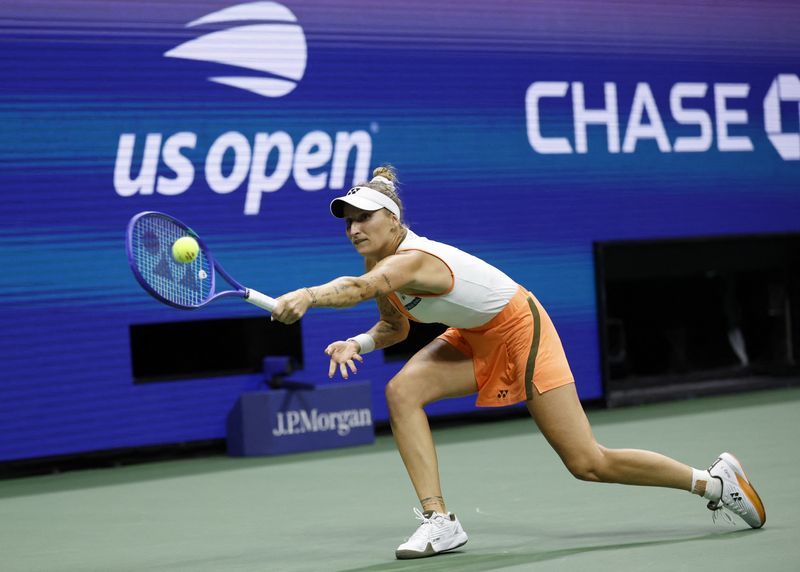
Former Wimbledon champion Marketa Vondrousova has escalated her fight against a four-year doping ban by appealing to the Court of Arbitration for Sport, marking a fresh chapter in one of tennis's most contentious recent disciplinary cases. The Czech player's suspension, handed down by the International Tennis Integrity Agency in June, stems from her refusal to submit a sample during an out-of-competition control test conducted at her home in December. The sport's highest judicial body confirmed receipt of her appeal on Tuesday, though no hearing date has yet been scheduled.
The circumstances surrounding Vondrousova's non-compliance have proven polarising within professional tennis. The integrity agency contended that the then-world number six failed to provide a sample when presented with a doping control notice by an officer who arrived at her residence at 8:15 p.m. demanding immediate testing. However, Vondrousova has consistently maintained her innocence and pushed back against what she describes as an invasive breach of her personal space. In statements released in April, she elaborated on her mental state at the time, explaining that she had reached a breaking point following months of accumulated physical and psychological strain.
What complicates the agency's case is that a sample Vondrousova did eventually provide just three days after the December 3 incident returned negative results, lending credence to her assertions that she had never engaged in doping. This detail carries significant weight in evaluating the severity of the punishment and whether the four-year ban proportionately reflects the violation. The arbitration process will likely place considerable emphasis on this finding as it reassesses whether the suspension was justified.
Vondrousova's career trajectory since the ban was imposed has been steeply downward. She has not competed since withdrawing from the Adelaide International in January, citing a shoulder injury that compounded her difficult position. Her world ranking has plummeted from number six to number 153, reflecting both the suspension and her forced absence from competition. The ban itself extends until June 21, 2030, when she will be 30 years old, raising questions about whether she can meaningfully resurrect her career even if successful in overturning the suspension.
Her achievements prior to this adversity underscore what is at stake. Vondrousova captured the Wimbledon singles title in 2023, representing the zenith of a career that had previously shown considerable promise. She reached the French Open final in 2019 and claimed a silver medal at the Tokyo Olympics in 2021, establishing herself as one of tennis's emerging talents. The suspension has interrupted what appeared to be an upward trajectory, freezing her competitive prime during years when most elite players are at their peak performance.
The appeal to CAS introduces crucial procedural considerations that extend beyond Vondrousova's individual case. The Court of Arbitration for Sport has become the final arbiter in athlete disputes against international federations, wielding authority to overturn, reduce, or uphold disciplinary decisions. CAS proceedings typically involve detailed examination of whether proper protocols were followed and whether evidence supports the original sanction. Vondrousova's representatives will likely argue that the manner in which the test was conducted, combined with the negative results from the sample she subsequently provided, warrants reconsideration of the proportionality doctrine.
The broader implications for professional tennis and its anti-doping framework are noteworthy for Southeast Asian audiences, particularly given the region's emerging tennis talent pool. The case raises questions about how strictly testing protocols should be enforced, the balance between athlete welfare and anti-doping integrity, and whether out-of-competition testing procedures adequately respect player privacy rights. These are matters that could influence how tennis authorities conduct testing across Asia-Pacific venues and academies.
Vondrousova's situation also reflects a larger tension within international sports regarding mental health and athlete autonomy. Her contention that the surprise visit at 8:15 p.m. constituted unwarranted invasion of privacy speaks to evolving conversations about athlete welfare in an era where competition and scrutiny have intensified. The CAS hearing will need to weigh legitimate anti-doping priorities against reasonable expectations of personal privacy that athletes, as individuals, retain.
The timeline of the appeal process remains uncertain, though CAS typically moves with deliberate speed rather than urgency. Vondrousova's team has initiated the formal challenge, but the composition of the arbitration panel, the submission of evidence briefs, and scheduling considerations will determine when arguments are heard and when a final determination emerges. During this interim period, she remains suspended and unable to compete professionally, a circumstance that deepens the stakes of the outcome.
For Malaysian and Southeast Asian tennis followers, the Vondrousova case demonstrates how even accomplished athletes remain vulnerable to career-altering disciplinary actions, sometimes arising from circumstances that involve legitimate questions about proportionality and procedure. Her appeal represents an opportunity for CAS to clarify standards that will likely resonate across professional tennis globally, influencing how testing protocols are applied and how athletes' rights are protected. The court's eventual decision could reshape anti-doping enforcement in ways that affect aspiring players throughout the region who compete at international levels.

