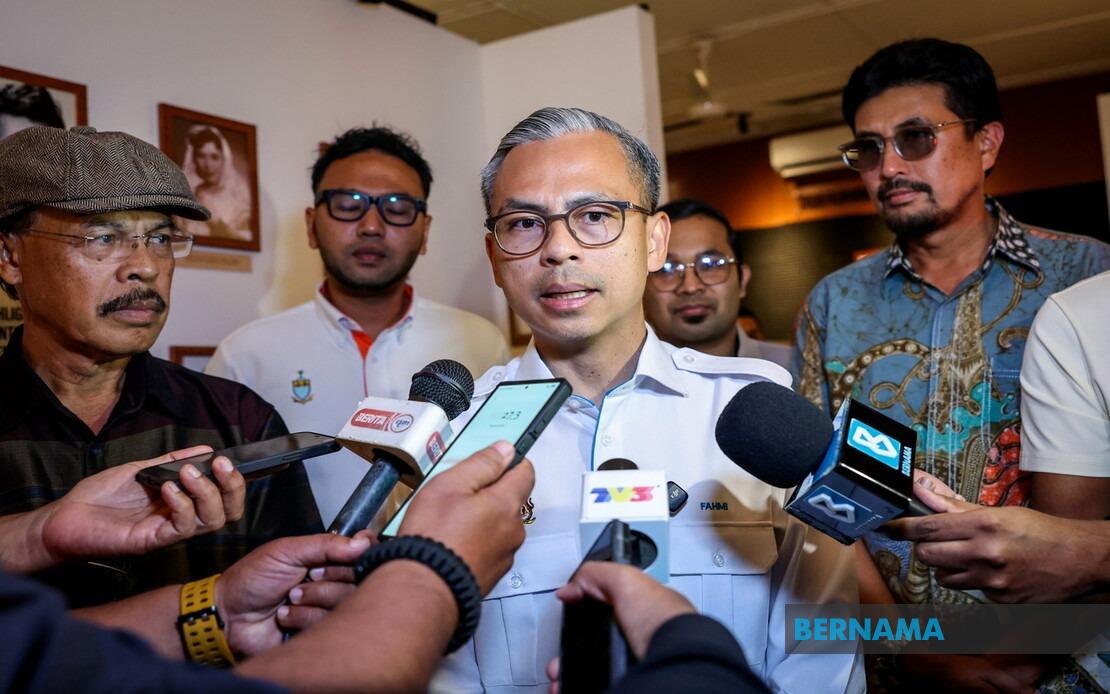
As Negeri Sembilan enters its state election campaign period, authorities are sounding an alarm over the rapid circulation of fabricated and recycled content on social media platforms that could distort public understanding of current events. Communications Minister Datuk Seri Fahmi Fadzil has issued an explicit warning to online users, particularly those eligible to vote in the state, to adopt a more critical approach when encountering news and claims shared across digital channels. The minister's appeal comes against a backdrop of increasing misinformation during a politically sensitive period, when voters are forming judgments that will directly influence electoral outcomes.
The proliferation of false narratives has become sufficiently acute that it warrants intervention from senior government officials. Fahmi emphasized that the circulation of outdated material repackaged as breaking news represents a particular challenge, alongside entirely fabricated statements designed to manipulate public opinion. When citizens encounter dramatic claims or provocative statements online, the minister advised, they should cross-reference such information against reporting by established news organizations before deciding whether to believe or amplify the content. This basic verification step, he suggested, could serve as a crucial filter against viral deception.
The reliance on messaging applications as a primary source of information has emerged as a critical vulnerability in Malaysia's information ecosystem. Many users receive politically sensitive content through WhatsApp, Telegram, and similar platforms without pausing to authenticate the source or check whether reputable news outlets have independently confirmed the story. This pattern of behaviour has allowed demonstrably false claims to achieve rapid distribution, reaching thousands of people before fact-checkers or journalists have opportunity to intervene. The structural advantage that false information possesses—its ability to provoke strong emotional reactions that encourage sharing—means that correction often arrives too late to prevent substantial audience exposure.
Fahmi called for media organizations to become more assertive in their role as custodians of public information. Rather than simply reporting on events as they unfold, newsrooms should proactively monitor social media channels, identify viral claims that lack verification, and publish explicit clarifications addressing the most widespread false narratives. This defensive approach to journalism recognizes that misinformation often outpaces legitimate news cycles, and that waiting for stories to develop organically may cede information space to unscrupulous actors. The minister's suggestion positions mainstream media as a necessary counterweight to the decentralized and unmoderated information flows that characterize social platforms.
Official data underscores the scope of the problem during this particular electoral moment. The Malaysian Communications and Multimedia Commission (MCMC) has received 16 reports documenting false news claims and related internet complaints since the Negeri Sembilan campaign commenced. While this figure may seem modest in absolute terms, it represents substantive official concern about information integrity during a period when voter decision-making is occurring. Each complaint typically indicates that misinformation has achieved sufficient visibility to warrant formal regulatory attention, suggesting that undetected false claims may be circulating at considerably higher volumes.
The timing of these warnings reflects the particular vulnerability of electoral periods to disinformation campaigns. During state elections, political actors across the spectrum possess heightened motivation to disseminate claims—accurate or otherwise—that advance their interests. Opposition figures may circulate allegations against the incumbent administration, while government-aligned actors may attempt to spread negative narratives about challengers. The intensity of this political messaging, combined with voters' elevated attention to political news, creates ideal conditions for false information to achieve influence. Voters who fail to verify claims against mainstream sources may incorporate misinformation into their electoral calculus, potentially affecting outcomes.
For Malaysian readers following the Negeri Sembilan election, the minister's guidance carries practical implications for how to navigate the information environment over the coming campaign period. When encountering eye-catching claims about scandals, policy positions, or candidate conduct on social media, the prudent approach involves checking whether established news outlets have reported the same story. If a significant claim appears only on messaging applications or obscure websites but is absent from mainstream newsrooms, this absence itself constitutes meaningful information. News organizations deploy journalists, editors, and fact-checkers specifically to authenticate claims before publication; their absence from a story often signals legitimate reasons for skepticism.
The broader Southeast Asian context matters for understanding this phenomenon. Across the region, misinformation has become a recurring feature of electoral and political moments, with countries from Thailand to Indonesia experiencing documented instances of false campaigns affecting outcomes. Malaysia's relatively developed media infrastructure and regulatory framework position it somewhat better than some neighbours to address these challenges, yet the persistence of the problem even in this context demonstrates its structural difficulty. The challenge stems partly from technological factors—platforms are designed to maximize engagement rather than verify accuracy—and partly from human psychology, which makes emotionally provocative claims more memorable and shareable than measured, factual reporting.
The MCMC's role in monitoring and responding to misinformation reports represents one institutional mechanism for addressing false content. The commission can investigate complaints, issue takedown orders for demonstrably false material, and work with platforms to limit distribution of verified misinformation. However, regulatory action functions most effectively as a complement to individual media literacy rather than a substitute for it. If each voter develops the habit of verifying claims through mainstream media, the volume of misinformation that reaches influential audiences would necessarily decline, reducing both the regulatory burden and the potential electoral impact of false narratives.
Fahmi's intervention also underscores a broader recognition within Malaysian government that information integrity represents a genuine policy concern requiring proactive attention. Rather than dismissing misinformation as an inevitable feature of digital life, officials are encouraging citizens to adopt more rigorous information practices and calling on established institutions to defend their role as trusted information sources. This positioning of mainstream media as a verification mechanism implicitly acknowledges that journalism, despite various criticisms and imperfections, generally applies systematic standards of accuracy that social media largely lacks. The minister's message, ultimately, amounts to an appeal for citizens to value institutional reliability during a period when misinformation could meaningfully affect political outcomes and public perception of electoral legitimacy.

