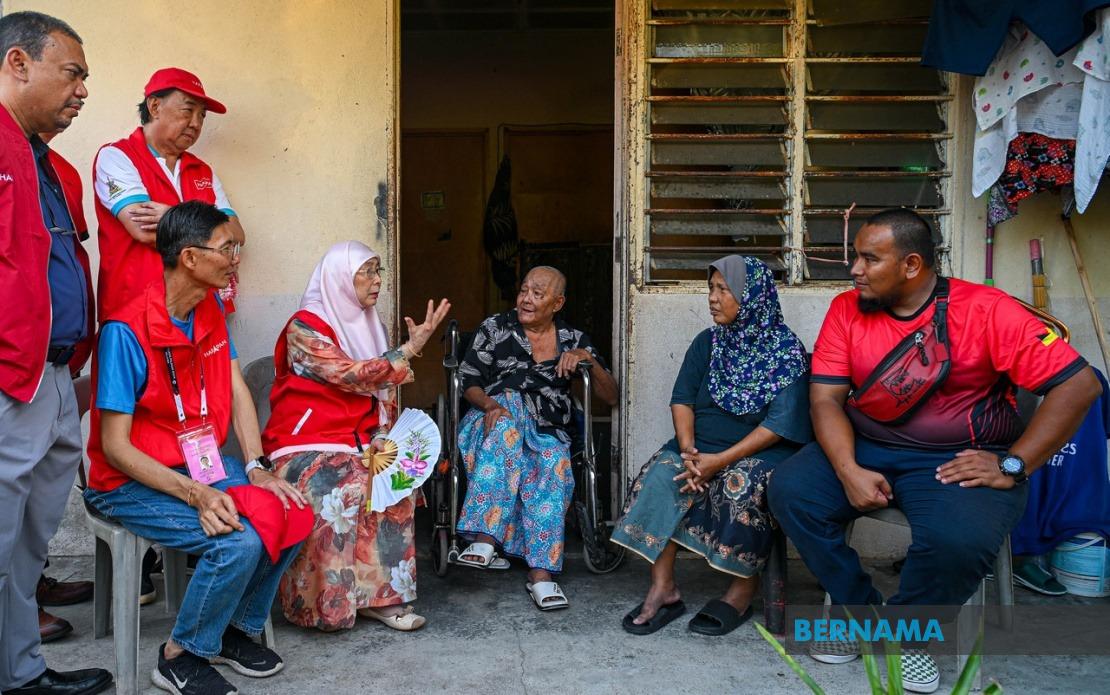
PKR president Datuk Seri Wan Azizah Wan Ismail made a compassionate house call in the Chuah constituency, spending quality time with an elderly couple grappling with chronic illness and financial strain. Accompanied by Pakatan Harapan candidate Datuk Yew Boon Lye, the veteran politician devoted roughly twenty minutes to the residence of Zaiton Hasan, aged 60, and her husband Paimin Sapari, aged 71, engaging them in direct conversation about their challenges and personal circumstances.
The couple's situation exemplifies the struggles facing many Malaysian pensioners and low-income households. Zaiton manages high blood pressure whilst Paimin contends with diabetes, both conditions requiring ongoing medical care and medication costs that strain household budgets. For households already operating on tight margins, chronic diseases compound financial difficulties and limit earning capacity. The couple's willingness to discuss their predicament openly with a prominent political figure underscores how vulnerable elderly Malaysians often seek attention and assistance from those in positions of influence.
Zaiton's emotional response to the visit reveals the depth of her family's isolation and the rarity of political engagement at the grassroots level. Speaking to Bernama after the encounter, she expressed profound gratitude and amazement that such a senior party leader would make time to visit their modest home. Her comment about it feeling like a dream, combined with her appreciation of the visitors' warmth and genuine concern, highlights how personal touches in politics can resonate deeply with ordinary citizens who frequently feel overlooked by the political establishment.
Wan Azizah's visit carries particular significance within the broader context of the 16th Negeri Sembilan State Election campaign. The Chuah constituency represents a competitive battleground where Yew Boon Lye faces a direct challenge from Pau Jeou Ching of Perikatan Nasional. By visibly demonstrating concern for vulnerable constituents, Pakatan Harapan seeks to reinforce its commitment to grassroots welfare and social responsibility—a key differentiation point in state elections where swing voters often decide outcomes based on perceived commitment to local issues.
Momentum-building exercises during election campaigns frequently take the form of community visits and welfare interactions. The strategic deployment of senior party figures to accompany local candidates serves multiple purposes: it elevates the candidate's profile, signals party resources and confidence, and generates ground-level human interest stories. However, beyond the electoral calculus, such visits occasionally result in tangible assistance for beneficiary families, as demonstrated by the wheelchair donation.
The Port Dickson People's Spirit Welfare Association contributed a wheelchair to Paimin during the visit, providing immediate practical relief for his mobility challenges. For elderly individuals with chronic health conditions, mobility assistance significantly impacts quality of life and independence. This donation, coordinated with the political visit, exemplifies how charitable and political efforts can intersect to deliver real benefits to vulnerable populations. Whether such support materialises through systematic follow-up or remains a one-time gesture often depends on the electoral outcome and post-election engagement levels.
The Chuah contest itself reflects broader competitive trends in Negeri Sembilan. The state election has traditionally seen close contests between major coalitions, with Pakatan Harapan and Perikatan Nasional trading strength across different constituencies. Straight fights such as the Chuah seat narrow voter choice but often generate higher turnout and more focused campaign intensity. The choice between Yew and Pau represents a clash of political visions regarding development priorities, economic management, and social welfare approaches at the state level.
Election Commission scheduling has set early voting for July 28, with the primary polling day on August 1. This compressed campaign timeline means candidates and parties must maximise impact through efficient deployment of resources and visibility. High-profile visits by senior figures become particularly valuable in this environment, generating media coverage and grassroots enthusiasm that can shift perceptions and mobilise supporters. For Pakatan Harapan, which has significantly invested in Negeri Sembilan, such engagement signals determination to retain or expand its presence in the state assembly.
For Malaysian voters generally, grassroots campaign activities provide windows into how political parties prioritise different constituencies and demographic groups. Whether engagement focuses on business owners, rural communities, or vulnerable elderly populations reveals implicit priorities and policy inclinations. Wan Azizah's specific choice to visit struggling elderly residents suggests Pakatan Harapan's broader social welfare orientation, though sceptics might note that such visits often receive amplified attention during election periods compared to non-campaign seasons.
Negeri Sembilan's state election holds significance beyond its immediate local impact. As a relatively marginal state where coalition control has shifted in recent electoral cycles, results influence national political narratives around momentum and regional strength. Strong Pakatan Harapan performance would reinforce coalition momentum heading into potential future national contests, whilst Perikatan Nasional gains would strengthen its claim to be a serious national-level alternative.
The human stories emerging from campaign trail visits, such as Zaiton and Paimin's encounter with Wan Azizah, often transcend partisan calculations and connect with voters' fundamental desire for political leaders to demonstrate understanding of ordinary people's struggles. Whether such demonstrations translate into sustained policy attention and improved circumstances for vulnerable groups remains a critical question for voters considering their electoral choices.

