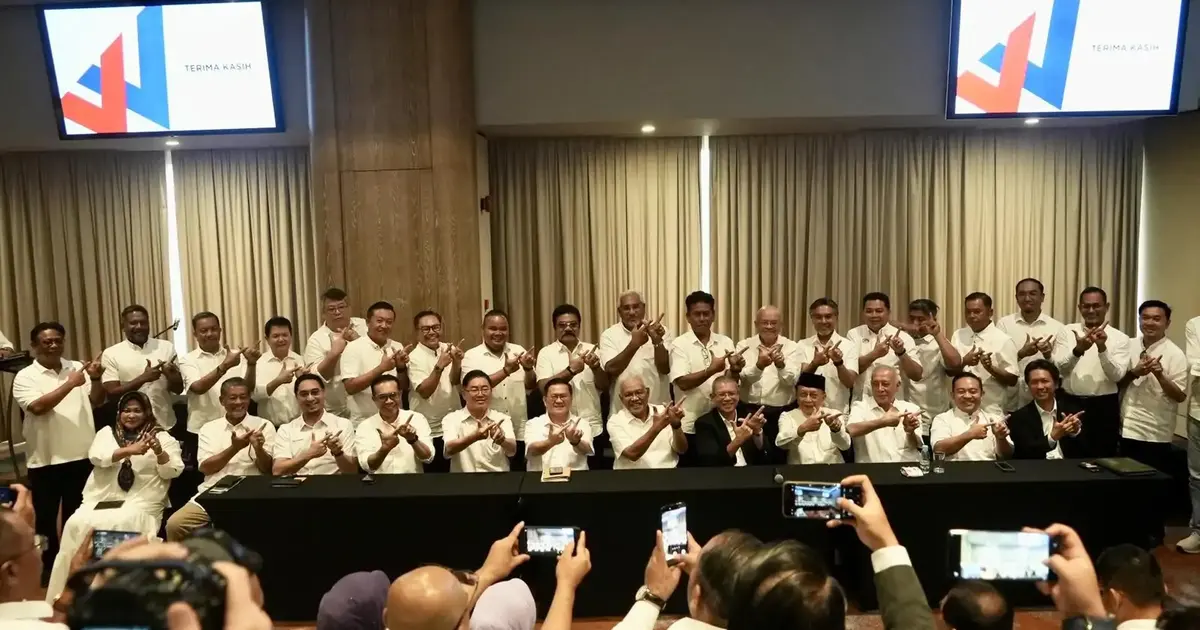
Perikatan Nasional's election director Sanusi has moved to settle the brewing internal dispute over Wawasan's membership, confirming that the newcomer's entry into the opposition coalition followed proper democratic procedures. The decision, reached through a majority vote by the Supreme Council, represents a definitive conclusion to weeks of debate within the bloc over whether the fledgling political entity should be welcomed into the alliance.
Bersatu's resistance to Wawasan's admission has been one of the most significant sources of tension within PN since the proposal gained traction. The party's objections were formally documented and presented before the Supreme Council, signalling serious reservations about expanding the coalition's membership. Nevertheless, Sanusi's clarification indicates that the council proceeded with the vote regardless of these concerns, prioritizing the broader consensus among other PN component parties.
This episode reveals the complex dynamics at play within the opposition coalition, where multiple parties with distinct political interests must negotiate decisions affecting the alliance's direction and composition. Wawasan's emergence as a political force has clearly prompted strategic recalculations among PN leaders, with some viewing the new party as a potential asset while others express caution about admitting untested political organizations into an already crowded field.
The use of majority voting in the Supreme Council demonstrates that PN operates with established governance structures, though the controversy surrounding this particular decision suggests disagreements persist about how consensus should be achieved on significant matters. Bersatu's public objections, despite losing the vote, highlight the party's willingness to stake out independent positions within the coalition rather than merely acceding to decisions made by larger players.
Understanding Wawasan's background proves essential to grasping why its admission has generated such friction. The party's political positioning, leadership credentials, and electoral prospects all factor into calculations about whether it strengthens or complicates PN's broader strategy. Whether Wawasan represents genuine political innovation or simply another attempt to fragment the political landscape remains contested, particularly given Malaysia's history of parties entering and exiting coalitions.
For Malaysian observers, PN's internal management of this decision carries implications for the coalition's overall cohesion and effectiveness. Successful alliances require mechanisms for resolving disputes while maintaining working relationships among member parties, yet visible disagreements about membership create questions regarding the bloc's ability to present unified positions during general elections or parliamentary proceedings.
Bersatu's position warrants particular scrutiny, as its objections may reflect legitimate concerns about admitting parties without established track records, or alternatively, reflect internal power dynamics within PN itself. The party's willingness to oppose decisions and have its objections formally recorded suggests it retains significant influence within the coalition structure, even when outcomes do not align with its preferences.
The Supreme Council's decision to proceed despite Bersatu's reservations establishes important precedent for future membership disputes. It indicates that PN operates according to majority-rule principles rather than requiring consensus or unanimity for significant decisions, an approach that streamlines decision-making but potentially accommodates minority dissatisfaction within the structure.
Wawasan's integration into PN now enters a practical phase, with the real test lying in whether the party can contribute meaningfully to the coalition's electoral performance and parliamentary effectiveness. The admission controversy may fade from public attention once the coalition moves forward with operational matters, though underlying tensions about coalition membership and party relationships could resurface in subsequent negotiations.
For Southeast Asian political analysts, PN's handling of this situation reflects broader regional patterns where opposition coalitions face constant pressure balancing inclusivity against organizational coherence. The necessity of admitting new parties to broaden electoral appeal conflicts with the risks associated with incorporating untested political actors, a tension evident across multiple democracies in the region.
Looking forward, Sanusi's public clarification aims to establish closure on the matter and signal that proper procedures were followed, thereby lending legitimacy to Wawasan's membership despite the controversy. This framing becomes important for PN's public messaging, particularly if questions about the decision's legitimacy resurface during election campaigns or parliamentary debates.
The incident ultimately demonstrates that while PN possesses institutional mechanisms for resolving disputes, the coalition's unity remains conditional and contested. Bersatu's opposition, even though unsuccessful, serves as a reminder that member parties retain agency within the structure and remain willing to voice disagreements when their interests diverge from majority positions.