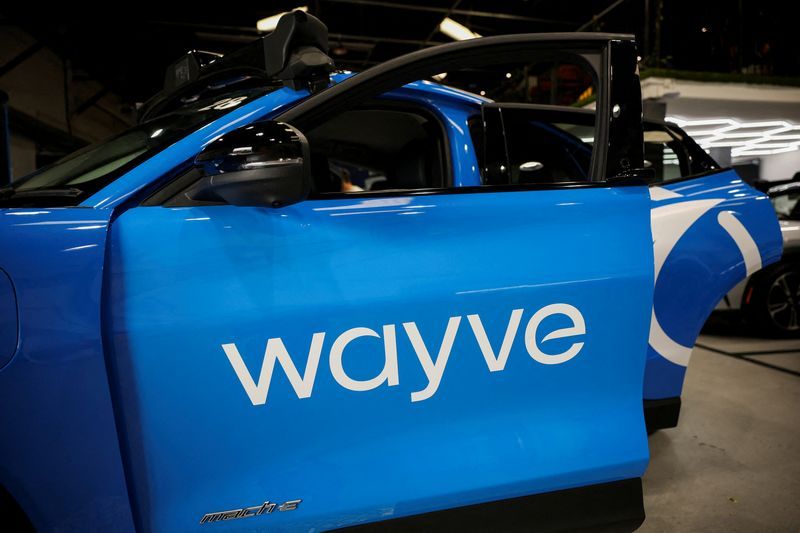
Wayve, a London-based autonomous-driving specialist, is capitalizing on intensifying investor enthusiasm for self-driving technology by securing backing from an impressive roster of strategic partners and financial investors. The company has accumulated $2.8 billion in funding, with contributions from technology giants and automotive heavyweights including Nvidia, Mercedes-Benz, and Nissan. Most recently, in June, Wayve announced a significant deployment agreement with Stellantis, the multinational automotive manufacturer that owns the Jeep brand, to integrate its autonomous system into robotaxis destined for Uber's ride-hailing platform. This sequence of partnerships signals growing confidence in Wayve's technological approach at a time when the autonomous vehicle sector is attempting to recover from decades of overpromising and underdelivering.
At the heart of Wayve's competitive proposition is an artificial intelligence methodology known as end-to-end machine learning, which represents a fundamentally different philosophy from earlier autonomous-driving systems. Rather than relying on a layered approach combining traditional coding, high-definition mapping, and predetermined rule-sets to govern vehicle responses in specific scenarios, Wayve's system processes raw sensor data directly and translates it instantaneously into driving decisions through neural networks. This mimics the intuitive decision-making process that human drivers employ, enabling the vehicle to navigate complex and unpredictable road conditions by pattern recognition rather than explicit programming. The approach has gained traction in the sector following Tesla's shift to end-to-end learning several years ago, though Wayve's system operates distinctly from Tesla's camera-only sensor architecture.
The critical distinction between Wayve's methodology and Tesla's lies in sensor flexibility and licensing potential. Wayve has architected its system to function with diverse sensor configurations and multiple AI chip manufacturers, a feature that fundamentally expands its commercial applicability. While Tesla's vision-only approach remains proprietary and difficult for other automakers to adopt wholesale, Wayve's hardware-agnostic design positions it as a licensable platform that established vehicle manufacturers can integrate into their own models and platforms. This strategic architecture reflects CEO Alex Kendall's articulated vision of democratizing autonomous driving across the industry. The 33-year-old New Zealander, who founded the company in 2017 immediately after completing his doctoral research in AI deep learning at Cambridge University, has explicitly stated his ambition to make full self-driving accessible to any vehicle brand in any global market.
The autonomous-driving industry has experienced a significant recalibration following the dramatic expansion of Alphabet's Waymo over the past two years. After more than a decade of development and testing, Waymo now operates paid public robotaxi services in approximately a dozen cities, demonstrating that commercial autonomous ride-hailing is no longer purely theoretical. This tangible progress has rekindled investor confidence in the broader sector after years of missed timelines and exaggerated claims. Interestingly, end-to-end machine learning—an approach that seemed marginal and experimental barely ten years ago when researchers like Kendall were working on it—has now become increasingly mainstream. Multiple autonomous-driving developers are incorporating end-to-end learning elements into their systems, suggesting a sector-wide shift toward this methodology.
Yet this technological transition introduces a significant regulatory and practical challenge that the industry has not fully resolved. End-to-end AI systems function in ways that defy easy human interpretation, creating what engineers and regulators describe as a "black box" problem. Unlike traditional rule-based systems where engineers can pinpoint precisely why a vehicle selected a particular path or executed a specific maneuver, end-to-end neural networks make decisions through processes that remain opaque even to their designers. This interpretability gap raises legitimate concerns among conservative automakers and safety regulators who prefer transparency in safety-critical systems. The earlier generation of autonomous-driving platforms, though more cumbersome and requiring extensive local road mapping and coding, at least offered clear documentation of the decision-making logic.
Wayve's engineering team has developed what they characterize as a safety-centric response to this interpretability challenge. Their system generates what the company terms a "safety map" that visualizes the traffic environment and identifies viable driving paths in real time. The theoretical underpinning of this approach rests on an assertion that traditional, rule-based safety logic becomes vulnerable in genuinely novel or rare driving scenarios. According to Wayve's vice president of AI, Vijay Badrinarayanan, conventional programming-intensive systems struggle when confronted with situations for which explicit rules have not been anticipated, causing the safety architecture to become "brittle." By contrast, human drivers demonstrate resilience in unfamiliar situations by defaulting to conservative adaptation strategies when uncertainty emerges. Wayve's end-to-end system, the company argues, captures this adaptive behavior more faithfully than predetermined conditional logic.
However, this argument faces skepticism from Waymo, which has itself adopted end-to-end learning yet continues to layer it with more conventional, rules-based safety systems derived from software coding and extensive mapping. When questioned about this hybrid approach, Waymo representatives stated explicitly that "end-to-end models aren't enough to guarantee safety at scale," suggesting that the technology remains insufficient as a standalone safety framework. This position reflects the extreme caution required when deploying systems responsible for human lives in public spaces. Nissan, one of Wayve's early deployment partners, has adopted a posture of measured enthusiasm combined with careful technical scrutiny. Eiichi Akashi, Nissan's chief technology officer, has characterized Wayve's system as the "most advanced" in its category but has acknowledged his team's difficulty in transparently understanding how the system arrives at its driving decisions—a fundamental concern for any automaker contemplating deployment on public roads in Japan.
Nissan's planned deployment timeline reflects this caution. The Japanese automaker intends to integrate Wayve's system into the Elgrand, a people-mover van, within the fiscal year ending March 2028, representing a phased commercial introduction rather than a rapid rollout. This measured approach aligns with the industry's broader recognition that autonomous systems require extensive real-world validation before scaling. Wayve's claimed advantage in market expansion stems from its assertion that it can deploy successfully in new geographic markets without the laborious preliminary work of road mapping and local coding that traditional approaches demand. The company claims successful testing across hundreds of cities globally without preliminary customization, a capability that theoretically enables rapid international expansion. The startup maintains significant operational hubs in Tokyo, Stuttgart, and Vancouver, positioning itself to serve Asian, European, and North American markets simultaneously.
Academic experts in autonomous systems have offered nuanced assessments of end-to-end learning's viability and safety profile. Siddartha Khastgir, a professor of safe autonomy at the University of Warwick in England, has suggested that end-to-end approaches should theoretically enable faster commercial development and deployment cycles than traditional methodologies. However, Khastgir has cautioned against assuming that one technological paradigm inherently supersedes the other in safety terms. Phil Koopman, a Carnegie Mellon University computer-engineering professor and recognized expert in autonomous-vehicle safety, has similarly argued that Wayve's approach to handling unusual traffic scenarios represents one viable methodology among several potentially successful alternatives. Both experts have emphasized that comprehensive deployment of autonomous systems across major markets will likely require innovations beyond current approaches.
The tension between technological innovation and practical deployment timelines remains central to the autonomous-driving sector's evolution. Wayve's funding success and strategic partnerships demonstrate that major automakers and investors perceive genuine commercial potential in the company's approach. Yet the cautious positioning of established automakers like Nissan, combined with the explicit hedging evident in Waymo's continued reliance on hybrid safety architectures, suggests that industry participants remain unconvinced that end-to-end learning alone provides sufficient assurance for full autonomous operation. The next several years will determine whether Wayve's architectural choices prove vindicated by real-world performance metrics or whether the sector ultimately converges on hybrid approaches that combine end-to-end learning with traditional safety verification methods. For Malaysian and Southeast Asian readers, this technological competition carries implications for the eventual adoption timelines and safety standards governing autonomous vehicles in the region, as international standards and best practices will likely reflect whichever approaches prove dominant globally.

