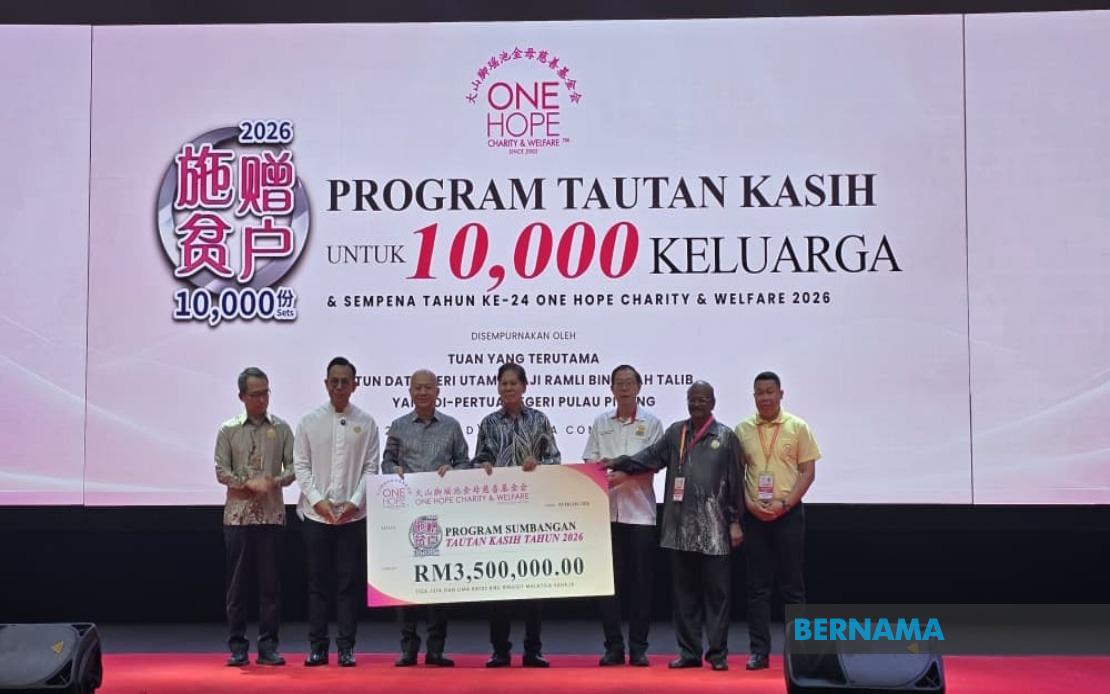
Minister of Entrepreneur Development and Cooperatives Steven Sim Chee Keong has underscored the critical importance of robust welfare frameworks in ensuring that Malaysians facing hardship receive adequate protection and assistance. Speaking at an event in Butterworth, Sim emphasised that a nation's advancement cannot be measured solely by economic indicators, but must equally reflect its commitment to safeguarding the wellbeing of citizens who encounter life's inevitable challenges. His remarks underscore a growing recognition within Malaysia's policy establishment that social safety nets form the bedrock of inclusive development and national stability.
The minister articulated a fundamental principle: prosperity and progress lose their meaning if not accompanied by tangible measures to protect those experiencing difficulty. Acknowledging that life circumstances vary dramatically across society, Sim argued that welfare interventions serve not merely as charity but as essential infrastructure that reflects a nation's values and maturity. This framing rejects the notion that welfare is a burden or temporary measure, instead positioning it as integral to the social contract between government and citizens. For Malaysian policymakers, this perspective carries implications for budget allocation and legislative priorities as the country navigates post-pandemic economic recovery.
Sim highlighted the role of welfare programmes in fostering social cohesion across Malaysia's diverse population. He contended that such initiatives build what he termed a "compassionate society," where solidarity transcends racial, religious, and political divides. This emphasis on unity through welfare reflects broader concerns about maintaining social harmony in a multicultural nation where inequality can threaten communal bonds. By connecting welfare policy to national unity, Sim positioned support for vulnerable communities as a governance imperative rather than a discretionary benevolence.
One Hope Charity emerged as a centrepiece example of effective welfare delivery. The organisation, which originated as a modest initiative in Bukit Mertajam, has evolved into one of Penang and Malaysia's most substantial charitable bodies. Its scale is remarkable: the charity distributes at least RM20 million annually to vulnerable communities, a figure that underscores both the magnitude of need and the potential for coordinated non-governmental action to address social challenges. The presence of Penang Governor Tun Ramli Ngah Talib and his wife, Toh Puan Raja Noora Ashikin Raja Abdullah, at the event reflected official recognition of the organisation's significance within the state's social infrastructure.
The charity's operational model demonstrates pragmatic approaches to welfare delivery. Rather than adopting a one-size-fits-all approach, One Hope Charity provides assistance tailored to individual circumstances. During the year referenced, more than 10,000 families received support comprising essential goods and daily necessities valued at approximately RM320 per household, supplemented by RM200 in cash to address specific family needs. This combination of in-kind and cash assistance recognises that vulnerability manifests differently across communities, and that effective welfare requires flexibility in provision.
One Hope Charity's track record between 2021 and 2025 reveals substantial investment in health-related interventions. The organisation has channelled over RM100 million toward medical treatment assistance, hospital support, medical equipment provision, and broader welfare programmes. This emphasis on healthcare reflects the reality that medical crises represent a primary pathway into poverty for Malaysian families, and that preventive welfare investment can mitigate catastrophic household impacts. The healthcare focus also aligns with national health priorities and demonstrates how community organisations can complement government service delivery.
Looking forward, One Hope Charity is planning significant expansion of its welfare footprint. In anticipation of the organisation's 25th anniversary in 2026, initiatives worth approximately RM30 million are being developed. These include expanded medical assistance programmes and additional welfare schemes not fully detailed in available reports. Such planning indicates sustained commitment to scaling welfare interventions at a time when inflationary pressures and economic volatility have intensified household financial stress across Malaysia.
The invocation of One Hope Charity as a welfare model carries important implications for Malaysia's broader social policy framework. The organisation's success in mobilising business networks and private donors suggests that government-led welfare need not operate in isolation, and that public-private collaboration can extend the reach and efficiency of assistance programmes. However, it also raises questions about the sustainability and equity of relying on philanthropic initiatives to address structural poverty and vulnerability. While One Hope Charity fills critical gaps, the sheer scale of its operations—distributing RM20 million annually—underscores that private charity alone cannot substitute for comprehensive public welfare systems.
Sim's remarks reflect a policy environment increasingly receptive to welfare strengthening, particularly following the economic disruptions of recent years. The COVID-19 pandemic exposed vulnerabilities in Malaysia's social safety net and demonstrated the speed with which economic shocks can create widespread hardship. As the nation recovers, policymakers appear cognisant that sustainable growth requires concurrent investment in social protection. This represents a subtle but significant shift from earlier austerity-focused approaches, acknowledging that welfare spending functions not as a drain on resources but as an investment in human capital and social stability.
The emphasis on welfare provision transcends traditional partisan lines in Malaysian politics. The presence of senior Penang state officials alongside national-level ministers at the One Hope Charity event suggests bipartisan recognition of welfare's importance. This convergence creates potential policy windows for welfare expansion, whether through enhanced government transfers, expanded healthcare coverage, or strengthened support for education and vocational training. For vulnerable Malaysians, such cross-party consensus offers hope that welfare enhancements might survive changes in government.
Conversely, the reliance on organisations like One Hope Charity highlights gaps in formal welfare architecture. Malaysia's existing Bantuan Keluarga Malaysia and other schemes provide baseline support, but targeted assistance programmes remain fragmented and often inadequate to address compound vulnerabilities. Sim's calls for strengthened policies therefore carry implicit acknowledgment that current frameworks require refinement. This includes streamlining access to benefits, increasing transfer values, and ensuring coverage of populations currently excluded from formal schemes.
The Malaysian context adds urgency to welfare strengthening. The country's income inequality has widened in recent years, with the bottom 40 percent of households experiencing stagnant wage growth and rising living costs. Regional competition for investment and talent has intensified wage pressures in lower-skilled sectors. Simultaneously, Malaysia's ageing population will place growing demands on healthcare and elderly support systems. Against this backdrop, Sim's emphasis on welfare is not merely compassionate rhetoric but a response to genuine structural challenges requiring policy attention.
As Malaysia charts its development trajectory, the lessons from One Hope Charity's success offer both encouragement and caution. The encouragement lies in demonstrating that organised, well-resourced welfare initiatives can materially improve vulnerable households' circumstances and strengthen social cohesion. The caution lies in recognising that non-governmental efforts, however substantial, cannot replace systematic government commitment to universal welfare provision. True strengthening of welfare policies will require sustained budget allocation, legislative reform, and institutional capacity-building across government agencies responsible for social protection. Minister Sim's articulation of welfare's centrality to national progress represents an important rhetorical foundation; translating this into concrete policy measures remains the ongoing challenge.

