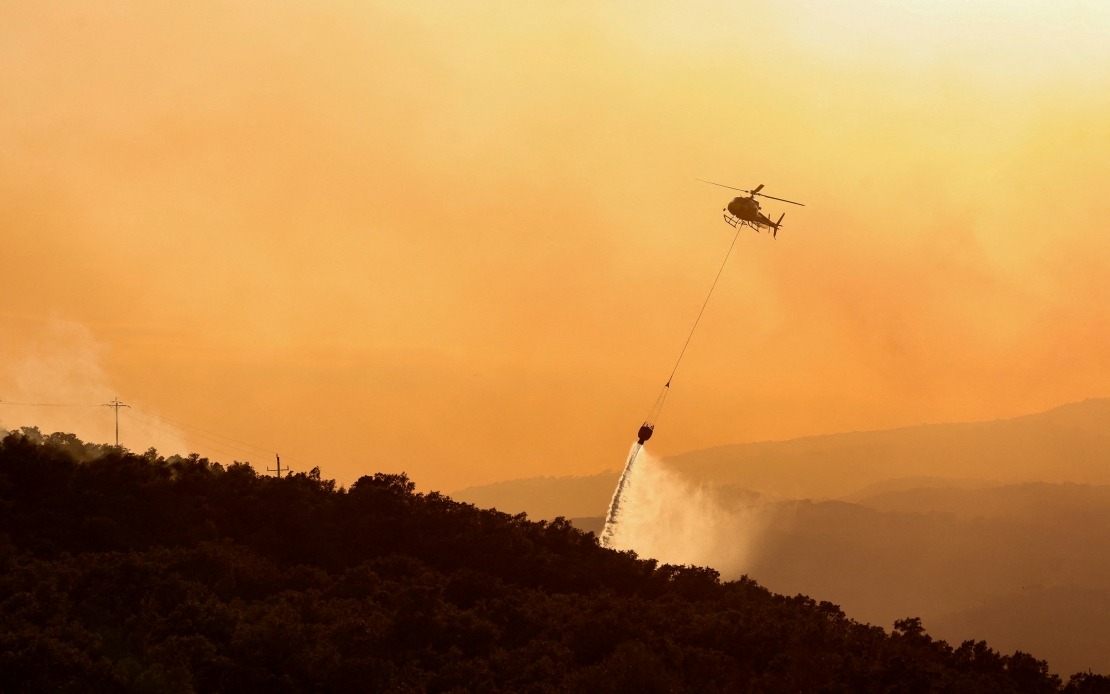
Communities across the western United States have scrapped or severely restricted Fourth of July fireworks celebrations this week, forced to prioritise fire safety over commemoration as the nation marks its 250th founding anniversary. The unprecedented cancellations underscore how environmental conditions are reshaping traditional American celebrations, a pattern with implications for climate vulnerability that extends far beyond the US and resonates with Southeast Asian nations increasingly confronting similar extreme weather challenges.
The scale of the wildfire crisis is staggering. A national incident report released on Friday documented 41 uncontained large fires burning across the country, placing the nation at its second-highest wildfire preparedness alert level. This elevated status reflects not merely isolated incidents but a systemic threat that has reshaped holiday planning across multiple states and affected millions of residents contemplating Independence Day festivities.
Utah presents perhaps the most alarming picture of the drought emergency. State drought monitoring data reveals that 94 per cent of the state is currently experiencing severe or extreme drought conditions—a figure that fundamentally constrains any use of open flames. In response to these alarming conditions, Utah Governor Spencer Cox issued a temporary statewide restriction on fireworks, though the measure permits local governments to designate limited zones where controlled displays may proceed through July 5. This delegated approach reflects the patchwork nature of fire management across western states, where local conditions vary dramatically.
State officials in Utah characterise current wildfire behaviour as aberrant. Jamie Barnes, the state forester, described conditions as "unlike anything we've seen in recent memory," noting that fires are spreading with unprecedented velocity compared to historical patterns. The statistics validate this concern: Utah has already burned more land in 2024 than during the entire previous four-year period combined, a trajectory that suggests both worsening baseline conditions and potentially more volatile fire behaviour.
Colorado faces similarly dire circumstances. The state's Division of Fire Prevention and Control reported more than a dozen active wildfires burning across Colorado this week alone, triggering cancellations in multiple communities. Cities including Durango, Vail, and Pueblo have all abandoned their traditional Fourth of July fireworks programmes. Vail's decision marks the sixth cancellation since 1998, though officials emphasise that this year's fire distribution across the state is distinctly more widespread than in previous crisis years, including the cancellation in 2021.
Colorado Springs, the state's second-largest city, eliminated all Fourth of July fireworks displays this week after evaluating extreme fire danger levels. Fire department officials determined that current risk conditions parallel circumstances preceding the 2012 Black Forest Fire, which destroyed over 300 homes and became one of the costliest wildfires in state history. Mayor Yemi Mobolade acknowledged the disappointment in a statement, recognising that cancelling celebrations during a national anniversary year compounds the cultural impact of fire restrictions.
The wildfire restrictions extend well beyond Colorado and Utah. Wyoming, Nebraska, and New Mexico have all implemented fireworks limitations driven by drought severity or existing fire activity, creating a multi-state zone where traditional Fourth of July customs have become incompatible with current environmental conditions. Notably, most professional fireworks displays operated by municipalities or commercial entities are still proceeding as scheduled, suggesting a bifurcation between amateur and professional pyrotechnic use in fire risk calculations.
Weather forecasts indicate heightened danger ahead. The national incident report warned that strong winds combined with extremely low humidity would elevate fire danger substantially across southwestern states through the holiday period. Simultaneously, much of eastern and central America faces dangerously elevated temperatures, with heat indexes in some regions reaching 46 degrees Celsius—conditions that compound fire risk by creating volatile atmospheric conditions alongside extreme heat stress.
Scientific research substantiates the connection between fireworks and wildfire risk. Philip Higuera, a fire ecology specialist at the University of Montana, explained to the Durango Herald that Independence Day fireworks demonstrably contribute to increased wildfire ignitions on a single concentrated day. "There are a lot of ignitions added to the landscape on that single day," he noted, capturing how holiday celebrations concentrate fire sources across vulnerable terrain.
Data from Lauren Lowman, an associate professor at Wake Forest University, provides quantitative perspective on this hazard. Historical records show approximately 15,000 wildfires were recorded specifically on July 4 across the United States between 1992 and 2020—a striking pattern of concentrated ignition risk. More broadly, research demonstrates that nearly half of all western US land burned since 2001 occurred during or immediately following heat waves, linking climatic extremes to catastrophic fire behaviour. Additionally, fireworks nationwide caused an estimated 32,000 fires in 2023 alone, illustrating the cumulative ignition burden that holiday celebrations impose on already vulnerable landscapes.
For Malaysian and Southeast Asian observers, these developments illuminate the trajectory of climate-driven disruption to civil infrastructure and cultural practices. As environmental extremes intensify globally, established holiday traditions and public celebrations increasingly conflict with safety imperatives. The cascading cancellations across the western US demonstrate how climate impacts extend beyond direct physical damage to reshape social calendars and community rituals—a pattern that regions like Malaysia should anticipate as precipitation patterns shift and extreme weather events become more frequent and severe.
The 250th anniversary celebrations proceed nationally, but the western cancellations signal a new climate reality where environmental conditions increasingly override historical customs. This reshaping of public life around fire danger reflects adaptation to altered baselines—a process that will likely accelerate across vulnerable regions worldwide as climate impacts intensify.

