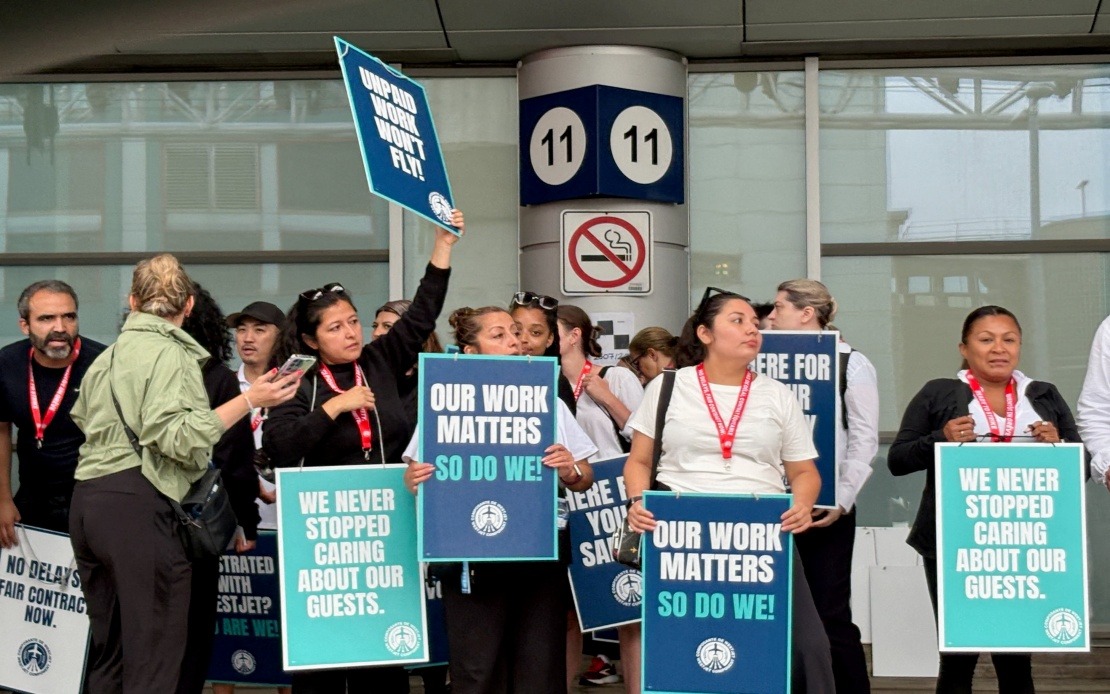
Canada's second-largest airline WestJet has faced significant operational disruption as more than 4,000 flight attendants initiated strike action on Sunday, effectively cancelling approximately 600 daily flights and creating substantial travel chaos for around 250,000 passengers across the country. The timing of the labour action compounds the airline's difficulties, coinciding with Monday's civic holiday in Canada, traditionally one of the busiest travel periods of the year. The strikes are projected to inflict millions of dollars in losses on WestJet's operations during what would ordinarily be a lucrative weekend for the carrier.
At the heart of this labour dispute lies a fundamental disagreement over compensation structure, particularly regarding what workers describe as unremunerated ground work performed during the critical periods immediately preceding and following actual flights. Flight attendants argue they should receive payment for these essential pre-flight preparations and post-flight duties, claiming they perform substantial work before passengers board and after they disembark. This compensation issue has festered throughout nearly eleven months of formal contract negotiations, gradually deteriorating the relationship between management and its workforce.
The airline industry has shown movement on this issue in recent years, with Delta Air Lines pioneering compensation for ground work when the American carrier implemented such provisions in 2022. Subsequently, Air Canada, WestJet's largest competitor in the Canadian market, established a precedent by incorporating ground work compensation into their February contract renewal with flight attendants. These developments have raised employee expectations across the sector and strengthened the conviction among WestJet's workforce that similar arrangements should be standard rather than exceptional.
Under Air Canada's newly negotiated agreement, flight attendants receive compensation amounting to up to 70 per cent of their regular hourly rate for the hour preceding aircraft departure, establishing a benchmark that WestJet's employees believe their employer should match. Currently, WestJet flight attendants earn between $28.88 and $53.61 per credit hour, depending on experience and seniority, but this compensation structure does not account for ground preparation work that unions argue substantially extends their working hours.
The Canadian Union of Public Employees, representing the striking flight attendants, has placed responsibility for the labour action squarely on WestJet's shoulders. Union representative Alia Hussain indicated in a formal statement that the strike would not have occurred had management demonstrated genuine responsiveness to worker concerns throughout the extended bargaining period. Hussain's remarks underscored the union's position that WestJet had dismissed legitimate employee demands despite months of discussion, leaving industrial action as the only viable mechanism to break the negotiating deadlock.
Federal oversight of the dispute has begun to emerge, with Jobs Minister Patty Hajdu expressing disappointment via social media that the two parties had failed to produce an agreement despite continued negotiation efforts. Her intervention signals government concern about the broader economic and social implications of the strike, particularly given its impact on Canadian travellers during a peak holiday period. The minister's involvement suggests potential federal mediation efforts may follow if the situation remains unresolved.
WestJet's leadership acknowledged the substantial disruption caused by the strike while defending its position in the dispute. Chief Executive Officer Alexis von Hoensbroech told The Canadian Press that the airline regretted the circumstances that had forced the labour action, recognising the cascading consequences for passengers, employees, and communities dependent on the carrier's services. The airline has committed to providing refunds to affected passengers, mitigating financial losses for travellers whose plans have been disrupted by the cancelled flights.
From a regional perspective, this Canadian labour dispute reflects broader trends affecting the aviation sector across North America and beyond. Airlines everywhere face intensifying pressure from workers demanding recognition of all labour performed, not merely flight hours, as compensation-worthy activity. The precedent established by Air Canada demonstrates that airlines can absorb ground work compensation into their cost structures, potentially creating expectations throughout the industry that similar provisions become standard practice. For Malaysian and Southeast Asian observers, this case illustrates how international aviation labour standards are gradually shifting, with implications for local carriers should they employ substantial numbers of cabin crew.
The economic impact of WestJet's strike extends beyond the airline itself. Hotels, restaurants, car rental agencies, and tourism operators in destinations served by the carrier face reduced bookings and revenue loss during what should have been a profitable holiday period. Businesses depending on reliable air transportation for connecting supply chains and personnel movement experience disruption costs that may dwarf the airline's own losses. The ripple effects of labour disruptions in critical infrastructure sectors such as aviation underscore why governments often become involved in protracted negotiations.
The resolution of the WestJet dispute will likely establish important precedents for future labour negotiations within Canadian aviation. Should the union successfully secure ground work compensation, other airlines will face pressure from their own cabin crew to negotiate similar provisions. Conversely, if WestJet successfully resists these demands, unions may intensify efforts, potentially leading to additional strikes. The industry balance of power, shaped partly by post-pandemic recovery dynamics and passenger demand levels, will determine which outcome emerges.
For international observers and especially Southeast Asian aviation stakeholders, the WestJet situation demonstrates the growing sophistication of airline unions and their willingness to deploy strikes during high-impact periods to achieve negotiating objectives. As airlines globally reckon with rising labour costs and changing worker expectations, the compensation frameworks established through these high-profile disputes become reference points for subsequent negotiations worldwide. The outcome of the WestJet strike will therefore resonate throughout the international aviation industry, including impacts on Southeast Asian carriers operating long-haul routes where cabin crew represent significant operational costs.

