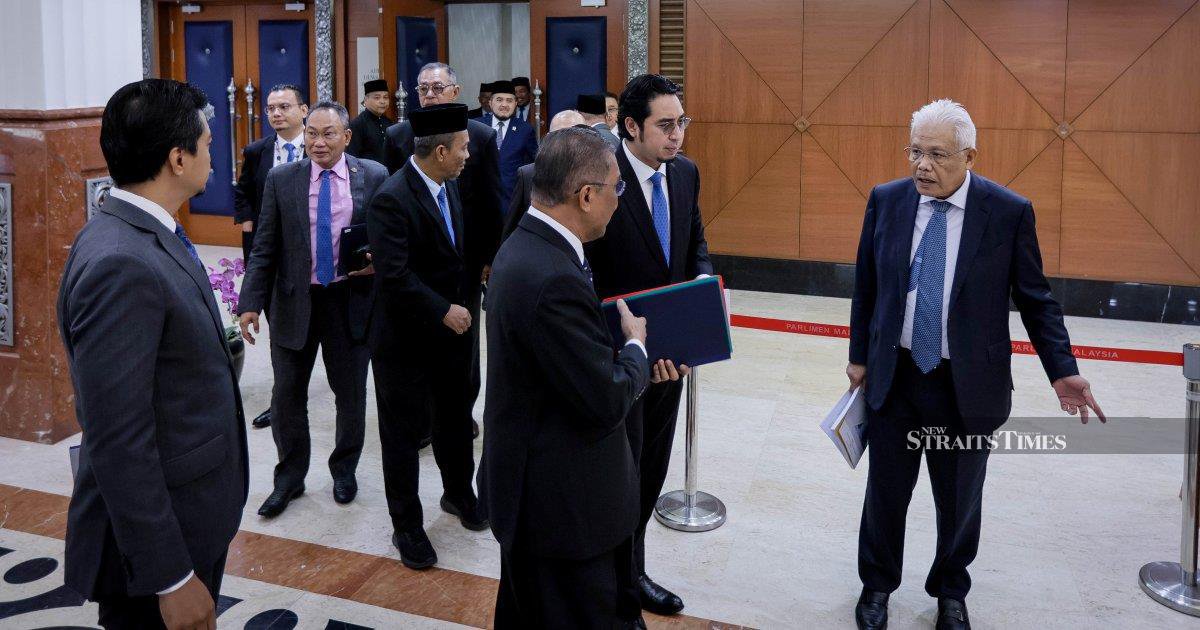
The most recent exodus from the parliamentary chamber over the Royal Commission of Inquiry report into Tabung Haji management has once again highlighted a persistent paradox in Malaysian politics: the same act of walking out carries entirely different meanings depending on which side of the aisle employs it. What opposition members characterise as principled objection to institutional failures, their government counterparts dismiss as performative grandstanding designed to grab headlines rather than advance substantive policy dialogue.
This contradiction cuts to the heart of how Malaysia's competing political camps conceptualise dissent within legislative spaces. When the opposition stages a walkout, its members typically frame their departure as a forceful rejection of perceived wrongdoing, corruption, or institutional mismanagement. In this framing, the walkout becomes a statement of moral gravity—an acknowledgement that normal parliamentary procedures and debate have proven inadequate to address the gravity of the situation at hand. The tactic suggests that the matter under discussion has transcended routine political disagreement and entered territory where stronger gestures are warranted.
Conversely, those remaining in the chamber often interpret the same action as a retreat from the hard work of legislative engagement. Government-aligned members and their allies argue that walkouts represent an abandonment of parliamentary responsibility, converting the chamber into a mere backdrop for theatricality rather than a forum for serious deliberation. From this perspective, the departing legislators forfeit their opportunity to challenge government positions through formal amendment procedures, question-and-answer sessions, and the documented record of parliamentary debate that carries legal and constitutional weight.
The Tabung Haji RCI report provided a particularly acute testing ground for these competing interpretations. The pension fund, which holds savings for millions of Malaysians preparing for pilgrimage to Mecca, has faced sustained scrutiny over investment decisions and financial management. An independent inquiry into its operations carries profound significance for public trust and individual financial security. The opposition's decision to abandon proceedings in protest suggested that the government's handling of the report's findings fell short of what accountability demands.
Yet examining the walkout phenomenon more broadly reveals structural incentives that shape both the decision to depart and the reaction it generates. In a parliamentary system where the government maintains a reliable working majority, opposition parties face severe constraints on their legislative influence. They cannot block government bills, cannot force substantive amendments to controversial measures, and often find themselves outnumbered in committee proceedings. Under these conditions, walkouts represent one of the few available tools for generating public attention and signalling disapproval that extends beyond parliamentary walls. The tactic becomes attractive precisely because normal channels prove insufficient.
From the government's perspective, this dynamic inverts the calculus entirely. When the ruling coalition commands numerical superiority, remaining in the chamber and continuing to legislate demonstrates strength and purpose. Opposition departures, viewed through this lens, appear as concessions of defeat—silent admissions that the government's position will prevail regardless. The walkout thus becomes evidence of the opposition's impotence rather than its principle, a visual confirmation that the government will advance its agenda with or without minority support.
The media dynamics surrounding these incidents further entrench the contradiction. Journalists and commentators face their own interpretive challenge: does photographing empty opposition benches constitute coverage of legitimate protest or amplification of political theatre? The visual spectacle of an exodus inevitably generates stories and social media attention. This publicity cuts both ways. Opposition members can point to media coverage as evidence their message reached the public beyond parliamentary walls. Yet the same coverage invites criticism that the primary objective was generating headlines rather than advancing substantive legislative goals.
Southeast Asian democracies confront these tensions with varying approaches. Some parliaments have experimented with enhanced opposition speaking rights or committee structures that amplify minority voices. Others have established clearer protocols around boycotts and walkouts, attempting to distinguish between legitimate protest and obstructive tactics. Malaysia's parliamentary tradition offers limited guidance on when such tactics are defensible, leaving the question perpetually subject to partisan interpretation.
The broader challenge extends beyond the immediate question of whether any particular walkout was justified. Parliamentary systems depend on shared understandings about acceptable conduct within legislative chambers. When ruling and opposition coalitions apply fundamentally different standards to identical behaviour, they erode the institutional norms that make democracy functional. If walkouts are legitimate protest when one's own side employs them but illegitimate theatre when opponents do so, parliament has been reduced to an arena where rules shift based on partisan interest rather than principle.
Moving forward, Malaysian politicians might benefit from explicit conversations about what circumstances justify departing the chamber and what procedural alternatives exist for expressing dissent. Such discussions need not constrain legitimate protest, but could establish common ground about when the tools of parliamentary procedure have genuinely been exhausted. Without this framework, every walkout will remain locked in the same cycle: one side celebrating conscience, the other denouncing theatre, while the public struggles to discern which interpretation applies.

