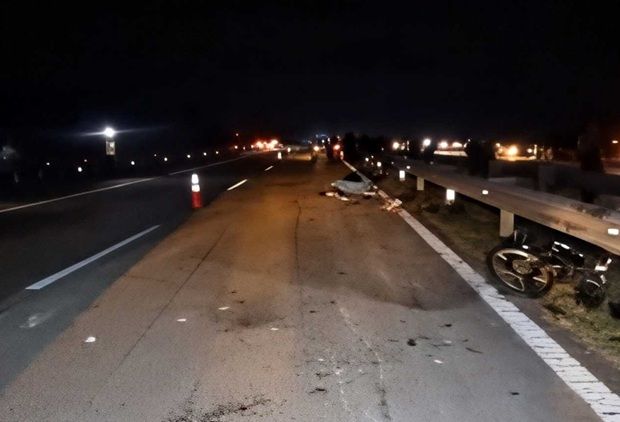
A deadly collision on the East Coast Expressway in the early hours of last Saturday morning left a trail of broken lives alongside the wreckage. Four people lost their lives at the scene or shortly afterwards in hospital, while another 13 sustained injuries. The tragedy, which unfolded around 1am near the Jabor interchange, triggered the predictable cycle of public recrimination. Within hours, armchair critics across social media platforms had already apportioned blame, with countless voices demanding accountability and justice according to law.
Yet beneath the noise of moral judgment lies a reality that receives far less scrutiny: eight children, ranging in age from just one year old to 13, suddenly found themselves without fathers. The immediate aftermath of such loss extends far beyond the courtroom and the insurance settlement. These are young lives that still require nourishment, education, shelter, and the basic necessities of childhood. Someone must now shoulder the burden of providing milk, school fees, growing clothes, and nutritious meals—responsibilities that previously fell to men whose earning capacity has now been permanently extinguished. The mothers left behind face years, perhaps decades, of navigating single parenthood under circumstances entirely beyond their control or consent.
This human dimension exposes a fundamental truth about social protection that many Malaysians overlook: the purpose of social security extends far beyond simply redistributing funds after catastrophe strikes. The Social Security Organisation (PERKESO) operates from a principle of collective responsibility that runs deeper than most citizens appreciate. Rather than viewing social security as charitable relief extended to the unlucky, it should be understood as society's institutional commitment that when disaster strikes one household, the broader community bears part of the weight. Those spared tragedy stand in solidarity with those who have suffered, the healthy contribute toward protection for the sick, and those still capable of working help sustain those whose capacity has been compromised.
In the case of this particular crash, three of the four fatalities had contribution records with PERKESO, making their surviving families eligible for monthly Survivors' Pensions. The family of Che Mohd Suffian Che Gani qualifies for RM2,207.63 monthly, while the dependents of Muhammad Hafiz Al Hakim Mazlan receive RM1,258.33, and those of Mohd Aizat Husni get RM708.33. These amounts are then apportioned according to prescribed formulas, with the widows receiving RM1,325, RM755, and RM425 respectively for life, while the children's share totals RM1,670 monthly across all eight young dependents.
When calculated across realistic timeframes, these figures reveal the true scale of protection extended. The widows' pensions, running across their remaining lifespans—conservatively estimated at 30 years—represent a collective value exceeding RM1.2 million. The children's benefits, projected over 15 years until they reach adulthood, amount to roughly RM300,600. These are not one-time payouts that evaporate with a single emergency; they represent a steady financial foundation designed to prevent families from collapsing into poverty during their most vulnerable years. For mothers who have lost their primary breadwinner, this monthly security allows them to maintain housing stability, ensure consistent schooling, and provide the fundamental care that growing children require.
The Lindung 24 Jam scheme represents a significant evolution in how PERKESO extends protection beyond its traditionally narrower scope. Before June 1 of this year, injured workers or their families would have faced far stricter conditions for claiming benefits. A crash victim deemed ineligible under older regulations might have joined the statistics of rejected applications, leaving injured parties with medical bills and lost wages but no institutional safety net. In this particular incident, five of the 13 injured victims were assessed as eligible for benefits under the expanded scheme. This shift acknowledges a critical gap that existed previously: those catastrophically injured in work-related contexts but falling outside narrow definitional boundaries were effectively abandoned by the system despite contributing to it.
The debate over negligence and dangerous riding naturally has its place in the aftermath of such tragedies. Questions about speed, visibility, and reckless behavior deserve serious legal examination. Yet the fixation on assigning individual blame can obscure a more sobering reality: road accidents are not merely individual failures but shared social risks. Every motorcycle rider on Malaysian highways represents a husband, a father, a provider whose sudden loss creates immediate devastation for those economically dependent on them. Every motor vehicle collision imposes costs that extend far beyond repair bills and hospital charges—they reach into classrooms, dinner tables, and rent payments across communities.
Understanding social security's true function requires recognizing that PERKESO's payments to these grieving families are not acts of charity or government compassion. They represent the fulfillment of a mutual agreement that runs through Malaysian society: those earning regular income contribute small amounts to a collective fund with the understanding that should catastrophe befall them, their families will not be discarded to fend for themselves. The widows receiving their monthly pensions are not receiving favors; they are receiving what their husbands' contributions—often deducted quietly from paychecks without great fanfare—were always meant to secure. The children receiving education allowances are not objects of pity but beneficiaries of a system designed precisely for moments such as these.
For Malaysian society, particularly those relying on regular employment and highway travel, the implications of this crash extend beyond immediate grief. It represents a reminder that social security literacy remains inadequate across the nation. Many workers view their PERKESO contributions as marginal deductions, small amounts that disappear from paychecks without obvious immediate benefit. Few fully comprehend the lifetime value of protection that accumulates through these regular payments. When families in the aftermath of tragedy discover that steady monthly payments will flow for decades, the importance of maintaining employment records and ensuring consistent contributions becomes suddenly crystalline. Yet this realization arrives too late for those who were never insured.
The Lindung 24 Jam scheme's expansion represents meaningful progress in extending the safety net to those previously excluded. Yet broader questions remain about coverage gaps, contribution rates, and the relationship between premium levels and benefit adequacy. For the eight children now navigating life without fathers, the RM1,670 monthly allocation represents genuine security against destitution. Yet observers might reasonably question whether this amount suffices to truly equalize opportunity, allowing these children to progress educationally and professionally at rates comparable to peers whose fathers remain alive and earning. These families will not become wealthy from PERKESO payments, but they will avoid catastrophic poverty—which is precisely what social security is designed to achieve.
As this tragedy fades from social media feeds and newspaper headlines, the monthly payments to affected families will continue flowing, year after year. The three widows will receive their pensions, the eight children will have educational support, and the five injured workers will receive assistance navigating recovery. This is not dramatic justice or satisfying accountability. It is something quieter and ultimately more profound: a social commitment that when disaster shatters someone's life, the institutions of society will ensure that those dependent on them do not face the additional cruelty of poverty. In that sense, Lindung 24 Jam and the broader social security system deserve recognition not as peripheral government programs but as fundamental expressions of what Malaysian society promises to its members.

