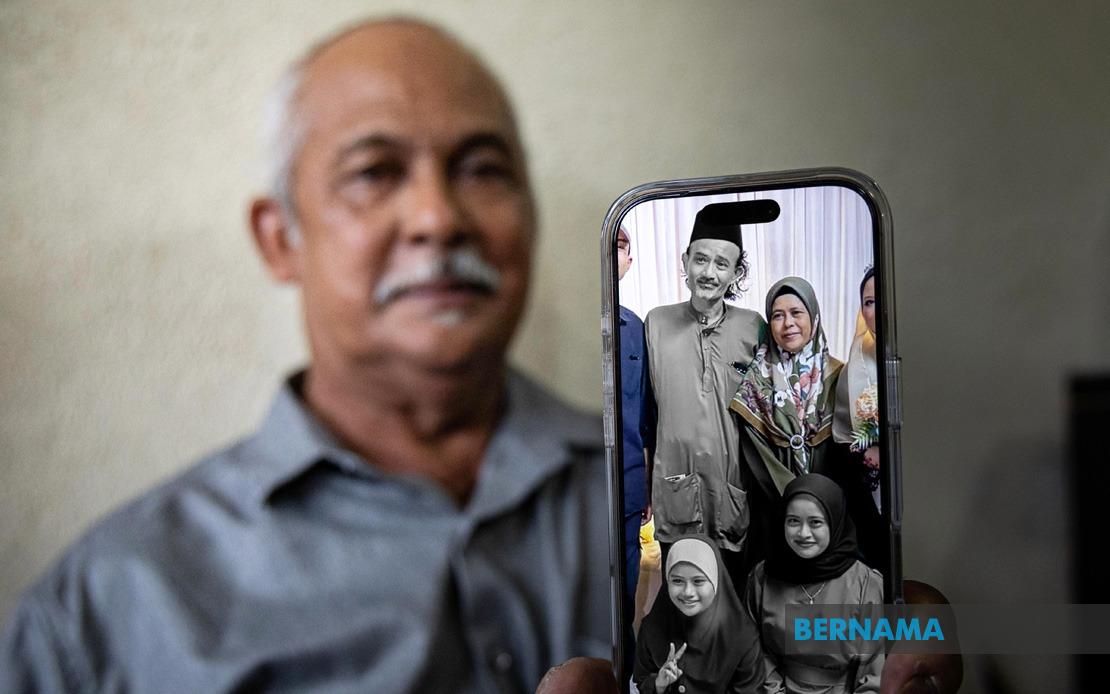
Norhayati Razali remains in psychological limbo following the catastrophic truck accident on Jalan Sultan Ismail in Kuala Lumpur that claimed three members of her immediate family. The 55-year-old, who was transferred from intensive care to a regular ward at Kuala Lumpur Hospital, is demonstrating gradual physical recovery, with medical staff noting she can now consume food and liquids independently without requiring a feeding tube. Yet beneath these encouraging signs lies a troubling neurological complication: the head injuries sustained in the collision have triggered persistent memory disruption, leaving her unable to reliably retain information about the tragedy itself.
Her brother, Mohd Nadzri Razali, described a disorienting pattern of repeated grief that underscores the psychological complexity of her condition. When Norhayati first regained consciousness following the crash on Wednesday, family members brought her to see the bodies of her deceased husband and two children, carefully explaining the circumstances. She acknowledged their words with nods, offering no verbal response. But the following day, she asked where her husband and children were, as if the previous day's briefing had never occurred. This cyclical forgetting suggests her injury has disrupted the brain's capacity to consolidate traumatic information into long-term memory, forcing family members to relive the initial disclosure repeatedly.
Beyond the cognitive effects, Norhayati sustained extensive physical trauma across multiple body regions. Injuries to her hands, waist, knees, and legs compound the damage to her head, creating a complex recovery trajectory that will likely require extended hospitalisation. Her brother indicated uncertainty about the duration of her treatment in the capital and whether she might eventually be transferred to a facility closer to the family's home in Perak, which would ease the logistical and financial burden on relatives who have already endured unimaginable loss. The prospect of moving her to Teluk Intan or Ipoh remains contingent on medical clearance, a decision doctors have not yet made.
The family's practical challenges extend beyond medical considerations. Mohd Nadzri, 69 years old, revealed that he has been unable to visit his injured sister because he lacks reliable transportation to Kuala Lumpur and fears navigating the capital's complex road network. He expressed hope that someone would provide a ride this weekend, illustrating how the tragedy has cascading effects on extended family members who must now coordinate care arrangements across state boundaries. Such logistical obstacles are common in Malaysia's healthcare system, where patients from rural or semi-urban areas often struggle with accessibility when referred to tertiary hospitals in major cities.
The circumstances of the accident itself remain a focal point of family concern and public scrutiny. On August 19, the Malaysian Immigration Department's Black Maria truck, assigned to transport detainees or conduct immigration operations, was en route to Chow Kit in Kuala Lumpur for an enforcement action targeting undocumented migrants. The vehicle, operating with its beacon and siren activated, approached an intersection at Jalan Sultan Ismail while the traffic signal displayed red, a violation of standard road rules that applies even to emergency and official vehicles. The truck collided with a Proton Saga sedan that was lawfully proceeding through the intersection with a green light, causing the heavier vehicle to lose control, veer across the road, and strike pedestrians before impacting an Inokom Matrix car.
Three pedestrians from one family lost their lives in the collision, with Norhayati serving as the sole adult survivor from that household. A fourth person was seriously injured. The incident raises critical questions about operational protocols for government vehicles engaged in law enforcement activities. Official duty vehicles are often afforded certain privileges on the road, yet those privileges carry corresponding responsibilities to exercise heightened caution, particularly in congested urban environments where civilian traffic is dense and unpredictable.
Mohd Nadzri articulated the family's determination to pursue accountability through the investigative process. He called for transparency and fairness in the inquiry, emphasising that justice requires authorities to examine all available evidence, including closed-circuit television footage from traffic lights at the intersection. Such documentation could definitively establish whether the truck had indeed passed through a red light or whether other factors contributed to the collision. His appeal reflects a broader public expectation in Malaysia that investigations into serious incidents involving government vehicles should meet rigorous evidentiary standards and produce findings that are publicly comprehensible.
The incident underscores tensions inherent in balancing operational efficiency for government agencies with public safety imperatives. Immigration enforcement operations are necessary functions of state administration, yet they must not create circumstances where the pursuit of one policy objective—apprehending undocumented migrants—results in loss of innocent civilian lives. The tragedy also highlights the vulnerability of pedestrians in urban settings where large vehicles navigate congested intersections, a concern that affects Malaysian cities broadly.
From a healthcare perspective, Norhayati's case illustrates the multifaceted challenges facing patients recovering from polytrauma, the medical term for injuries affecting multiple body systems simultaneously. Physical rehabilitation will proceed alongside cognitive recovery, and the interplay between these domains remains incompletely understood. Neuropsychological support, grief counselling, and family-centred care planning will be as essential to her long-term wellbeing as orthopaedic and surgical treatments. Malaysian hospitals have made progress in establishing trauma centres and critical care facilities, yet the psychological and social dimensions of recovery often receive less emphasis than acute medical interventions.
Looking forward, the family's prospects depend on both Norhayati's medical trajectory and the outcomes of official investigations and potential legal proceedings. The loss of a spouse and two children represents a catastrophic restructuring of family identity and financial circumstances. While Norhayati recovers, the family faces questions about whether compensation mechanisms exist, how future care will be financed, and whether systemic changes will prevent similar tragedies. Her brother's call for justice extends beyond individual accountability to encompass broader expectations that the state will examine its own operational practices and implement reforms that protect citizens.

