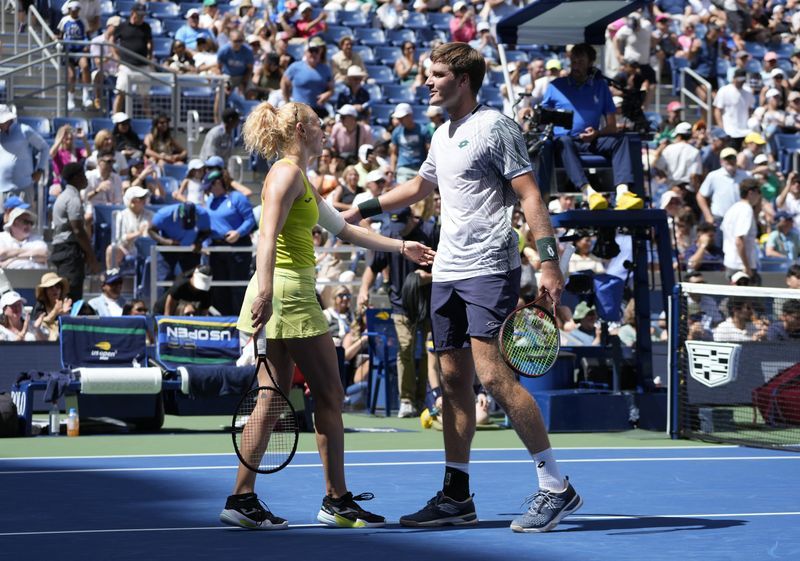
Serena Williams delivered a moment of sporting theatre on Tuesday when she returned to Arthur Ashe Stadium for the first time since her emotional retirement in 2022, this time pairing with 21-year-old sensation Carlos Alcaraz in the US Open mixed doubles. The partnership proved immediately effective, dispatching New Zealand's Erin Routliffe and Britain's Lloyd Glasspool with a commanding 5-3, 4-1 victory in the opening round. As the 23-time Grand Slam champion took to the court, the iconic venue erupted with recognition and affection, offering a stark contrast to the tearful goodbye that fans witnessed nearly two years ago.
The atmosphere surrounding Williams' reappearance underscores the cultural significance of her presence in professional tennis. At 44 years old, the American legend has transcended sport to become a symbol of excellence and longevity in a field typically dominated by younger athletes. Her participation in this revamped mixed doubles format signals broader confidence in her physical capabilities following her initial comeback announcement just over two months prior. For Malaysian fans and regional audiences, Williams represents a bridge between tennis generations, demonstrating that elite-level competition remains accessible beyond the traditional career arc.
The chemistry between Williams and Alcaraz offered compelling viewing during their courtside performance. Despite the significant age gap between the seven-time major champion and his significantly younger partner, both players displayed genuine comfort working together. The pair exchanged knowing glances and smiles throughout the contest, suggesting a mutual respect that transcended the typical professional partnership. Alcaraz, who had been sidelined since April with injury concerns, appeared energised by competing alongside one of the sport's greatest practitioners, shaking off early rust to deliver clutch performances when required.
Williams' individual contributions throughout the match warranted particular attention from observers. On her opening stroke, she struck a backhand winner that immediately galvanised supporter enthusiasm. Later in the opening set, she produced a thunderous 120 mph ace that drew audible reactions from spectators, demonstrating that her celebrated power remains largely intact. These moments offered reassurance to those questioning whether age and extended absence might have diminished her competitive edge. Her combination of experience and technical excellence proved sufficiently formidable against Routliffe and Glasspool, a pairing with respectable credentials of their own.
The mixed doubles format itself represents a deliberate structural innovation aimed at broadening the tournament's appeal. This marks the second year of its restructured presentation, which strategically positions premier singles competitors in a standalone mixed competition during the week preceding the main singles draw. The format change emerged partly from concerns that traditional doubles events were attracting insufficient mainstream attention, despite their technical complexity and entertainment value. Tournament organisers believed that featuring marquee singles names would generate additional attendance and viewership, potentially offsetting traditional doubles specialists' concerns about their sport receiving diminished prominence.
The commercial calculation has proven sound thus far. The inaugural year of this format iteration delivered sellout crowds and attracted numerous elite singles performers despite voiced criticism from established doubles practitioners who contended the innovation marginalised their craft. The debate between broadening tennis accessibility and respecting specialised doubling expertise remains unresolved, with legitimate arguments existing on both sides. Malaysian tennis enthusiasts navigating this evolving landscape must weigh the appeal of seeing familiar singles stars in alternative formats against the traditional doubles community's concerns about their profession's recognition and viability.
The shock elimination of top seeds Novak Djokovic and Aryna Sabalenka created unexpected complications for tournament expectations. The formidable pairing of the world's top male and female singles competitors suffered defeat at the hands of seasoned doubles specialists Henry Patten and Katerina Siniakova, who triumphed 4-1, 4-2, 10-2 in a comprehensive performance. The score's lopsidedness suggests that singles excellence does not automatically translate into doubles success, where tactical awareness, court positioning, and partnership understanding follow different premium hierarchies. Siniakova delivered the decisive blow with a precisely placed ace that sealed the upset with considerable stylistic flourish.
Patten's post-match commentary illuminated the psychological dimensions of the mixed doubles format. He acknowledged that the compressed scoring structure—where single poor games can rapidly cascade into set losses—creates extreme pressure points that reshape competitive dynamics. The experienced doubles practitioner understood that momentum shifts occur with dramatic speed when playing fewer points overall, contrasting sharply with traditional extended sets. This tactical reality explains why established doubles partnerships possessed meaningful advantages despite their opponents' superior overall rankings and singles reputation. For regional viewers, this outcome reinforced that tennis specialisation yields measurable benefits even against globally renowned athletes.
Defending champions Sara Errani and Andrea Vavassori from Italy could not replicate their previous success, succumbing to Russian pairing Mirra Andreeva and Andrey Rublev through a 4-1, 4-1, 11-9 scoreline. The unseeded Russian combination displayed sufficient composure during critical moments to overturn the Italian duo's championship pedigree. This result further substantiated the notion that mixed doubles competition operates according to different rules than singles dominance might suggest. The tournament draw's bracket structure positioned these advancing players toward potential semi-final encounters against other notable combinations, including married partnership Gael Monfils and Elina Svitolina alongside Czech-Slovak pairing Karolina Muchova and Jakub Mensik.
Williams and Alcaraz advanced to quarterfinal competition against Switzerland's Belinda Bencic and Italy's Flavio Cobolli, scheduled for later the same Tuesday. This progression promises continued exposure for Williams' comeback narrative while simultaneously testing whether the exceptional first-round performance represented sustainable form or initial enthusiasm. The quarterfinal stage will introduce materially more formidable opposition, potentially revealing whether age-related limitations might impose constraints during extended tournament runs. Malaysian observers invested in Williams' comeback story will monitor this progression carefully, as her sustained success would further legitimise the mixed doubles format's capacity to showcase tennis excellence across multiple event categories.
The broader implications of these opening-round results speak to tennis' evolving landscape as it navigates audience engagement strategies. The mixed doubles format innovation succeeds commercially through celebrity appeal while simultaneously creating genuine uncertainty about outcome predictability. Top-ranked singles stars do not automatically dominate doubles environments where partnership experience, tactical acuity, and compressed scoring systems operate according to different specifications. Williams' triumphant return captured affection and attention, yet her partnership's mettle will require testing against increasingly organised opposition. Southeast Asian tennis communities, observing these developments, witness firsthand how elite sport adapts to commercial pressures while attempting to maintain competitive integrity across increasingly diversified event structures.

