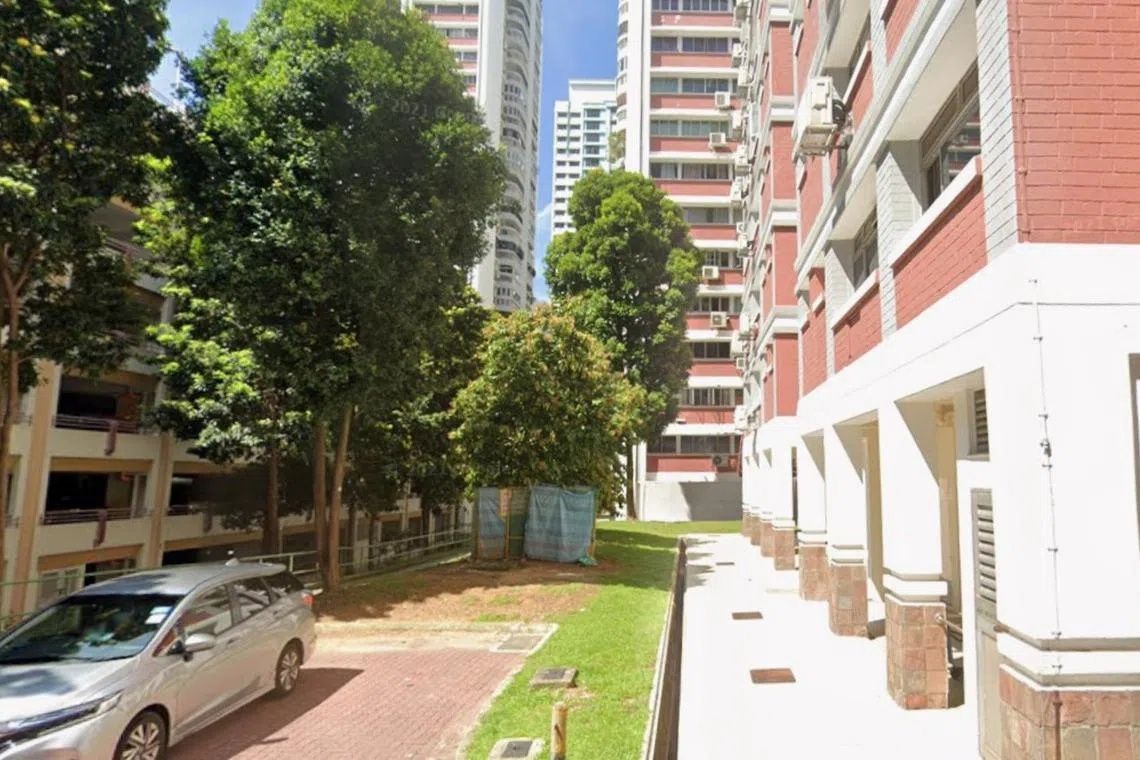
Singapore law enforcement moved swiftly after a violent altercation erupted at a residential housing block in the Bukit Merah area on Saturday evening. A 46-year-old woman has been detained on suspicion of using a knife to attack a 43-year-old acquaintance at 7 Kim Tian Place, marking another incident of serious violence in the city-state's public housing estates. Responding officers arrived at the void deck of the Housing Board block at approximately 7.40pm after receiving an emergency call for assistance.
The nature of the relationship between the two women and any prior history of conflict remain unclear at this stage, though the police have identified them as acquaintances rather than strangers. This detail carries significance in Singapore's context, where most violent crimes involving residents of public housing typically involve individuals with existing connections—suggesting that this was not a random or impulsive assault by an unknown assailant. The circumstances leading to the confrontation have not been disclosed to the public, and investigators are actively examining what precipitated the attack.
Police found the 43-year-old victim conscious at the scene and immediately arranged her transport to Singapore General Hospital for medical treatment. The extent of her injuries has not been publicly detailed, though the decision to hospitalise her indicates wounds serious enough to require professional medical attention. Paramedics assessed her condition as stable enough to travel to the major medical facility, where she would have undergone further examination and treatment for the blade wounds inflicted during the assault.
The 46-year-old suspect has been formally charged with causing grievous hurt with a weapon—a significant criminal allegation under Singapore law that carries potential jail time and monetary penalties. Authorities recovered the knife used in the attack, which now serves as a key piece of evidence in the ongoing investigation. This weapon has been seized and will likely feature prominently in prosecution and legal proceedings as the case progresses through Singapore's courts.
Witnesses to the incident reported seeing bloodstains at the void deck area where the altercation occurred, according to reports from Shin Min Daily, a major Chinese-language newspaper covering Singapore news. The presence of blood evidence at the scene corroborates accounts of the violent nature of the attack and the severity of the victim's injuries. Void decks in Housing Board blocks serve as common communal spaces where residents gather, making such a public incident likely to have been witnessed by multiple bystanders.
The incident highlights an ongoing concern about violent crimes within Singapore's public housing estates, where millions of residents live in high-density residential blocks. While Singapore maintains one of the world's lowest violent crime rates overall, incidents involving weapons and serious assaults periodically occur within these densely populated neighbourhoods. Such occurrences raise questions about community safety, mental health support services, and conflict resolution mechanisms available to residents in public housing.
From a Malaysian perspective, this incident offers a sobering reminder of how violence can erupt even in highly regulated urban environments with strong law enforcement presence and low overall crime rates. Singapore's stringent legal system and swift police response illustrate the region's approach to managing serious crime, contrasting with the significantly higher violent crime rates recorded in other Southeast Asian capitals. The case underscores the universal challenges of domestic and community-based violence that transcend geography and development levels.
The investigation remains ongoing, with police continuing to gather statements from witnesses and examining the circumstances surrounding the confrontation. Authorities have not yet disclosed whether there were prior complaints or incidents involving either party, nor have they provided details about any potential motives for the attack. The thoroughness of Singapore's investigative process typically results in comprehensive case files before charges are formally laid.
This incident occurs against a backdrop of Singapore's broader public safety framework, which includes widespread CCTV surveillance in public housing blocks and active community policing initiatives. Yet despite these preventative measures, interpersonal violence still occasionally surfaces, suggesting that technological and enforcement-based approaches must be complemented by social support services addressing underlying causes of conflict. The rapid police response and arrest in this case demonstrates the effectiveness of Singapore's law enforcement machinery, though it also reflects the persistent reality that violent crime, while rare, remains a component of urban life even in one of Asia's safest cities.

