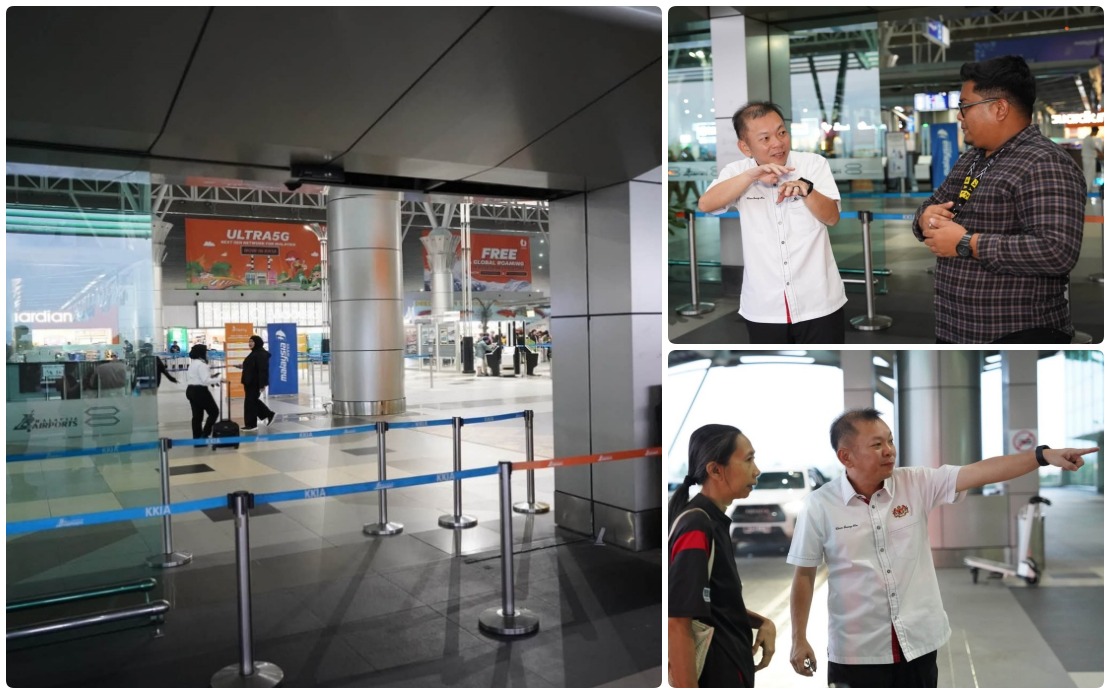
A woman driver sustained minor injuries on Wednesday afternoon when the sports utility vehicle she was operating lost control and struck the glass door structures at the entrance to the departure hall on Level 3 of Kota Kinabalu International Airport. The 4:20 pm incident caused significant damage to both the vehicle's front end and the terminal's entry doors, leaving shattered glass across the kerbside area. No other passengers or airport staff members were harmed in the collision, though the property damage was substantial enough to trigger an immediate response from airport management and emergency services.
The injured driver was quickly attended to by airport personnel and transported to a nearby hospital by ambulance for treatment of her minor injuries. Kota Kinabalu District Police Chief ACP Shahrudin Mat Husain confirmed the incident and indicated that investigators are pursuing multiple lines of inquiry to determine what caused the vehicle to lose control. The exact circumstances leading to the crash—whether mechanical failure, driver error, medical episode, or another factor—remain under examination as police piece together the sequence of events.
Malaysia Airports, the operator managing the facility, moved swiftly to contain the situation and minimise disruption to the travelling public. Aviation Security and Customer Service staff responded immediately to the incident, ensuring that medical help reached the driver promptly and that the scene was secured. By 6:00 pm, the damaged vehicle and associated debris had been completely removed from the departure kerbside, allowing normal traffic flow to resume relatively quickly. The airport operator emphasised that the incident did not interrupt broader airport operations, with Terminal 1's other automatic doors remaining fully functional throughout the afternoon.
Repair works on the damaged glass entrance doors commenced almost immediately, reflecting management's commitment to restoring the terminal to full aesthetic and functional condition. The priority given to clearing the affected area demonstrates the airport's understanding that departure hall entrances are high-traffic zones where delays and obstruction can cascade into broader operational problems. Passenger movement through the terminal was maintained through alternative entry points while the primary entrance underwent assessment and restoration.
Deputy Minister of Agriculture and Food Security Datuk Chan Foong Hin, who coincidentally arrived at the airport shortly after the crash, publicly commended the rapid response. In a social media post, he praised KKIA management and all personnel involved in handling the emergency with efficiency and professionalism. His acknowledgment underscored the importance placed on airport safety and operational continuity at a major regional hub like KKIA, which serves both domestic and international passengers daily.
The incident highlights the critical role that airport infrastructure maintenance and incident response protocols play in maintaining passenger confidence and operational reliability. Kota Kinabalu International Airport, as Sabah's primary gateway for air travel, handles thousands of passengers throughout the day, making rapid response to such incidents essential. The glass doors that were damaged are typically designed to be robust enough to withstand normal operational stress, suggesting that the force of impact was considerable.
Malaysia Airports' statement confirmed that the matter has been formally referred to the Royal Malaysia Police for investigation, with the operator pledging full cooperation with law enforcement authorities. This procedural step ensures that the crash is documented in official police records and that any safety lessons identified can be properly assessed and communicated within the aviation industry.
For Malaysian air travellers and those passing through Kota Kinabalu's airport, the incident serves as a reminder of the importance of careful vehicle control in airport service areas. Departure kerbsides and airport precincts are regulated zones where vehicle speeds are carefully controlled to prioritise pedestrian and passenger safety. The fact that no bystanders were harmed in this collision is fortunate given that these areas typically see high foot traffic.
The return to normal operations by evening underscores the airport's capacity to manage incidents without cascading effects. Modern airport management relies on pre-positioned contingencies, trained personnel, and clear communication protocols—all of which appear to have functioned effectively in this case. The roughly 90-minute window between the incident and complete clearance reflects professional coordination among multiple agencies.
As investigators continue their work, the cause of the crash will likely inform broader conversations about airport safety, vehicle access protocols, and infrastructure design. Whether the incident resulted from mechanical failure, sudden medical emergency, or another cause will shape recommendations for preventing similar incidents in the future. Malaysia Airports will presumably review access procedures and potentially enhance safety measures around the departure hall entrance based on findings from the ongoing inquiry.
The incident remains under police investigation, with authorities seeking to establish a complete factual record that will inform any recommendations for operational improvements at the airport.

