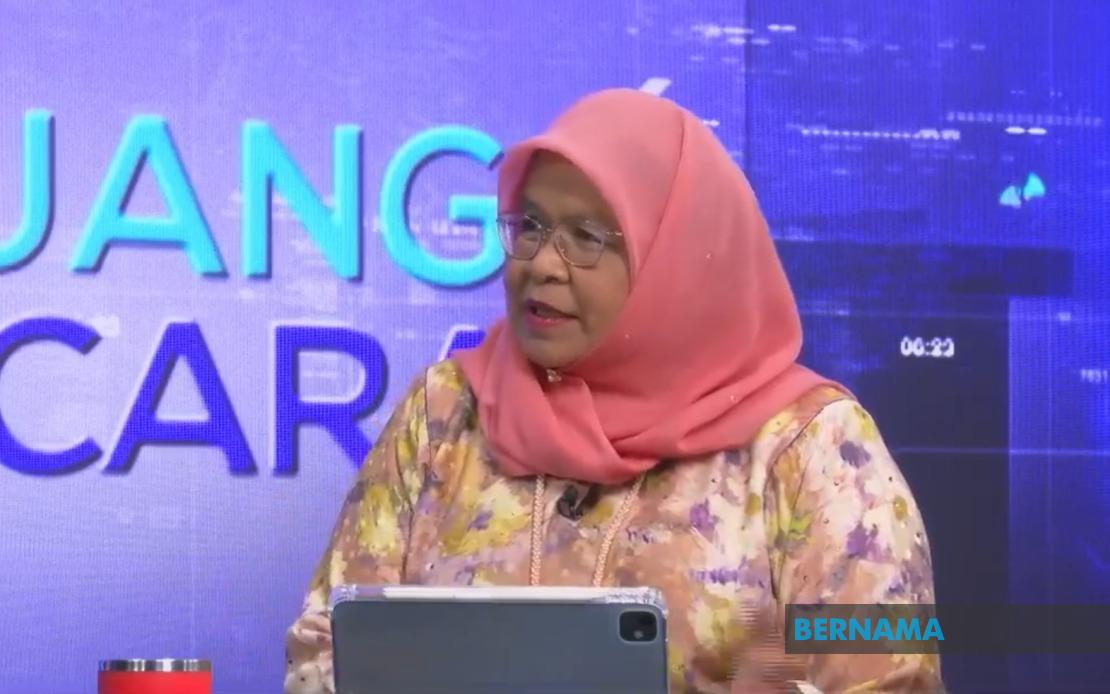
Empowering women to occupy senior decision-making roles across Malaysian institutions demands far more than simply offering positions; it requires deliberate investment in support systems, professional development, and a fundamental shift in workplace culture that values capability over gender. Datuk Seri Dr Maimunah Mohd Sharif, the Government's Sustainable Urban Development advisor and former mayor of Kuala Lumpur, articulated this nuanced understanding during recent comments on the persistent gender imbalance in Malaysian leadership, arguing that women's meaningful participation at strategic levels is essential if policymaking is to adequately reflect and address the needs of half the population.
The statistics paint a sobering picture of Malaysia's current state of female representation in positions of influence. Women comprise 56.4 per cent of higher education enrolment according to 2025 data, demonstrating clear capacity and commitment to professional qualification. Yet this educational advantage does not translate proportionally into leadership. Only 27 per cent of management positions are held by women, indicating a significant filtering effect as careers progress. At the parliamentary level, female Members of Parliament represent just 13.5 per cent of the chamber, while women constitute 16.1 per cent of Cabinet positions. These figures underscore a persistent structural barrier that prevents women with proven credentials from accessing the highest levels of policy influence.
Maimunah's perspective, forged through her tenure as Kuala Lumpur's mayor, reflects the practical reality that women in leadership roles face distinct challenges not encountered by male counterparts. Her appeal for women to seize opportunities when they arise comes paired with a call for self-directed development—urging women to "seek knowledge" and continuously strengthen their qualifications. This dual emphasis on individual initiative and systemic enablement reflects a realistic assessment that advancement requires both personal determination and institutional support structures that currently remain underdeveloped in many Malaysian sectors.
The financial services industry offers an instructive case study in this dynamic. Datuk Mona Suraya Kamarudin, a non-executive independent director at Nomura Asset Management, observed that women in finance possess equivalent technical competency and professional experience to their male colleagues. Yet they remain disproportionately concentrated in mid-level positions rather than ascending to senior executive and board-level roles where strategic decisions are made. This pattern suggests that technical capability alone—while necessary—proves insufficient without corresponding access to mentorship, sponsorship, and the informal networks through which advancement typically occurs in the financial sector.
Kamarudin's observation that gender becomes irrelevant when evaluating financial management capability points to an important principle: markets and meritocratic evaluations do recognise competence regardless of gender. The implication is that persistent underrepresentation stems not from women's inability to perform leadership roles, but rather from systemic barriers in recruitment, promotion, and development pathways that operate independently of demonstrated performance. This distinction matters considerably because it redirects focus from questioning women's suitability for leadership toward examining institutional practices that inadvertently limit their advancement.
The role of family support emerges as a critical but often overlooked component of women's professional advancement. Kamarudin highlighted that family structures and support systems significantly influence whether women can effectively balance career responsibilities with domestic commitments. This observation reflects Malaysian social reality: while women's workforce participation has grown substantially, domestic labour and childcare responsibilities remain disproportionately assigned to women even when both spouses work professionally. Without deliberate family support—whether through extended family arrangements, quality childcare access, or partners actively sharing household responsibilities—women face a dual burden that constrains their capacity for the extended hours and intensive engagement that senior positions often demand.
The Malaysian context requires particular consideration of how religious and cultural traditions intersect with professional advancement. While Islam emphasises education and contribution regardless of gender, conservative social interpretations sometimes create additional expectations around women's family roles that can inadvertently discourage or complicate career progression. Creating genuine space for female leadership therefore requires not merely formal policy change but also cultivation of cultural narratives that celebrate and normalise women's professional achievement without requiring them to abandon family roles or face social criticism.
Maimunah's suggestion that parity need not be the only acceptable outcome—proposing that 50 per cent representation would constitute success—reflects pragmatic acceptance of gradualism. However, this framing also masks the underlying principle: positions should be filled according to capability and merit, with outcomes naturally reflecting the available talent pool. If women constitute 56 per cent of university graduates, then leadership positions should eventually reflect similar proportions as these cohorts mature professionally. Current representation gaps thus indicate either that women are being systematically excluded despite equal qualification, or that societal investments in their development have lagged behind opportunities for men.
The investment case for accelerating female leadership advancement extends beyond equity considerations to economic competitiveness. Research consistently demonstrates that organisations with diverse leadership teams make more robust decisions and better navigate complex challenges. Malaysia's aspirations to develop knowledge-based industries and innovative sectors will be constrained if half the potential talent pool remains underutilised in lower-level positions. Enhanced female representation in decision-making roles therefore constitutes not merely a social justice imperative but a strategic economic priority.
Implementing meaningful change requires translating these insights into concrete institutional mechanisms. Formal mentorship programmes pairing junior women with senior leaders, explicit succession planning that includes female candidates, transparent promotion criteria that reduce unconscious bias, and board-level commitment to diversity targets with accountability measures represent evidence-based approaches that have proven effective internationally. Malaysia's government agencies, corporations, and professional organisations should examine whether current practices inadvertently perpetuate gender imbalance and implement targeted interventions accordingly.
The conversation around women in leadership ultimately reflects whether Malaysia is willing to fully mobilise its human capital or content to operate with artificial constraints on talent availability. Maimunah's advocacy for systematic support, professional development, and genuine trust in women's capabilities provides a roadmap for transition. As Malaysia navigates the demands of digital transformation and regional competition, the question is not whether women can lead—their educational attainment and professional performance demonstrate clear capability—but rather whether institutions will create the conditions enabling that potential to flourish.

