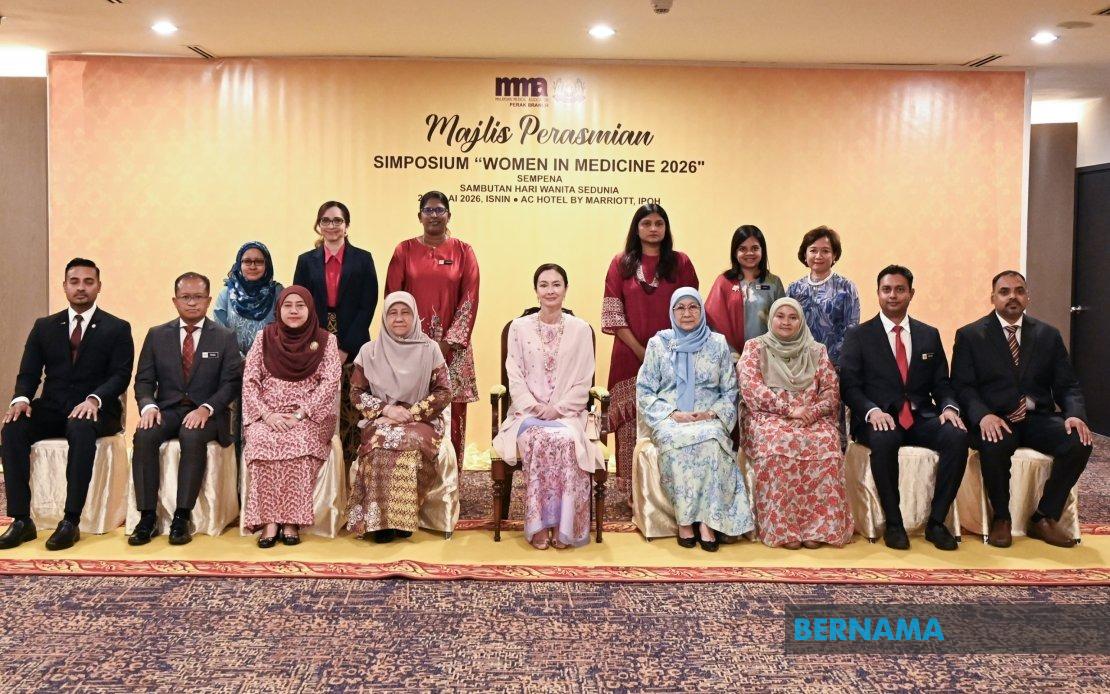
The Malaysian medical establishment is making a forceful case for greater female representation in healthcare leadership, framing women's advancement not as a social cause but as a practical necessity to address mounting systemic challenges. Speaking at the Women in Medicine 2026 Symposium in Ipoh, leaders from Perak's medical community emphasised that women bring distinctive qualities—including broader perspectives, deeper empathy, and patient-centred thinking—that are indispensable as the healthcare sector navigates an increasingly complex landscape.
The modern Malaysian health system confronts a daunting array of pressures that demand innovative responses and strategic foresight. Mental health disorders continue climbing the disease burden, chronic non-communicable conditions like diabetes and hypertension reshape epidemiological patterns, demographic ageing strains both resources and service delivery models, and healthcare institutions scramble to harness digital technologies and artificial intelligence. These interconnected challenges cannot be solved through conventional approaches alone, argued Dr Monesh Pillai, chairman of the Perak Malaysian Medical Association, who delivered the symposium's opening remarks.
Dr Pillai's central contention reflects a broader recognition within Southeast Asia's healthcare sector: that diverse leadership teams generate more robust solutions than homogeneous decision-making bodies. When women occupy positions of genuine influence rather than symbolic roles, they fundamentally reshape institutional priorities and problem-solving methodologies. The missing element in Malaysia's healthcare governance, he suggested, is not technical expertise but female voices at strategy tables where fundamental directions are determined. This framing shifts the conversation from diversity-and-inclusion platitudes to operational effectiveness—positioning women's leadership as strategically advantageous rather than merely equitable.
The symposium's official programme underscored the breadth of female contribution across medicine and healthcare. While historical discussions of women in medicine concentrated narrowly on female physicians, contemporary practice recognises women excelling as administrators, researchers, educators, nursing specialists, pharmacists, allied health practitioners, and public health advocates. This expanded understanding reflects the reality that modern healthcare delivery depends on multidisciplinary collaboration; excluding women from any tier diminishes system performance. The event also acknowledged women's roles as patients, caregivers, and community mobilisers—recognising that healthcare leadership encompasses not only clinical credentials but also advocacy and lived experience.
Raja Permaisuri of Perak Tuanku Zara Salim's decision to officiate the proceedings carried symbolic weight, demonstrating royal institutional endorsement of women's professional advancement. The attendance of senior state health officials, including Perak Health director Datuk Dr Feisul Idzwan Mustapha, signalled that this conversation extends beyond professional associations into government health administration. For Malaysian practitioners and health policymakers, such high-level participation suggests that gender equity in medical leadership may increasingly influence resource allocation and strategic planning at state level.
The symposium's intellectual content addressed concrete healthcare challenges through explicitly gendered lenses. Datuk Dr Adeeba Kamarulzaman, president and pro vice-chancellor of Monash University Malaysia, delivered remarks on 'From Clinic to Global Policy: Women Leading the Change in Healthcare'—a title that simultaneously acknowledges women's historical marginalisation in policy circles while asserting their capacity to reshape systems. Similarly, Dr Sangeetha Siniah's presentation on allergy and immune health in women and children recognised that medical knowledge itself becomes more comprehensive when researchers examine how biological sex and gender shape disease presentation and treatment response.
The chosen theme for International Women's Day 2026—'For All Women and Girls: Rights. Equality. Empowerment.'—provided framework for deeper analysis. Dr John Emmanuel, organising committee chairman, reinterpreted this slogan through healthcare prisms, arguing that empowerment transcends opportunity provision to encompass genuine space for women to lead, contribute, and fulfil their potential. This distinction matters operationally: opportunity without institutional support often leaves women in subordinate positions, whereas genuine empowerment requires structural changes enabling female leadership to reshape systems.
For Malaysia specifically, these discussions arrive at a pivotal moment. The nation's healthcare system, strained by pandemic aftereffects, workforce shortages, and rising chronic disease burdens, requires fresh thinking and untapped talent pools. Female medical graduates now comprise substantial portions of professional cohorts in Malaysia, yet progression into senior administrative and policy roles remains constrained by structural barriers, including inflexible work arrangements, limited mentorship, and institutional cultures that privilege traditional career trajectories. The Perak MMA's public advocacy therefore addresses a tangible deficit: not women's technical competence, which is amply demonstrated, but systemic barriers preventing their advancement into decision-making positions.
The implications extend across Southeast Asia. Regional healthcare systems share similar challenges—ageing populations, digital transformation pressures, rising mental health burdens—and similar patterns of gender underrepresentation in medical leadership. Malaysia's forthright positioning of women's advancement as healthcare necessity rather than social nicety potentially influences regional conversations, normalising female leadership as standard practice rather than progressive aspiration. Other national medical associations might follow Perak MMA's lead in highlighting women's contributions and advocating systemic change.
Looking forward, the symposium's occurrence in Perak carries additional significance. While Kuala Lumpur typically dominates Malaysia's professional discourse, initiatives in state capitals democratise conversations and highlight regional medical communities' sophistication. Perak's healthcare leaders are demonstrating that progressive professional thinking thrives beyond the capital, with implications for how national medical policy develops. If state-level medical associations increasingly champion women's leadership, pressure builds on federal organisations and health ministries to implement consistent, ambitious strategies.
Ultimately, the medical profession's advocacy for women's leadership addresses a practical challenge cloaked in ethical language. Healthcare systems function optimally when decision-making reflects population diversity, when leadership incorporates varied perspectives, and when talent selection prioritises merit over convention. Malaysia's healthcare sector, confronting multifaceted emerging challenges requiring innovative responses, cannot afford to underutilise half its potential talent pool. The Perak MMA's symposium thus articulates a straightforward proposition: women's leadership strengthens medicine not through tokenism but through superior clinical outcomes, more inclusive institutional cultures, and healthcare systems genuinely designed around patient needs rather than professional convenience.

