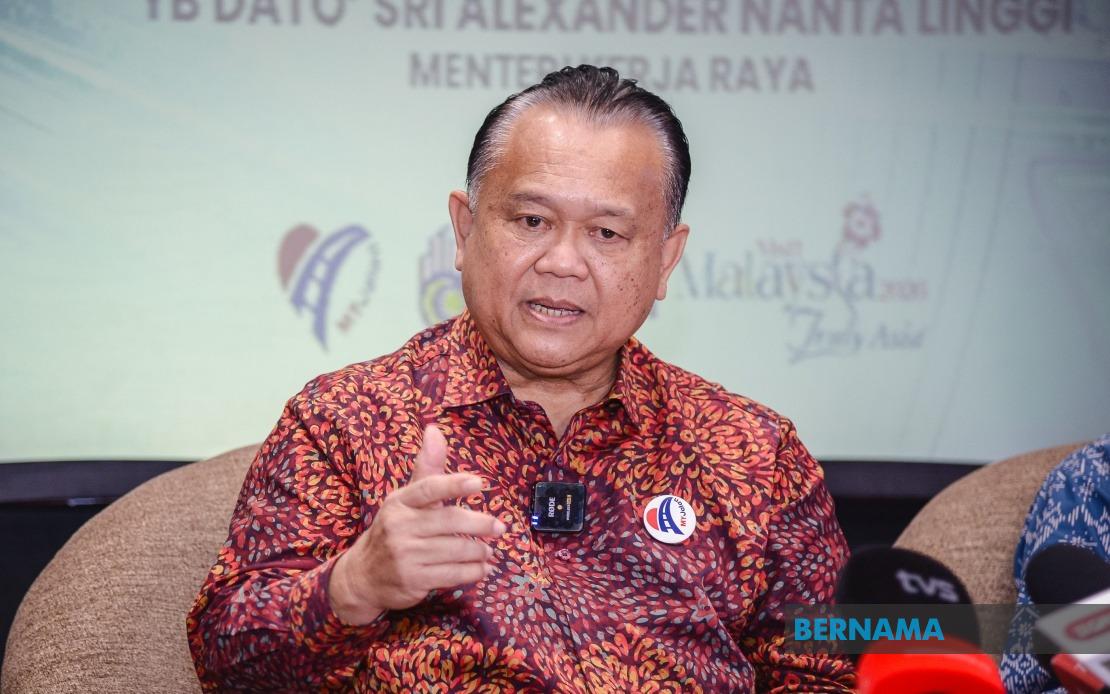
Malaysia's Works Ministry (KKR) is shaping its Budget 2027 agenda through direct consultation with the construction sector, having collected 30 strategic wishlists addressing industry priorities from productivity to technological advancement. Minister Datuk Seri Alexander Nanta Linggi revealed the consultation process during an industry dialogue in Putrajaya, signalling the government's intention to align budgetary decisions with on-ground realities facing contractors, engineers and material suppliers across the nation.
The ministry has distilled these industry inputs into five core transformation priorities that extend beyond conventional infrastructure spending. These pillars include fortifying the national road network and executing flagship infrastructure projects that generate measurable economic returns, shifting focus from expenditure volume towards tangible impact created by each ringgit of public investment. This philosophical reorientation reflects broader efficiency concerns within Malaysia's fiscal framework, particularly relevant as economic pressures mount regionally and globally.
Sustainability represents the second pillar, intertwining Malaysia's infrastructure ambitions with national energy transition commitments. The construction sector, historically a significant carbon emitter, must embed green practices into project planning and execution. This requirement extends beyond environmental compliance—it positions Malaysian contractors to capture growing demand for sustainable infrastructure across Southeast Asia, where renewable energy and low-carbon development dominate investor conversations and multilateral financing conditions.
Digitalisation and Industry 4.0 technologies form the third transformation priority, with Building Information Modelling (BIM), Internet of Things (IoT) sensors and artificial intelligence identified as essential capabilities. These technologies enable better project coordination, reduce waste, improve safety monitoring and allow predictive maintenance of completed infrastructure. For Malaysian companies competing in regional markets, technological sophistication increasingly distinguishes premium providers from commodity contractors, directly addressing competitiveness concerns that have historically limited local firms' international expansion.
Empowering small and medium-sized contractors—classified as G1 through G4 enterprises—constitutes the fourth strategic focus. Minister Nanta emphasised that inequitable starting positions across the industry necessitate foundational support enabling smaller players to progress to higher capability tiers. This inclusive approach recognises that concentrated market dominance by mega-contractors can stifle innovation and limit employment opportunities in secondary cities and rural areas where smaller firms operate. Supporting these enterprises indirectly strengthens community resilience and distributed economic development.
The fifth priority addresses road safety through the MYJalan initiative, recognising construction and infrastructure maintenance activities as inherently hazardous sectors. This integrated approach—bundling infrastructure development with safety consciousness rather than treating safety as a separate compliance burden—reflects international best practices adopted by advanced construction economies. For Malaysia, where road fatality rates remain concerning, embedding safety into construction culture yields public health dividends extending beyond project participants to general road users.
The 117 total proposals received by KKR, including 87 directly from industry stakeholders, reveal sector-wide concerns transcending large contractors' traditional interests. Recurring themes include governance and contract management frameworks that provide clarity and reduce disputes, workforce development addressing skilled labour shortages that constrain project delivery, and operational cost pressures from material volatility and logistics disruptions. These feedback patterns mirror Southeast Asian construction challenges, offering Malaysia insights transferable across the ASEAN region as regional infrastructure integration intensifies.
Cost containment emerges as a pervasive concern, with industry players identifying operating expenses, material procurement inefficiencies and logistics bottlenecks as profit constraints. Rather than seeking subsidy, the sector appears to request structural improvements—better approval timelines, utilities access reliability, and road maintenance quality—that reduce friction costs without direct government transfers. This distinction matters for fiscal sustainability and suggests construction industry challenges reflect systemic inefficiencies remediable through administrative improvement rather than expenditure escalation.
Minister Nanta's emphasis on competition driven by productivity, technology, quality and value creation rather than price undercutting represents a strategic recalibration for Malaysian construction. Historically, competitive dynamics have favoured firms willing to operate at minimal margins, incentivising cost-cutting that sometimes compromised quality. Reorienting competition towards capability-based differentiation encourages investment in worker training, equipment modernisation and innovation systems that create sustainable competitive advantage. This transition benefits Malaysian firms competing against lower-cost regional competitors by establishing quality and efficiency as primary value propositions.
The consultation also addressed Environmental, Social and Governance (ESG) practices adoption and increased utilisation of local materials in construction projects. ESG integration responds to investor requirements increasingly embedded in infrastructure financing, particularly from development banks and institutional capital sources driving regional infrastructure development. Prioritising local materials supports domestic supply chains, reduces logistics impacts and creates employment in mining, processing and manufacturing sectors supporting construction industries.
Budget constraints, rather than justifying reduced ambitions, should catalyse creative resource allocation and prioritisation discipline, Minister Nanta suggested. This framing rejects the notion that fiscal limits necessitate development postponement, instead positioning constraints as stimuli for innovation in project delivery models, public-private partnerships, and technology deployment. For Malaysian policymakers and industry participants, this perspective aligns with regional trends toward more efficient infrastructure provisioning in resource-constrained environments.
The Works Ministry's Budget 2026 allocation of RM10.692 billion, with RM9.607 billion directed toward development expenditure, establishes the fiscal baseline for upcoming discussions. The 3.3 percent increase from the previous year reflects measured budget growth, suggesting fiscal conservatism constrains infrastructure expansion despite acknowledged development needs. Budget 2027, scheduled for tabling in the Dewan Rakyat on October 9, will reveal whether the extensive industry consultation translates into expanded infrastructure investment or continued emphasis on efficiency and impact-per-ringgit metrics. The industry's strategic wishlists will likely face rigorous prioritisation against competing national budgetary demands and economic growth imperatives shaping Malaysia's medium-term development trajectory.

