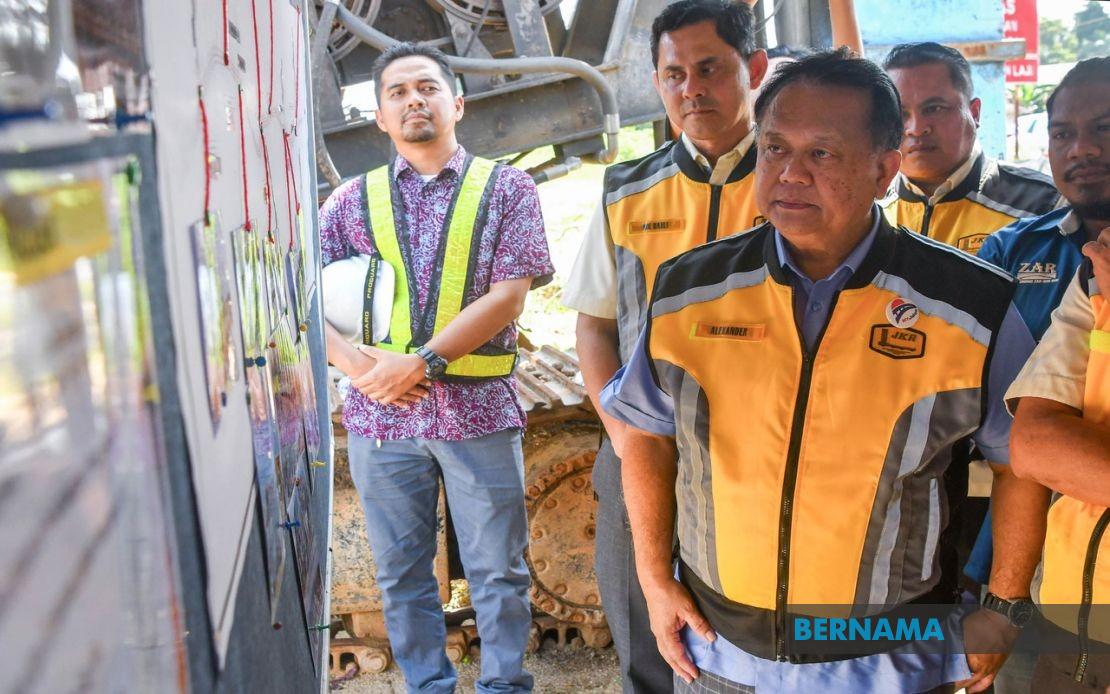
The Works Ministry has launched an intensive monitoring regime targeting 50 infrastructure projects that have fallen behind schedule, according to Works Minister Datuk Seri Alexander Nanta Linggi. Speaking during a site visit to a major road upgrading project in Kota Bharu, the minister revealed that these problematic projects represent a small fraction of the 865 total schemes under the ministry's oversight, underscoring both the scale of Malaysia's infrastructure development programme and the persistent challenges affecting delivery timelines across the nation.
Among the identified delayed initiatives, only seven of the 104 Works Ministry projects operating within Kelantan have been classified as experiencing performance difficulties, suggesting that while problems exist, they remain geographically concentrated. The minister's acknowledgment of these specific figures demonstrates an attempt at transparency regarding the state of public infrastructure delivery, a concern that frequently dominates parliamentary debates and affects public confidence in government project management.
The underlying causes of project delays reveal a complex landscape of interconnected obstacles that Malaysian infrastructure developers routinely encounter. Beyond straightforward contractor incompetence, the ministry has identified financial instability and inadequate management capabilities among construction firms as significant contributors to postponements. Land acquisition processes—notoriously time-consuming in Malaysia's property-rights environment—continue to impose substantial delays, as do the logistical complications surrounding utility relocation and unexpected site conditions that pre-construction surveys failed to identify. These underground obstructions and unforeseen geological challenges represent particularly vexing complications, as they emerge only after projects commence and cannot be readily anticipated during planning phases.
The ministry's response framework demonstrates a graduated approach to problem resolution rather than a uniform termination policy. Nanta explained that projects approaching completion, with approximately 10 to 15 per cent of work remaining, may receive time extensions rather than contract termination. This pragmatic stance reflects an understanding that abandoning nearly-finished work and appointing replacement contractors typically generates greater financial losses than granting reasonable completion delays, a calculation that balances fiscal discipline against project delivery realities.
Weekly monitoring sessions conducted following Cabinet meetings represent the administrative machinery driving this oversight initiative. The minister has delegated responsibility for coordinating these reviews to his deputy, ensuring that systematic follow-up occurs across the entire portfolio of delayed schemes. This institutional arrangement suggests the ministry has acknowledged that oversight of 50 problematic projects demands dedicated personnel and regular review cycles rather than sporadic interventions.
Consequences for underperforming contractors include progressive sanctions, ranging from enhanced scrutiny through contractor replacement to outright contract termination. However, Nanta emphasised that termination decisions require careful deliberation and strict adherence to governance protocols, reflecting awareness of potential legal challenges and contractual obligations that constrain administrative action. This cautious approach, while protecting the government from litigation, occasionally frustrates public expectations for swift accountability when contractors persistently underdeliver.
The Kota Bharu road upgrading initiative exemplifies both the ambition and complexity of Malaysia's infrastructure modernisation. The combined FT209 and FT131 six-kilometre project carries a RM191 million price tag and targets alleviation of chronic traffic congestion affecting routes from Kubang Kerian through Sabak to Pengkalan Chepa. At 71.61 per cent physical completion, the scheme remains broadly on track despite consuming more than RM200 million for land acquisition involving 300 separate properties—a figure illustrating the substantial hidden costs embedded within Malaysian road projects beyond headline construction budgets.
Unforeseen consequences of infrastructure work emerged as a secondary concern during the minister's Kelantan visit. Pengkalan Chepa Member of Parliament Datuk Dr Ahmad Marzuk Shaary raised flooding complaints from residents adjacent to the FT209/FT131 construction zone, a common complaint where earthworks disrupt existing drainage patterns. Rather than deferring the matter, Nanta instructed the contractor to immediately construct a temporary 40-metre drainage channel as an interim mitigation measure until project completion in September 2025, demonstrating responsive governance that addresses community impacts alongside infrastructure delivery.
The ministry's intensive focus on these 50 problematic projects carries broader implications for Malaysia's infrastructure development trajectory. As the government pursues ambitious modernisation programmes through its economic stimulus initiatives and development plans, the capacity to deliver projects on schedule remains critical to economic productivity and public satisfaction. Delayed infrastructure constrains business operations, frustrates commuters, and erodes confidence in government execution capability, consequences that extend beyond the immediate projects themselves.
For regional observers, Malaysia's infrastructure management challenges mirror obstacles confronting other Southeast Asian economies engaged in substantial construction programmes. The intersection of contractor capacity constraints, land-rights complications, and site contingencies represents a regional pattern rather than uniquely Malaysian difficulties. However, the Works Ministry's structured monitoring regime and willingness to publicise performance shortcomings suggest institutional maturation in addressing these perennial obstacles through systematic rather than ad-hoc responses.
Moving forward, the sustainability of the weekly review process and the minister's commitment to decisive action regarding chronic underperformers will determine whether this monitoring initiative produces meaningful improvements in project delivery timelines. The challenge extends beyond identifying sick projects to establishing consequences sufficiently severe that contractors prioritise performance compliance over cost-cutting, a discipline that remains inconsistently enforced across Malaysian infrastructure development despite official pronouncements regarding accountability.

