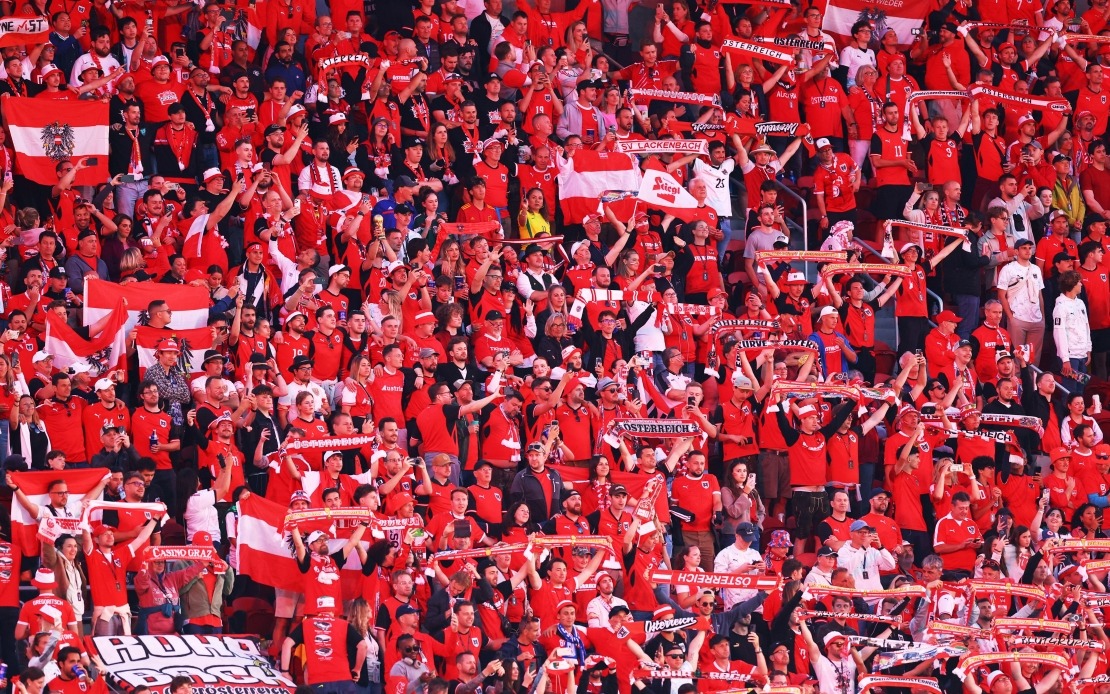
The expanded World Cup format being contested across the United States, Canada and Mexico has already etched itself into the football record books with a string of unprecedented milestones, FIFA confirmed over the weekend. The governing body released comprehensive statistics showing that the group stage alone drew 4.644549 million spectators—a staggering increase of more than a million from the 1994 World Cup held in the United States, which attracted 3.587538 fans across its duration.
The scale of this expansion is critical to understanding these figures. The 1994 tournament featured 24 teams competing in 52 matches across the entire competition. By contrast, the current edition doubled the field to 48 teams, fundamentally transforming the tournament structure and doubling the number of fixtures. The group stage alone comprised 72 matches, far exceeding the total number of games in the entire 1994 edition. This architectural change means that while total attendance has surged dramatically, the story becomes more nuanced when examining per-match averages.
Despite the astronomical total attendance numbers, the average stadium occupancy per match has actually declined. Games in the current tournament averaged 64,508 fans, falling short of the 1994 benchmark of 68,991 spectators per game. This disparity reflects the practical realities of expanding the tournament—not every stadium can fill to capacity for every fixture, particularly when less-prominent matchups or smaller nations are involved. However, venue operators and organizers in the three host nations appear to have managed the logistics successfully, maintaining respectable attendance levels across a significantly larger slate of games.
On the pitch, the expanded format has also produced a historic goalfest. A total of 215 goals have been scored during the group stage, yielding an impressive average of three goals per match. This offensive explosion contrasts sharply with the 2022 World Cup in Qatar, where the traditional 32-team format produced 179 goals across 64 matches for an average of 2.8 per game. The higher-scoring affair suggests either that the expanded format creates more competitive imbalances leading to lopsided victories, or that the quality and style of football has shifted to favor attacking play.
Another remarkable statistic underscores the tournament's unprecedented scope: the 48 participating teams deployed 999 players across their squads. The symbolic milestone came during Canada's knockout-stage victory over South Africa on Sunday, when national team captain Alphonso Davies entered the match for his first appearance, becoming the 1,000th player to participate in the tournament. This staggering number of athletes reflects both the expanded competition and the depth of talent required for teams to field competitive rosters.
The scale of the tournament has extended well beyond the matchday experience into the commercial and hospitality realm. FIFA reported that stadium vendors sold 2.8 million beers throughout the venues, demonstrating the festive atmosphere that characterizes the World Cup experience. Water consumption also proved substantial, with nearly one million bottles sold, reflecting both the climatic conditions across North America and the hydration needs of millions of spectators. Perhaps most notably for food vendors, concessionaires moved 300,000 hot dogs across all three host nations—a statistic that captures the distinctly North American flavor of the tournament.
The fan experience extended far beyond the stadiums themselves through an extensive network of official fanfests established across all three host countries. These gathering spaces attracted more than 5.5 million visitors who came to celebrate the tournament atmosphere even when they could not secure tickets to matches. The fanfests proved to be significant consumption hubs in their own right, with visitors purchasing over 2 million alcoholic beverages and almost 2 million soft drinks. This secondary network of tournament infrastructure effectively doubled the experiential footprint of the World Cup, creating multiple touchpoints for engagement across urban centers.
These statistics carry substantial implications for the future direction of major football tournaments and for organizers planning mega-events in Southeast Asia and across the Asia-Pacific region. The successful absorption of 4.6 million spectators across a 48-team format demonstrates that there exists considerable global appetite for expanded international football competitions. For Malaysia and neighboring nations, these metrics suggest that hosting major sporting events remains economically viable and capable of generating significant tourism and hospitality revenue. The ability to distribute matches across multiple stadiums and cities—rather than concentrating them in a single metropolis—could make future tournament hosting more feasible for developing nations with distributed urban centers.
The data also hints at evolving consumption patterns at sporting events. The emphasis on hydration through water sales, alongside traditional beer consumption, reflects changing health and wellness consciousness among international audiences. Food offerings remain central to the spectator experience, with the 300,000 hot dogs sold underscoring how cuisine becomes intertwined with sporting identity and national expression. For Malaysian event planners and hospitality operators, these consumption trends provide valuable benchmarks for planning concession strategies at future international tournaments.
The expanded tournament format has proven operationally successful in managing an unprecedented number of simultaneous fixtures while maintaining audience engagement and satisfaction. The combination of record-breaking attendance, elevated goal-scoring rates, and massive infrastructure supporting fans outside venues suggests that the 48-team model, while controversial in some quarters before the tournament began, has resonated positively with global audiences. This success could influence FIFA's long-term strategic direction, potentially setting the template for future World Cups and encouraging other sports governing bodies to consider expansion as a path to greater revenue and global participation.

