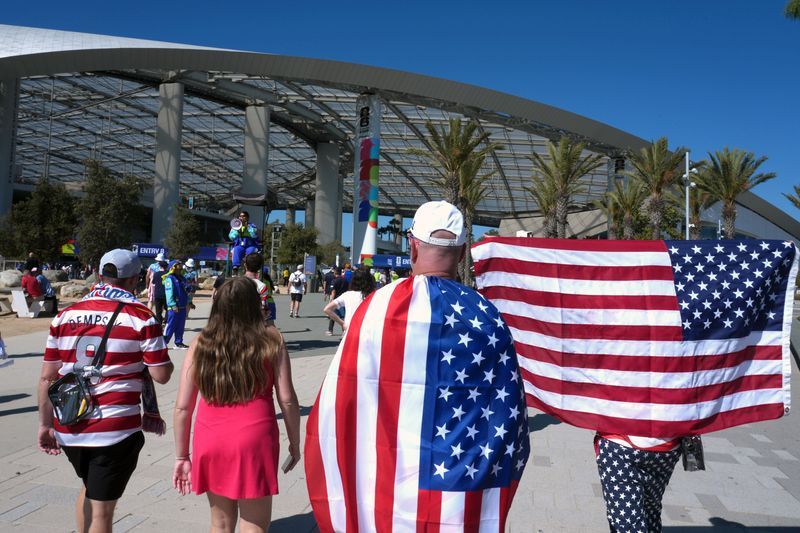
The festive anticipation of a World Cup adventure dissolved into disappointment for Jeremy Wright when, just five hours before kickoff on June 14, StubHub delivered crushing news: his tickets to watch the Netherlands face Japan could not be delivered. The Christmas gift he had carefully selected for his wife Sarah months earlier evaporated, leaving the couple from Austin facing a five-hour drive to Dallas that ended in rain-soaked defeat as they returned home empty-handed. Their experience, shared by dozens of other aggrieved fans across social media this month, reveals a significant crisis engulfing the first North American World Cup in over three decades—one that exposes fundamental vulnerabilities in how major sporting events distribute tickets through secondary markets.
StubHub, the U.S.-based resale platform where Wright purchased his tickets in September, assured customers it would honour its "FanProtect Guarantee" by sourcing replacement seats at no additional cost. Yet when Wright attempted to claim alternative tickets, the company offered only a refund, leaving him stranded. After exhausting hours trying to reach customer support without resolution, the Wrights capitulated. Their predicament was far from isolated: writer and personal stylist Dacy Gillespie purchased four tickets to Argentina's June 16 clash against Algeria as a surprise Christmas gift for her sons. She too received a matchday cancellation notice after driving 250 miles from St Louis to Kansas City, forcing her to scramble for overpriced replacements.
The blame for these failures centres on competing narratives between StubHub and FIFA. The resale platform contends that FIFA's ticketing infrastructure is hampering ticket transfers across all secondary platforms, citing systemic delivery issues beyond its control. Conversely, FIFA maintains its official ticketing platform operates reliably at scale and insists that its proprietary resale marketplace is the only channel through which it can guarantee proper ticket delivery. In a pointed statement, FIFA rejected "any suggestion that the functional issues being experienced by users of third-party platforms" stem from its infrastructure, positioning itself as a victim rather than a culprit. This regulatory finger-pointing provides little comfort to stranded fans caught between two powerful entities unwilling to accept responsibility.
Underlying these cancellations lies a practice known as speculative ticketing, whereby sellers list seats they do not yet possess, gambling they can purchase them cheaper on the secondary market before reselling them at a profit. Scott Friedman, a ticketing expert who previously consulted for the Cleveland Cavaliers and now heads the Ticket Talk Network, compares it to short-selling in financial markets. For typical major sporting events, secondary-market prices decline as game day approaches, making speculation less risky. However, World Cup ticket prices only climbed as the tournament neared, trapping speculators unable to fulfil orders without sustaining losses. Wright's September 6 purchase—four days before FIFA even launched official sales—strongly suggests his tickets were listed by a speculator. His order contained no seat numbers, merely a vague reference to "Category 3" seating, a telltale absence required by StubHub's stated policies but routinely circumvented through deliberate non-enforcement.
StubHub formally prohibits speculative ticketing, yet enforcement remains porous. The platform does not require sellers to provide specific seat numbers when listing inventory, enabling what Friedman terms "ghost tickets"—phantom seats that exist only on listings. StubHub maintains that sellers must upload actual tickets or furnish proof of purchase at listing time, with financial penalties and account suspension awaiting those caught misrepresenting inventory. These assurances ring hollow against mounting evidence of systemic failures. The platform has since established a dedicated World Cup support team and expanded capacity to source replacement tickets, responses that arrived only after affected customers weaponised social media outrage.
The Wright family and Gillespie both acknowledged that StubHub responded meaningfully only after their complaints went viral. StubHub offered the Wrights complimentary seats to a semi-final match, while Gillespie received USD 3,000 to offset replacement ticket costs—gestures that feel like guilt-driven appeasement rather than principled customer service. Sarah Wright articulated a broader frustration when she observed that they secured remedies only by "raising holy hell," wondering what became of the countless other affected patrons who lacked the social media reach to amplify their grievances. This selective accountability undermines consumer confidence and suggests StubHub calibrates its response not to moral principle but to reputational threat.
For Malaysian and Southeast Asian readers following World Cup developments, this scandal carries particular relevance. Regional fans planning to attend future international tournaments or purchase tickets through online platforms should expect similar vulnerabilities. The absence of strong regulatory oversight over secondary ticket markets—particularly across North America and Europe—creates conditions where platform failures can leave buyers internationally exposed. Those from the region purchasing via StubHub or comparable platforms face heightened risks of cancellation, given their geographic distance from venues and limited recourse mechanisms. The incident underscores why fans should prioritise official ticketing channels, despite higher fees and occasionally clunky interfaces, over seemingly cheaper secondary options that offer no legal guarantees.
FIFA's reliance on dynamic pricing—adjusted ticket costs based on demand fluctuations—has already attracted criticism from consumer advocates concerned about affordability. The crisis compounds these worries by suggesting that FIFA's ticketing infrastructure, while reliable for direct sales, may be incompatible with secondary-market platforms, effectively forcing fans toward FIFA's official resale channel with its controversial 30 percent commission. FIFA argues these fees align with North American industry standards, but the strategic advantage is unmistakable: fans facing cancellation risks on cheaper alternatives have little choice but to purchase at premium rates on FIFA's platform. This de facto monopoly, enforced through infrastructure incompatibility rather than explicit policy, raises fairness questions that regulatory bodies may eventually scrutinise.
Marsha-Gaye Knight, a clinical assistant professor at New York University's Tisch Institute for Global Sport, warns that StubHub faces potentially severe long-term brand damage. The company's reputation for reliability already faces external pressure: this week, the UK's markets watchdog ordered StubHub UK to refund more than 50,000 customers and impose a £900,000 (USD 1.19 million) fine for failing to display total prices upfront. That regulatory action, arriving simultaneously with World Cup cancellations, compounds the perception of a platform struggling with customer protection obligations across multiple jurisdictions. For a company built on promises of transparency and consumer protection, these concurrent failures suggest systemic shortcomings rather than isolated incidents.
The World Cup ticketing crisis exposes uncomfortable truths about how modern sports events interface with secondary markets. Neither StubHub nor FIFA emerges with credibility intact: the former failed to prevent speculative selling despite explicit policies against it, while the latter constructed infrastructure seemingly designed to funnel fans toward its own lucrative resale channel. Caught between two economically motivated entities, consumers absorbed the actual costs—forfeited money, cancelled holidays, broken family celebrations. Until regulatory frameworks impose genuine accountability on both official organisers and resale platforms, similar crises will recur at future major tournaments. For fans globally, including those in Southeast Asia, the lesson is unambiguous: secondary ticket markets offer convenience and occasionally savings, but they provide no real protection when systems fail.

