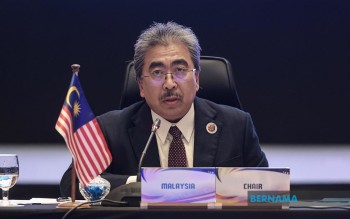
The World Trade Organization stands at a crossroads and must fundamentally rethink its operating framework to reflect the realities of 21st-century commerce, according to Malaysia's Investment, Trade and Industry Minister Datuk Seri Johari Abdul Ghani. Speaking at the 39th Asia-Pacific Roundtable in Kuala Lumpur, Johari articulated a vision of institutional evolution rather than abandonment, suggesting that the multilateral trading system—though foundational to post-war prosperity—now faces an existential challenge to its relevance in an era defined by strategic competition and supply chain anxieties.
When the WTO took shape in the mid-1990s, the institutional architecture reflected a particular set of assumptions about global commerce. Trade liberalization and expanded market access were viewed as unambiguous goods, pathways to prosperity and stability that transcended national boundaries. The intellectual consensus was remarkably strong: lowering barriers benefited all participants through comparative advantage and increased consumer choice. Yet that consensus has fractured. Today's policymakers navigate a landscape fundamentally altered by geopolitical tensions, pandemic-induced supply disruptions, and technological competition between major powers. The old playbook of progressive tariff reduction and regulatory harmonization no longer captures the full spectrum of concerns animating trade policy in capitals from Washington to Beijing to New Delhi.
Johari's diagnosis identifies the core tension: economic policymaking has shifted decisively toward questions of resilience and strategic autonomy. Nations increasingly ask not simply whether a given trade agreement maximizes GDP growth, but whether it renders them dependent on potentially hostile suppliers for critical materials, semiconductors, pharmaceuticals or energy. This pivot reflects hard lessons from recent years. When COVID-19 shuttered factories, revealed the fragility of globally distributed supply chains, and created shortages of essential goods, governments confronted the reality that pure efficiency metrics overlooked vulnerability. The subsequent rush to nearshoring, friend-shoring, and domestic capability-building reflects this reorientation. Meanwhile, the race for artificial intelligence dominance and advanced chip manufacturing has further concentrated minds on technological leadership and the notion of strategic autonomy—the capacity to function independently when geopolitical relationships deteriorate.
The minister's central concern—that the WTO could lose relevance without adaptation—resonates particularly in Southeast Asia, a region deeply embedded in global supply networks yet increasingly caught between competing power blocs. For Malaysia and its neighbors, the stakes are high. ASEAN nations rely heavily on open market access and rules-based commerce, yet they also face pressure to align with either Chinese or Western technology ecosystems, supply chain partnerships, and security frameworks. A WTO unable to address these tensions risks irrelevance precisely when clear, credible multilateral rules are most needed to manage uncertainty and prevent economic disputes from escalating into military confrontation.
Johari emphasizes that the organization must retain its core function of dispute resolution and rule-making while expanding its remit to encompass modern trade concerns. The WTO's traditional toolkit—tariff schedules, non-discrimination principles, transparency obligations—remains valuable. Yet these instruments alone cannot address digital trade barriers, intellectual property theft, forced technology transfer, or the strategic use of trade restrictions as instruments of coercion. The organization must develop mechanisms to handle discriminatory practices that operate beneath the threshold of traditional tariff or quota measures. This requires conceptual innovation and renewed institutional capacity, not wholesale abandonment of multilateralism.
The broader context underscores why Johari's message matters for the Asia-Pacific. As the 39th Asia-Pacific Roundtable convened under the theme "Accelerating Agency and Action," the conference brought together policymakers, diplomats, military officials, and business leaders to grapple with urgent regional challenges. In an era of intensifying strategic competition, particularly between the United States and China, the region faces a genuine dilemma: how to maintain economic openness and multilateral engagement while protecting critical interests and preserving strategic choice. A modernized WTO could facilitate this balance by establishing clearer rules governing investment screening, technology transfer, and strategic supply chains. Absent such evolution, bilateral deals and regional blocs will proliferate, fragmenting global commerce and reducing predictability.
Malaysia's public reaffirmation of support for the multilateral trading system, coupled with this critique of its current operation, reflects a sophisticated middle-power perspective. The country benefits enormously from rules-based commerce and wishes to preserve that order, yet recognizes that the existing institutional framework no longer adequately serves the interests of members operating in a multipolar, technologically competitive environment. This position likely resonates across much of ASEAN, where economic resilience and geopolitical flexibility are both essential.
The challenge for the WTO is substantial. The organization's decision-making processes were designed for consensus in a more collegial era; updating them to address contemporary tensions will prove contentious, with developed and developing nations, liberal and state-directed economies, technological leaders and followers all viewing reform differently. Yet the alternative—gradual irrelevance as nations turn to bilateral, regional, or sectoral arrangements—seems worse. Johari's intervention suggests that Malaysia at least sees genuine possibility in institutional renovation, provided the WTO proves willing to examine and adapt its assumptions about what modern trade governance requires.
Ultimately, the question confronting the WTO is whether it can evolve from an organization primarily concerned with tariff reduction into one capable of managing the complexities of technological competition, supply chain security, and strategic autonomy while preserving the benefits of market openness. For countries like Malaysia deeply invested in both economic integration and strategic independence, that adaptation is not merely desirable but essential to maintaining a rules-based order capable of channeling competition into peaceful channels and preventing economic tensions from metastasizing into broader conflict.

