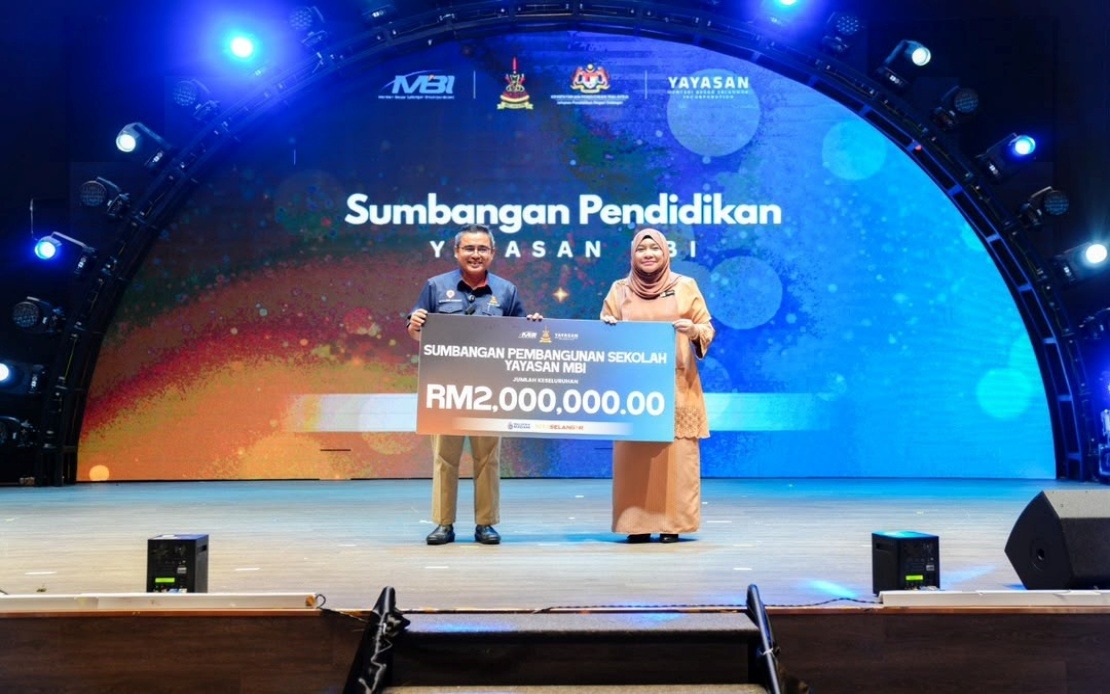
Yayasan Menteri Besar Selangor (Incorporated) has allocated RM2 million to upgrade school facilities and educational infrastructure across the state, marking a significant investment in Selangor's learning environment. The disbursement through the foundation's School Development Contribution programme underscores a strategic commitment to creating more functional and welcoming spaces for both educators and pupils, addressing infrastructure gaps that often constrain teaching quality and student outcomes.
The initiative was unveiled at the Yayasan MBI Education Aspiration 2026 event, a gathering designed to forge closer ties between the foundation, educational institutions, and community partners while celebrating the work of teachers in advancing the state's education agenda. According to Ahmad Azri Zainal Nor, head of Yayasan MBI, this financial commitment reflects a deeper philosophical stance toward education. Rather than viewing philanthropic support as temporary welfare, the foundation regards educational investment as a foundational element in building human capital and securing Selangor's long-term prosperity and competitiveness.
Education has emerged as a centrepiece of Yayasan MBI's operational philosophy, with approximately two-thirds of the foundation's initiatives concentrated in this sector. This weighted allocation demonstrates a deliberate strategic choice to prioritise educational outcomes over other social concerns, reflecting a belief that systemic improvements in schooling create multiplier effects across society. By directing substantial resources toward schools, the foundation seeks to address root causes of educational inequality rather than managing symptoms through temporary relief programmes.
The RM2 million injection targets tangible improvements in physical learning infrastructure—classrooms, facilities, and amenities that directly influence student engagement and teacher effectiveness. Poor infrastructure has long plagued Malaysian schools, particularly in rural and underserved urban areas. When schools lack basic resources, teachers expend energy managing environmental constraints rather than focusing on pedagogy. Students, meanwhile, struggle to concentrate in uncomfortable or inadequate spaces. This fund addresses those realities by channelling resources toward schools facing documented infrastructure deficits.
Beyond one-time funding, Yayasan MBI operates a suite of ongoing programmes designed to sustain educational support throughout the academic year. The Back to School Tour Programme helps students prepare for the school year, while the Selangor People's Tuition Programme and Didik Kasih Programme provide free academic coaching to vulnerable pupils. Parent-Teacher Association collaborations strengthen the institutional networks that bind schools to their communities. Together, these initiatives constitute a layered approach recognising that education requires continuous, multi-dimensional support rather than isolated interventions.
The foundation's operational model emphasises partnership with government structures, particularly the Selangor State Education Department. This alignment ensures that Yayasan MBI's funding priorities align with departmental assessments of actual school needs, reducing duplication and maximising impact. When private philanthropy works in coordination with state education authorities rather than in parallel, resources reach schools most effectively and programmes complement rather than undermine official educational policy.
For Malaysian readers, this development carries particular relevance given ongoing debates about educational equity and public investment in schools. Selangor, as the nation's most economically developed state after the Federal Territories, has comparative advantages in attracting philanthropic capital and state resources. Yet even within prosperous regions, school infrastructure gaps persist, particularly in newer townships and older rural areas. Private foundation contributions like Yayasan MBI's RM2 million signal that structural educational challenges require contributions beyond government budgets alone, though such private funding cannot substitute for adequate public investment.
The emphasis on creating a more inclusive and sustainable education ecosystem reflects an understanding that educational quality depends on interconnected factors—physical spaces, teaching resources, community engagement, and targeted academic support. Yayasan MBI's approach acknowledges that no single intervention solves educational challenges; instead, coordinated efforts across multiple dimensions yield incremental improvements that compound over time. This systems-thinking approach contrasts with fragmented philanthropic efforts that address isolated problems without addressing underlying structural issues.
Looking forward, the foundation's Education Aspiration 2026 framework suggests a roadmap extending several years into the future, indicating sustained commitment rather than sporadic giving. For policymakers monitoring Selangor's education trajectory, this provides a degree of predictability regarding philanthropic contributions. Schools can plan renovations and improvements knowing external resources will remain available. Teachers benefit from stable supplementary programmes. Students access consistent tutoring and support services. This stability, often absent in ad hoc charitable efforts, magnifies the real-world impact of each ringgit deployed.
The broader context involves Southeast Asia's competitive dynamics in human capital development. Regional economies increasingly differentiate themselves through workforce quality and innovation capacity, both rooted in educational foundations. States investing heavily in school infrastructure and teacher support build advantages in attracting investment and retaining talent. Selangor's combination of government programmes and private foundation support positions it competitively within Malaysia and the region, signalling to prospective residents and investors that the state takes seriously the human capital investments that drive prosperity.
Yayasan MBI's RM2 million commitment also reflects acknowledgment that teacher satisfaction and retention depend partly on working conditions. When schools feature adequate facilities and functional learning environments, teachers' professional experience improves, potentially reducing burnout and enhancing retention of experienced educators. Malaysian schools face documented teacher shortages in certain disciplines and regions; improving the physical and operational environment in which teachers work represents an indirect but meaningful strategy for human resource sustainability in education.
The collaboration framework established with the Selangor State Education Department provides a governance model worthy of attention. Rather than Yayasan MBI unilaterally determining funding priorities, the partnership structure ensures that educational professionals assess needs and guide allocation decisions. This approach respects the expertise of career educators and administrators while leveraging private capital. For other state-level foundations or corporate social responsibility programmes, this model offers a template balancing philanthropic autonomy with institutional expertise and government accountability.
Ultimately, Yayasan MBI's RM2 million School Development Contribution represents both immediate material benefit—upgraded facilities and spaces—and affirmation of education's centrality to Selangor's future. The foundation's sustained focus on the sector, now formalized through 2026, positions education not as a peripheral concern but as a core strategic priority. For students, parents, and educators in Selangor schools, this translates into tangible improvements in learning environments and access to supplementary support, with implications extending beyond individual schools toward broader state competitiveness and social cohesion.

