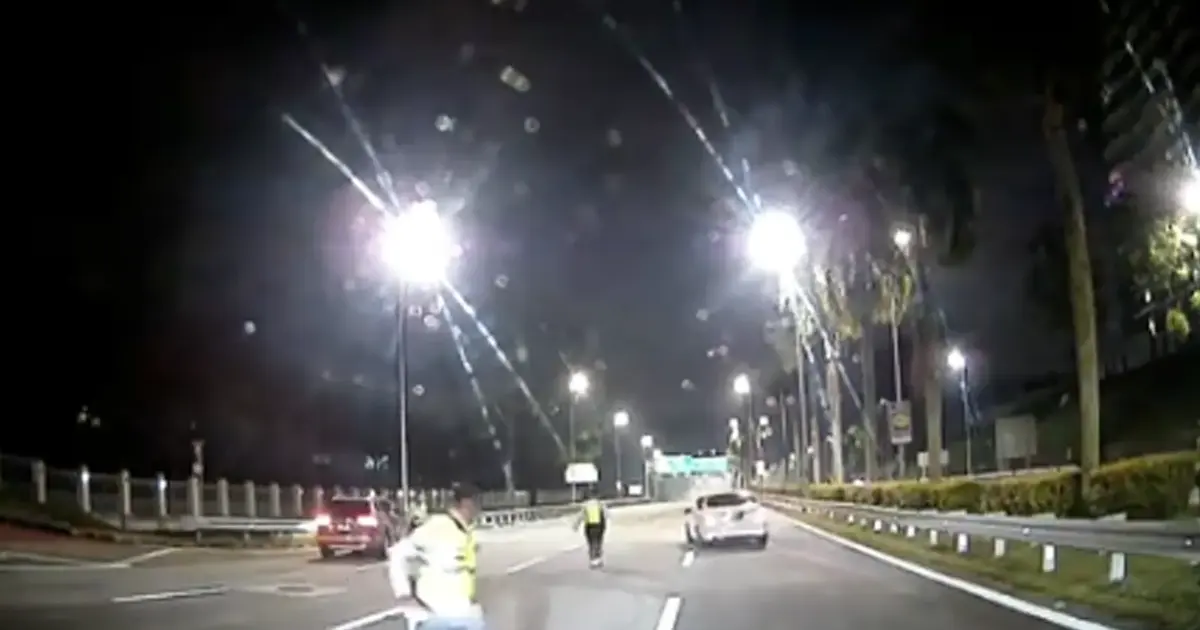
Police arrested a 20-year-old man today following an incident at a roadblock in which he drove through a checkpoint despite officers' attempts to halt his vehicle. The young driver, observed to be visibly apprehensive during the encounter, chose to accelerate rather than comply with standard police procedures at the inspection point.
The driver's decision to breach the roadblock raises broader questions about compliance with law enforcement during routine traffic checks, a common occurrence across Malaysia's road network. Such incidents underscore the tension that can arise when motorists encounter police checkpoints, particularly when nervous or anxious about the interaction.
Roadblocks form a crucial component of Malaysia's traffic safety and law enforcement strategy, allowing officers to check vehicle documentation, detect traffic violations, and identify wanted individuals or vehicles. The systematic nature of these operations depends entirely on the cooperation of motorists, making non-compliance a serious matter that authorities must address firmly to maintain the effectiveness of such operations.
The arrested individual now faces charges related to failing to comply with a police officer's orders, a violation that carries legal consequences under Malaysian law. Such offences are treated seriously because they undermine police authority and create safety risks for both officers and other road users during checkpoint operations.
This incident reflects a pattern observed periodically at roadblocks throughout the country, where some drivers panic or become defensive when approached by law enforcement. Understanding the psychology behind such decisions—whether stemming from nervousness, prior negative experiences with police, or other factors—can help authorities develop more effective communication strategies at checkpoints.
For Malaysian road users, the implications are clear: cooperation at roadblocks remains the safest and most legally prudent course of action. Even if a driver believes they have done nothing wrong, forcing through a checkpoint only compounds the situation and inevitably results in arrest and formal charges.
The case also highlights the importance of proper driver training and awareness campaigns emphasizing lawful behaviour during police interactions. Public education initiatives that normalize roadblock procedures and explain their necessity could potentially reduce incidents of non-compliance by making drivers more comfortable with routine inspections.
From a law enforcement perspective, this arrest demonstrates that police will pursue cases of deliberate obstruction or refusal to obey orders, regardless of the driver's age or apparent state of mind. Authorities must maintain consistent enforcement to preserve the deterrent effect that roadblocks provide across the nation's highways and urban streets.
The incident occurs within a broader context of Malaysian traffic management, where regular checkpoints serve multiple functions beyond simple compliance verification. These operations allow officers to monitor vehicle safety standards, identify uninsured drivers, and conduct intelligence gathering on criminal networks that utilize road networks for illicit activities.
For regional observers, Malaysia's approach to roadblock enforcement reflects wider Southeast Asian practices, though the specific legal frameworks and procedures vary by jurisdiction. The consistency with which Malaysian authorities prosecute non-compliance demonstrates the region's general commitment to maintaining order on public roads.
Looking forward, this case will likely be processed through Malaysia's court system, where the charges against the 20-year-old driver will be formally examined. The outcome may serve as a reminder to other motorists of the consequences associated with ignoring police instructions at checkpoints.

