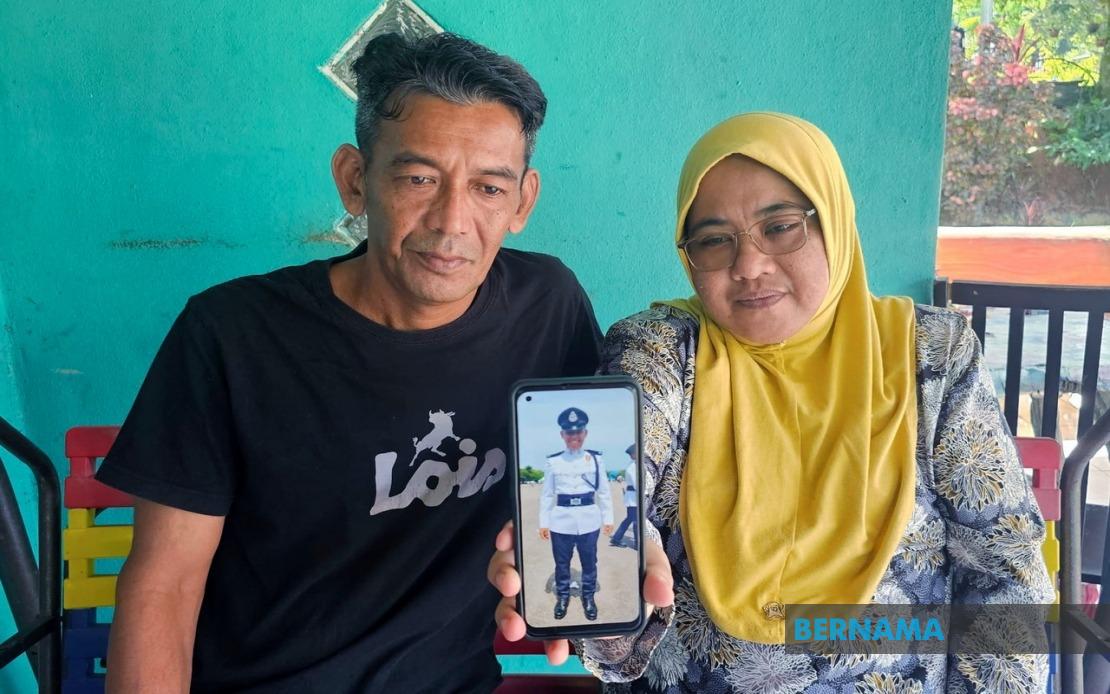
The joy that Ismarubee Ismail and his wife Nor Azila Zakaria had anticipated in welcoming their son home this month transformed into devastating grief when they learned of his sudden death on duty in Sabah. Constable Muhammad Raimi Ismarubee, 26, was fatally electrocuted while working at the Weston Police Station in Beaufort, marking a tragic loss for the family in Felda Kerteh 2, Dungun. The incident has renewed concerns about workplace safety protocols at police installations across Malaysia, particularly regarding hazard management during routine operational tasks.
The young constable had been stationed at Weston Police Station since September 2024, a relatively short tenure in his policing career. When speaking to his parents in June, Muhammad Raimi had expressed his desire to take leave and return to his hometown in Terengganu for a holiday. His plan was to return once he could secure more affordable airline tickets, reflecting the financial constraints many young government servants face when travelling between Peninsula Malaysia and Sabah. His last homecoming had occurred in January, suggesting he had been unable to visit his family for several months prior to his death.
According to his father Ismarubee, who works as a labourer, the final communication from his son came at 2 pm on the day of the incident. Muhammad Raimi had sent a WhatsApp message detailing the success of a drug arrest operation he had participated in—a moment of professional pride that would become his last message to his family. Just four hours later, at 6 pm, Ismarubee received a phone call from his son's friend delivering the shocking news of his death. The compressed timeframe between professional accomplishment and tragedy underscores the unpredictability of workplace hazards, even in administrative and security environments.
The electrocution occurred when Muhammad Raimi and two colleagues—Corporal Chiu Teck Siong, 40, and Lance Corporal Mohamad Nur Hafiz Ibrahim, 29—were moving a metal pole used for coconut harvesting near the police station grounds close to Sekolah Kebangsaan Weston. The incident raises significant questions about why police personnel were engaging in such tasks and whether appropriate safety equipment and protocols were in place. That three officers died simultaneously suggests inadequate grounding or insulation measures, compounding the tragedy and pointing to systemic gaps in workplace hazard management.
Muhammad Raimi's mother Nor Azila painted a portrait of a devoted son whose ambitions extended beyond his police duties. He had planned to get engaged to a woman from Sabah in the coming year, demonstrating his commitment to building a life despite the geographical challenges of his posting. However, he had deliberately deferred his marriage plans until his youngest sibling completed the Sijil Pelajaran Malaysia examination, prioritising his family's educational needs over his own personal milestones. This decision reflected a maturity and sense of familial responsibility that earned the deep affection of his parents.
The constable's financial contributions to his household painted the picture of a conscientious young man navigating early adulthood. Muhammad Raimi regularly purchased educational materials and equipment his siblings required for their studies, including a laptop, and sent money to his parents and siblings nearly every month. These sustained contributions represented not merely financial support but an emotional investment in his family's future, demonstrating that his commitment to the police service did not diminish his sense of obligation to those who raised him.
The incident has profound implications for workplace safety culture within Malaysia's police force and broader government institutions. Three experienced and relatively young officers—ranging from 26 to 40 years old—were lost in a single preventable incident. The fact that they were engaged in a task outside their primary security duties while at a police station raises questions about risk assessment, supervision, and the allocation of routine maintenance work. Whether civilian contractors or equipment should have been employed for coconut harvesting instead of uniformed personnel remains an unanswered question with serious ramifications for future operations.
For families across Sabah and the Peninsula Malaysia who have relatives in the police force, this tragedy carries particular resonance. Young officers stationed far from home often face isolation and are sometimes assigned to duties beyond their core training. Muhammad Raimi's case exemplifies a common pattern—a young man from Terengganu working in Beaufort, maintaining financial support for family across hundreds of kilometres, and unable to visit home regularly due to cost and duty commitments. The circumstances surrounding his death suggest that attention to occupational health and safety in the police service requires urgent review.
The authorities moved quickly to handle the immediate aftermath. Muhammad Raimi's remains were brought back to Terengganu and buried at the Felda Kerteh 2 Muslim Cemetery on the same day as his death. This rapid repatriation, while providing some dignity to the deceased, also underscores the efficiency of the police institution in managing casualties—a sobering testament to how routine such tragedies have become. The speed suggests established protocols exist for handling officer deaths, yet the question remains whether sufficient protocols exist for preventing them in the first place.
The loss extends beyond the immediate families to the broader police institution and communities both in Sabah and the Peninsula. Muhammad Raimi represented an investment of training and resources, yet more importantly, he represented the hopes and sacrifices of families supporting their members in public service. His story should prompt reflection on whether police stations provide adequate training, equipment, and supervision for all tasks assigned to personnel, and whether institutional culture adequately values the wellbeing of officers performing duties beyond their primary responsibilities.
For Ismarubee and Nor Azila, the anticipated joy of their son's homecoming has transformed into mourning, and the engagement their son planned for next year will never come to pass. The financial security he provided to his younger siblings and parents has ended abruptly. Yet beyond this particular family's grief lies a systemic issue demanding examination: how many other young officers are currently working in hazardous conditions without adequate safety measures, and what institutional failures allowed three experienced personnel to be placed in circumstances where a routine task claimed their lives?

