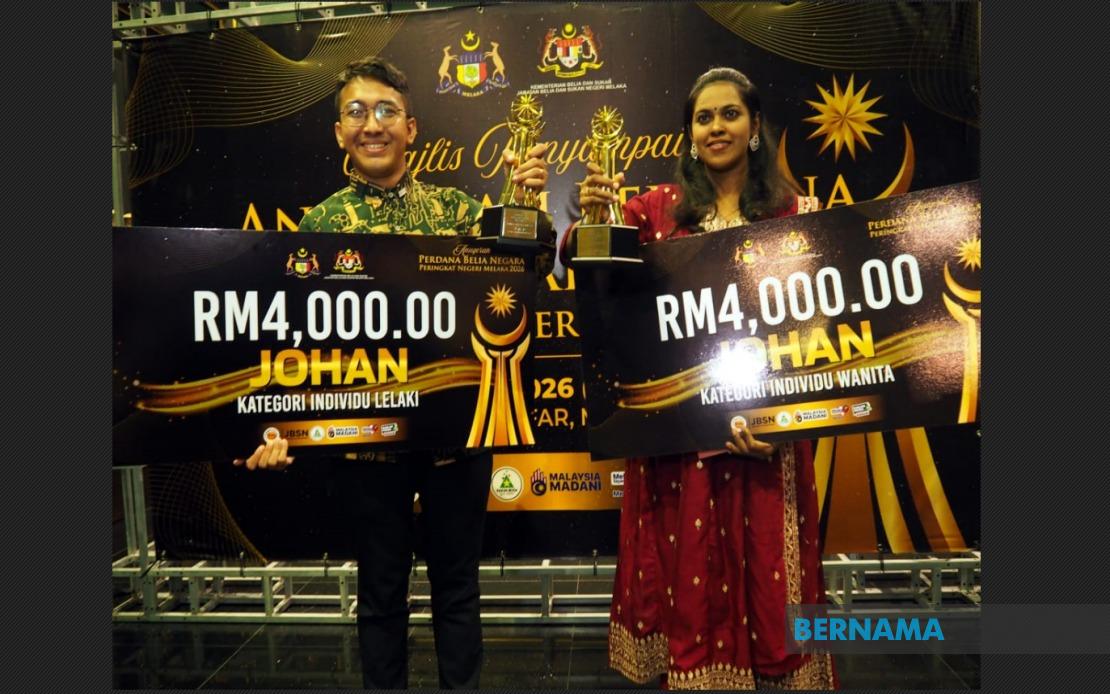
Harris Daniel Hermee, a 28-year-old practising syariah lawyer, has claimed the top honour in the male category at the 2026 Melaka State-level National Youth Awards, marking a significant milestone in his career of youth advocacy and community service. The Islamic studies and law graduate from Universiti Sultan Zainal Abidin represents a growing cohort of young professionals leveraging their expertise to mentor and empower the next generation, particularly within Malaysia's Muslim youth communities.
The ceremony, held in Ayer Keroh and presided over by Melaka Chief Minister Datuk Seri Ab Rauf Yusoh, underscores the state government's commitment to recognising emerging leaders who drive grassroots development initiatives. The presence of state Youth, Sports and NGO Committee chairman Datuk VP Shanmugam signals institutional support for youth-led advocacy, a crucial element in sustaining momentum for community-based programmes across the peninsula.
Hermee's pathway to recognition began with his engagement with Gerakan Belia 4B Hang Tuah Jaya, where he established a track record organising youth empowerment, sports, and volunteer activities in collaboration with government bodies and community organisations. His role as Youth State Assembly Member for Pengkalan Batu has expanded his platform, enabling him to translate grassroots insights into actionable policy advocacy at the state parliamentary level. Speaking after the ceremony, he reflected that his third-place finish in the previous year's competition motivated him to intensify his efforts, particularly through involvement in national and international youth forums.
Hermee's ascent through the awards rankings illustrates a broader pattern in Malaysian youth engagement where academic credentials and professional standing are increasingly paired with substantive community participation. His background in Islamic jurisprudence positions him uniquely to address legal and ethical dimensions of youth development, particularly regarding Syariah compliance in youth programmes and family-related matters affecting younger Malaysians.
In the female category, SS Mayuri, a 30-year-old primary school educator from Alor Gajah, secured top honours for her comprehensive approach to student welfare and community mobilisation. Working through the Melaka and Malaysia Tamil Youth Club Council, Mayuri has concentrated on academic mentorship, particularly supporting students preparing for the Sijil Pelajaran Malaysia examination through motivation and guidance programmes. Her recognition by the state awards committee acknowledges the pivotal role classroom educators play in youth development beyond the formal curriculum.
Mayuri's initiatives extend into community health and social responsibility, with blood donation drives representing her efforts to instil civic consciousness among younger cohorts. This dual focus on academic excellence and community participation reflects contemporary approaches to holistic youth development that recognise education's role extends beyond examination results. Her work particularly resonates in the Tamil-speaking communities of Melaka, where culturally grounded mentoring and peer support networks strengthen social cohesion.
The recognition of both awardees highlights a significant demographic shift in Malaysian youth leadership. Both recipients came of age during periods of rapid technological and social change, yet have deliberately invested in traditional mechanisms of mentoring, volunteerism, and institutional participation. This contrasts with perceptions that young Malaysians gravitate exclusively toward digital activism or individual entrepreneurship, instead demonstrating sustained commitment to formalised community structures.
For the broader Melaka context, these awards reflect the state's deliberate cultivation of youth capital as an economic and social asset. The state government's public recognition of community-focused young professionals sends a clear message that career advancement and public service are compatible, potentially encouraging similar engagement among other high-performing young professionals in the region. This alignment of incentives with community needs proves particularly important in a state competing for talent against more economically dynamic urban centres.
The awards also underscore disparities in youth development infrastructure across Malaysian states. Melaka's structured recognition system for youth leaders provides visibility and validation that smaller or less formalised programmes in other states may struggle to offer. For young professionals contemplating relocation or career decisions, such institutional frameworks become relevant considerations when evaluating quality-of-life and social impact dimensions beyond remuneration.
As Malaysia navigates demographic transitions and evolving labour market demands, the elevation of educators and legal professionals engaged in youth work carries symbolic weight. Both Hermee and Mayuri represent knowledge workers actively investing their professional standing in community betterment rather than purely commercial pursuits. Their recognition may catalyse similar commitment among peers in the legal, educational, and professional sectors, gradually shifting cultural expectations around corporate social responsibility among individual practitioners.
Moving forward, the question facing policymakers concerns how to scale the impact of individual high-performers like Hermee and Mayuri. Formal recognition through state awards constitutes important validation, yet sustainable youth development requires institutional capacity to support mentor-mentee networks, resource-intensive programmes, and long-term engagement strategies. The challenge lies in translating individual excellence into systemic improvement across Melaka's education and community sectors.

