The contest for Johor Jaya state seat is shaping up as a generational battle between fresh political momentum and entrenched community connections, with candidates from Pakatan Harapan and Barisan Nasional each leveraging their distinct strengths as voters prepare to head to polls on July 11. At the heart of this competition lies fundamentally different philosophies about how to steer the constituency toward prosperity—one emphasizing youthful energy and policy innovation, the other grounded in years of hands-on service and local relationship-building.
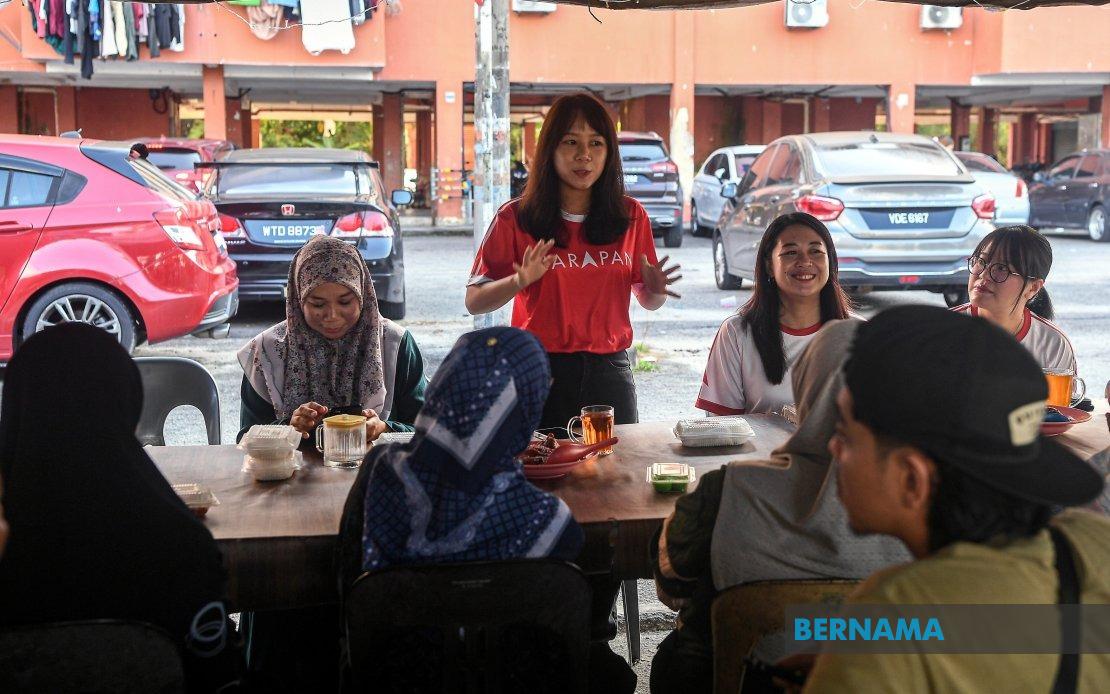
Lee Wern Yiing, the Pakatan Harapan standard-bearer, represents a particular archetype increasingly common in Malaysian politics: the educated diaspora returnee willing to sacrifice lucrative overseas prospects for domestic public service. The 30-year-old DAP politician completed her tertiary education in Singapore but made the deliberate choice to come home, citing confidence in Malaysia's reform trajectory and personal commitment to community development. Her journey from special officer to Johor Jaya assemblyman Liow Cai Tung's team to present candidate status reflects a structured rise through party ranks, one that emphasizes ideological alignment with the broader reformist agenda that Pakatan Harapan has championed since 2018.
The strategic challenge Lee faces involves convincing voters—particularly younger demographics who are frequently dismissed as politically apathetic—that substantive engagement with electoral politics serves their material interests. Rather than accepting the conventional wisdom that young people disengage from traditional political participation, she argues that this generation conducts its own research and forms independent judgments based on observable reality. This analysis carries important implications for how political campaigns must adapt their messaging and delivery mechanisms. Lee's emphasis on social media outreach combined with community programming such as the Johor Jaya Run demonstrates recognition that younger voters respond to multi-channel engagement strategies that integrate digital platforms with tangible ground activities.
Economic opportunity stands as Lee's primary policy pillar, and she has strategically anchored this to a major infrastructure initiative that resonates beyond Johor Jaya itself. The Johor-Singapore Special Economic Zone represents precisely the kind of transformative project that could generate employment pathways for the young professionals Lee seeks to retain within the state. By framing the JS-SEZ not merely as abstract economic development but as a concrete vehicle for career opportunities and family stability, she appeals directly to voters' lived concerns about cost of living, housing affordability, and job availability. Her vision of Johor Jaya as a destination where young people choose to build lives rather than escape to Singapore or Kuala Lumpur carries emotional resonance alongside practical economic logic.
Barchan Nasional's Chan San San approaches the same constituency from an entirely different vantage point, weaponizing her status as a Plentong native—a marker of long-standing community roots—and over a decade of accumulated service experience. Chan's political autobiography emphasizes proximity to constituent problems, framing her work as a Johor Bahru City Council member, Johor MCA deputy secretary, and volunteer crisis relief coordinator as evidence of practical commitment rather than theoretical policy-making. This localist positioning directly contests the notion that outside experience, foreign education, or party ideology should determine voter preference. Instead, Chan appeals to a more traditional calculus: demonstrated presence in the community, willingness to engage with problems on their terms, and visible institutional experience navigating bureaucracy on residents' behalf.
The infrastructure emphasis that both candidates highlight reveals shared understanding of Johor Jaya's development trajectory but diverging priorities. Chan frames transportation connectivity as central to the constituency's future, specifically positioning it as a hub linking eastern Johor Bahru to the Rapid Transit System project while simultaneously addressing the traffic congestion that plagues the area. This focus on mobility infrastructure reflects recognition that Johor Jaya residents increasingly commute across metropolitan boundaries and that transportation bottlenecks directly impact quality of life and economic productivity. By anchoring her campaign to concrete infrastructure solutions, Chan counters potential criticism that her campaign relies solely on personal relationships and service history without forward-looking policy vision.
The four-way contest shape—with Parti Bersama Malaysia's Lau Yi Leong and independent candidate Lim Hun Peaw joining the PH-BN duel—introduces an element of unpredictability into what might otherwise appear as a straightforward two-coalition struggle. Third-party candidacies in Malaysia's electoral system can prove decisive, particularly when they fragment support among specific voter blocs or message carriers. The existence of these alternatives forces Lee and Chan to address not just each other but also the possibility that voters might seek options beyond the traditional coalition framework, suggesting broader dissatisfaction or specific local grievances that warrant protest voting.
The broader context of the 16th Johor state election encompasses 172 candidates contesting across 56 seats, a competitive environment that intensifies pressure on individual candidates to develop locally resonant narratives while contributing to their coalition's overall electoral strategy. Early voting scheduled for July 7 followed by main polling on July 11 compresses the final campaigning window, making message discipline and targeted voter communication increasingly critical. For Pakatan Harapan, the Johor election represents an opportunity to extend its 2022 federal election performance and consolidate youth support in a state where demographic trends favor younger voters. For Barisan Nasional, the contest offers a chance to demonstrate resilience and ground-level organizational strength despite national-level challenges to its political dominance.
The substantive stakes of the Johor Jaya election extend beyond individual seat contests to encompass broader questions about how Malaysian parties and voters conceptualize development priorities and leadership qualifications. The Lee-Chan dynamic specifically highlights tension between cosmopolitan expertise and localist knowledge, between policy innovation and administrative competence, between appealing to demographic change and leveraging institutional continuity. Neither candidate's approach is inherently superior; rather, voters must evaluate which combination of attributes they judge most valuable for steering their constituency through coming years. Lee's strength in capturing young ambition and policy articulation must overcome perceptions that she lacks entrenched local relationships and deep community history. Chan's advantage in demonstrated service and institutional experience must respond to potential voter hunger for new ideas and different political orientations.
The outcome in Johor Jaya will offer insights into whether Malaysian voters increasingly privilege fresh talent and policy innovation over traditional service records and community embeddedness, or whether local relationships and institutional experience retain decisive political value. This choice, played out across Johor and potentially signaling patterns for future Malaysian elections, carries implications for political recruitment, campaign strategy, and the types of leaders parties identify as viable representatives. The July 11 result will provide one data point in the ongoing negotiation between generational change and political continuity that defines contemporary Malaysian democracy.

