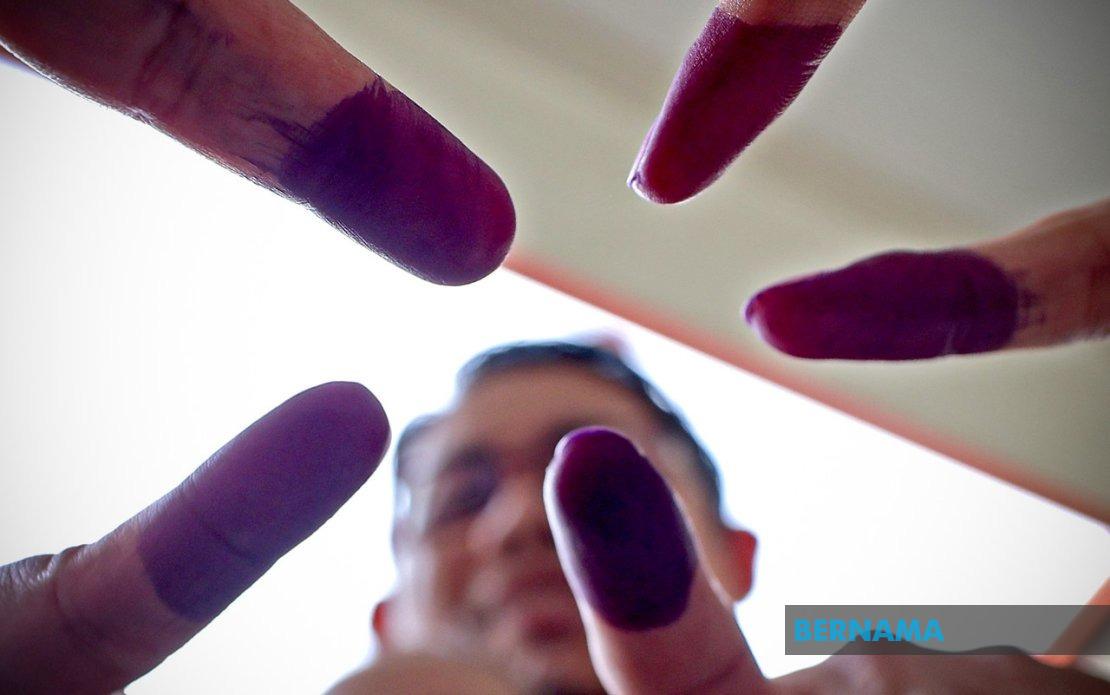
Young and first-time voters are set to emerge as critical decision-makers in closely contested seats across Johor's 16th state election, a shift driven by the implementation of Undi18 legislation and automatic voter registration that has substantially enlarged the electorate. Political analysts increasingly view this demographic—estimated at around 1.2 million people—as potential kingmakers in marginal constituencies where traditional party support has eroded, particularly among those without strong ideological moorings to any political faction.
The expansion of youth electoral participation through constitutional and administrative reforms has fundamentally altered campaign calculus. Election Commission data reveals that voters below age 40 now comprise a significant bloc: 587,888 aged 30 to 39, 544,657 aged 21 to 29, and 165,386 aged 18 to 20. This concentration of younger voices in virtually every constituency means that in closely-fought races, their collective preferences could determine which party takes control of hotly-contested seats. Unlike previous elections where youth turnout was episodic, these voters now represent a permanent structural feature of Johor politics.
Associate Professor Dr Mohd Yusri Ibrahim from the Ilham Centre argues that campaign strategies must now be fundamentally recalibrated to accommodate this demographic reality. He contends that parties relying solely on traditional outreach methods risk alienating the very voters most likely to swing marginal races. Social media has become the primary vehicle for reaching younger urban voters, who increasingly consume political information through digital platforms rather than conventional media. However, this digital emphasis cannot entirely replace conventional grassroots activity, which remains essential for mobilising older rural constituencies that continue to be influenced by personal networks and community relationships with candidates.
A particularly notable characteristic of these younger voters is their apparent indifference to traditional partisan identities. Rather than sorting themselves into stable party coalitions, many younger Johor voters appear to evaluate candidates and parties based on concrete performance metrics, personal credibility, and demonstrated problem-solving capacity. This represents a significant departure from earlier voting cohorts, where party affiliation and ethnic-communal politics provided relatively stable anchors for electoral choice. The fence-sitting tendency among younger voters makes them simultaneously valuable and unpredictable from parties' perspectives.
Dr Mohammad Tawfik Yaakub from Universiti Malaya's political science department emphasises that parties must strike a delicate balance between digital momentum-building and on-the-ground organisational capacity. He observes that while social media can generate excitement and visibility, converting that virtual engagement into actual votes requires robust grassroots machinery. Many parties that have invested heavily in online presence while neglecting grassroots infrastructure have discovered that social media momentum dissipates on polling day when voters face the practical decision of which candidate to support. The most successful parties in Johor will likely be those that harness digital tools while maintaining strong community-level networks.
Geographic divides in voter behaviour further complicate the campaign picture. Urban voters are generally more exposed to national political narratives and participate more actively in social media discourse, while rural voters continue to rely more heavily on local candidate reputations and long-standing relationships within their communities. This split means that a single campaign message is unlikely to resonate across all constituency types. Parties must craft messages that appeal to urban swing voters concerned with economic policy and institutional accountability while simultaneously addressing the localised concerns that matter most to rural constituents.
The willingness of Johor voters to consider new political faces represents another significant shift from past elections. Where seniority and incumbency once conferred substantial advantages, younger voters increasingly evaluate candidates on intrinsic merit—their capability, track record of delivering results, and perceived ability to address constituent concerns. However, analysts caution that youth alone is insufficient to win voter confidence. A young candidate without demonstrable competence or credibility will struggle to gain support, regardless of age. The electorate appears to be demanding that new faces combine relative freshness with genuine qualification for office.
Economic grievances are emerging as the central preoccupation of younger voters. Rather than engaging primarily with identity politics or abstract ideological frameworks, many younger Johor voters are focused on practical bread-and-butter concerns: wage levels, cost of living, housing affordability, and employment prospects. This pragmatic orientation means that parties positioning themselves as capable managers of economic challenges and rising costs are more likely to persuade fence-sitting voters than those relying on traditional political messaging. The electorate's growing focus on economic performance over political rhetoric represents a meaningful shift in what voters reward at the ballot box.
Voter turnout will prove crucial to the final outcome, particularly given the propensity of younger voters to sit out elections if they perceive insufficient difference between competing parties or feel disconnected from campaign messaging. The scheduled polling day of July 11, with early voting on July 7, provides ample opportunity for parties to mobilise their support bases. However, simply getting young voters to the ballot requires campaigns that meaningfully engage with their concerns and demonstrate that parties have substantive solutions rather than platitudes to offer.
The broader implication of these electoral dynamics extends beyond Johor itself. As Undi18 and automatic registration take root nationally, the experience in Johor provides a preview of how Malaysian politics will evolve across the country. The declining power of traditional partisan identities and the rising importance of economic competence and candidate credibility suggest that future elections will be more volatile and less predictable than those dominated by stable communal voting blocs. Political parties throughout Southeast Asia may similarly need to recalibrate their strategies to address younger voters prioritizing practical governance over ideological consistency.

