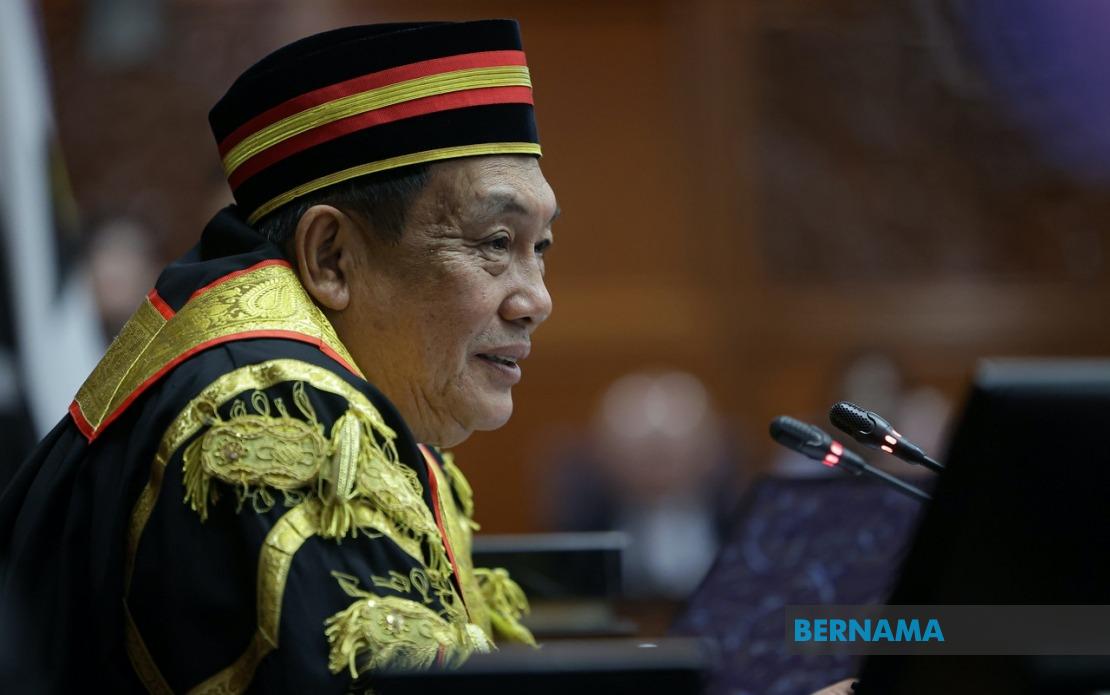
Malaysia's Youth Parliament represents far more than a symbolic gesture toward inclusion, according to Dewan Negara President Datuk Awang Bemee Awang Ali Basah. Speaking at a parliamentary outreach programme at Universiti Malaysia Terengganu on August 27, the Senate president framed the initiative as essential infrastructure for cultivating informed, engaged citizens who grasp the mechanics and ethos underlying democratic governance. By exposing young Malaysians to parliamentary processes—debate, deliberation, criticism and consensus-building—the platform imparts lessons that extend well beyond legislative procedure, shaping the foundational attitudes required for meaningful participation in national affairs.
The concept of Youth Parliament as a "school of democracy" carries particular resonance within Malaysia's context. The nation's diverse racial, religious and cultural composition demands leaders and citizens capable of navigating competing perspectives with maturity and respect. Awang Bemee emphasised that participants learn tangible democratic virtues: they discover that articulating a position carries corresponding duties, that listening rivals speaking in importance, and that holding influence demands accountability. These insights prove difficult to teach through formal civics instruction alone; experiential learning within a structured parliamentary simulation provides authenticity and emotional resonance that transforms abstract democratic principles into lived understanding.
The Senate president articulated a three-pillar framework for youth empowerment that moves beyond conventional civic engagement. The first pillar—openness and inclusive democracy—acknowledges that young Malaysians must encounter spaces where their voices receive genuine consideration. This requires institutional commitment to transparency and protection of dissenting opinion, qualities not uniformly distributed across all Malaysian institutions. By channelling youth participation through Parliament, the approach signals that democratic expression belongs in Malaysia's formal political architecture, not relegated to campus activism or social media commentary.
Education constitutes the second pillar, though Awang Bemee broadened the conventional definition significantly. Rather than limiting focus to examination performance and credential accumulation, he advocated equipping young people with critical thinking capabilities, digital literacy, artificial intelligence comprehension, creative problem-solving and civic consciousness. This expansion reflects recognition that Malaysian youth entering workforce and citizenship requires competencies poorly captured by traditional academic metrics. The emerging Blue Economy—encompassing fisheries modernisation, aquaculture innovation, tourism development, renewable marine energy and maritime infrastructure—represents concrete opportunity where these cross-cutting skills create tangible economic value alongside environmental stewardship.
The responsibility dimension of freedom constitutes Awang Bemee's third pillar, addressing what he termed the paradox of modern democratic discourse. In Malaysia's context, where social media amplifies both constructive dialogue and destructive misinformation simultaneously, educating youth about the relationship between rights and obligations proves critical. His injunction to "verify before sharing, scrutinise before believing, understand before judging, consider consequences before acting" reflects growing concern that democratic participation requires digital discipline matching offline decorum. Young Malaysians must recognise that technological platforms magnify both constructive and harmful speech, demanding heightened personal responsibility in digital spaces.
The Youth Parliament roadshow, of which the UMT event formed part, deliberately targets higher education institutions as sites for democratic cultivation. Universities represent optimal recruitment grounds for identifying emerging leaders, yet paradoxically, campus populations often feel disconnected from formal legislative processes. By bringing Parliament's senior leadership—including Parliament Malaysia chief administrator Datuk Dr Ahmad Husaini Abdul Rahman—directly to campuses for interactive forums, the initiative shortens psychological and institutional distance between students and national governance. The forum titled "Malaysian Youth: Drivers or Spectators?" posed a deliberately provocative framing, challenging students to recognise that their demographic possesses agency rather than victim status within Malaysia's political landscape.
This approach carries implications extending beyond youth engagement into broader governance questions. Malaysian Parliament historically conducted business with limited public understanding or participation; the Youth Parliament concept inverts this dynamic by positioning legislative process as pedagogical opportunity rather than technocratic function. When young people gain firsthand exposure to how bills transform into law, how competing interests negotiate compromise, and how majority decisions accommodate minority concerns, their later civic participation and democratic literacy increase substantially. Moreover, politicians and officials gain insight into youth perspectives on contemporary challenges—economic anxiety, climate concern, social inclusion, technological disruption—insights potentially influencing policy formulation.
The Blue Economy emphasis within youth development strategy reflects deliberate attempt to connect democratic participation with concrete economic opportunity. For Malaysian youth navigating uncertain employment prospects amid global economic restructuring, abstract exhortations toward civic engagement ring hollow without tangible connection to livelihood improvement. By positioning Youth Parliament participants as potential beneficiaries of emerging sectors like renewable marine energy and aquaculture innovation, Awang Bemee suggested that democratic participation offers instrumental value alongside intrinsic democratic merit. This pragmatic framing increases programme attractiveness to students concerned foremost with career prospects, while simultaneously socialising future entrepreneurs and professionals into democratic values.
The implicit acknowledgment within Awang Bemee's remarks that Malaysian youth required better connection to Parliament suggests recognition of democratic deficit in current practice. That the Senate president needed to explicitly defend Youth Parliament's importance and articulate its developmental benefits indicates previous insufficient investment in youth democratic participation. Southeast Asian democracies generally struggle with youth engagement, as young people increasingly perceive formal political institutions as unresponsive to their concerns. Malaysia's Youth Parliament initiative represents attempt to reverse this troubling disengagement pattern by demonstrating Parliament's relevance and creating pathways for meaningful youth influence.
The programme's emphasis on bridge-building carries particular weight. Awang Bemee called for youth to become "bridge-builders who unite communities, solve problems and lead the country towards a better future." Within Malaysia's context of persistent communal tensions and periodic flareups of interethnic or interreligious friction, this aspiration toward youth leadership for social cohesion addresses a genuine national need. Young Malaysians whose formative political experience occurs within Parliament's diverse deliberative space may internalize cross-communal dialogue as normalcy rather than exception, potentially contributing to long-term social resilience.
The roadshow's framing as bridging higher education and Parliament addresses structural gap in Malaysia's democratic infrastructure. Universities produce most educated citizens, yet systematic mechanisms for channelling campus intellectual energy into parliamentary deliberation remain underdeveloped. By establishing regular dialogue between campus communities and legislative leadership, Parliament signals institutional commitment to youth perspectives. This engagement proves especially valuable in societies where university campuses historically served as incubators for political activism and social critique; channelling this energy through official parliamentary mechanisms potentially captures intellectual contributions that might otherwise find outlets in extraparlimentary protest or disillusionment.
Implementation quality will determine Youth Parliament's ultimate impact on Malaysian democratic culture. If the initiative devolves into performative consultation where young people deliver scripted remarks to inattentive audiences, it risks deepening youth cynicism toward democratic institutions. Conversely, if Parliament demonstrates genuine responsiveness to youth input—revising policy proposals based on youth feedback, explaining parliamentary rejection of youth recommendations, providing transparency regarding how youth input influenced legislative outcomes—the programme cultivates sustainable democratic engagement. The test of Youth Parliament's success extends beyond participation metrics to measurable effects on subsequent civic engagement rates, voting patterns and interest in political careers among alumni.
Awang Bemee's articulation of Youth Parliament as school rather than token gestures toward institutional recognition that democracy requires cultivation rather than assumption. Malaysia's young citizens inherit complex governance challenges—managing technological disruption, addressing climate risks, ensuring inclusive growth, maintaining social cohesion—demanding both technical competence and democratic maturity. By providing structured experience with parliamentary deliberation, the Youth Parliament contributes to developing leaders and citizens equipped with both. The programme's success will ultimately depend on whether Parliament translates rhetoric about youth empowerment into authentic institutional responsiveness, demonstrating through repeated action that democratic participation offers meaningful pathway for young Malaysians to shape their nation's future.

