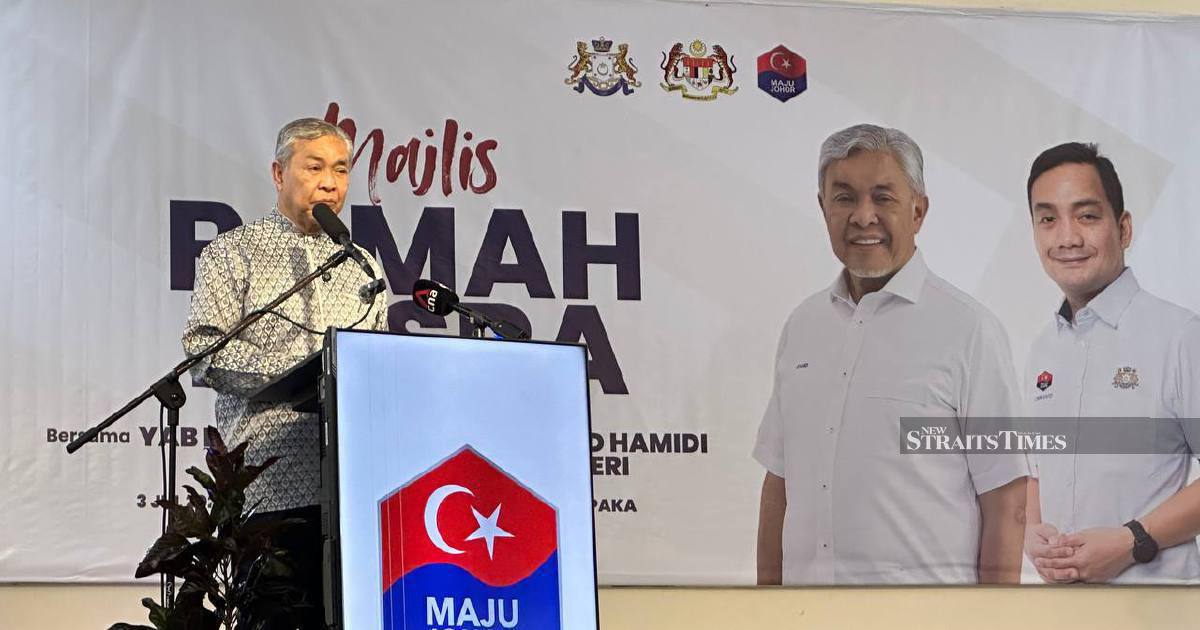
Barisan Nasional chairman Datuk Seri Dr Ahmad Zahid Hamidi has made a direct appeal to his coalition partners within the unity government to refrain from reviving historical grievances and past accusations targeting Umno and the broader BN alliance as the Johor state election campaign gains momentum.
The appeal reflects underlying tensions within Malaysia's current political coalitional framework, which brings together traditionally rival political forces under the unity government umbrella. Since Anwar Ibrahim's administration took office in late 2022, the partnership has been tested by competing agendas and periodic friction between constituent parties, particularly as electoral contests approach at the state and federal levels.
Zahid's intervention suggests concern that factional disputes and recriminations could undermine the coalition's effectiveness in the Johor campaign. The southern state remains strategically significant for Umno and BN, serving as both a traditional stronghold and an arena where the coalition's viability is tested. Recent years have seen intensified competition in Johor, with opposition parties making inroads into constituencies long considered secure for the ruling coalition.
The political dynamics in Johor have shifted considerably since the 2022 general election. While Umno retains substantial organizational capacity and grassroots presence, voter sentiment has become more fluid, with concerns about cost of living, employment opportunities, and perceived inequities in wealth distribution influencing electoral preferences across demographic groups. In this environment, internal coalition cohesion becomes especially critical for maintaining voter confidence and preventing the fracturing of support.
Zahid's plea also carries implications for how the unity government manages its internal communications going forward. The coalition encompasses parties with divergent ideological positions and historical grievances. By explicitly discouraging the airing of contentious issues, the BN chairman appears to be attempting to establish boundaries for permissible political discourse during the campaign period. This approach seeks to prioritize electoral unity over settling internal scores, though such arrangements remain inherently fragile in competitive political contexts.
The Johor election represents a significant test of the unity government's ability to campaign as a coherent force rather than as separate entities pursuing individual advantages. Previous coalitions in Malaysia, most notably the original BN itself, often struggled with managing internal competition during state campaigns. The current arrangement faces similar pressures, as partner parties compete for credit for policy achievements while potentially seeking to distance themselves from unpopular decisions through blame-shifting.
Historically, attacks on Umno's governance record and financial stewardship have emanated from both opposition parties and, occasionally, from within the coalition itself. Issues surrounding corporate governance, alleged misuse of government resources, and patronage networks have featured prominently in Malaysian political discourse, particularly following the 1Malaysia Development Berhad scandal and related controversies. Zahid's intervention suggests concern that campaign rhetoric might inadvertently resurrect these narratives, potentially damaging the entire coalition.
For Malaysian voters and observers, the appeal raises questions about the durability and authenticity of the unity government framework. Coalitional arrangements that require suppression of legitimate policy disagreements or historical accountability often mask underlying divisions rather than resolving them. Whether such tactical unity during elections can translate into sustained cooperation in governance remains uncertain, with regional and federal outcomes likely to influence both public perception and intra-coalition dynamics.
The Johor context also matters significantly for national politics. The state election will provide early indicators of voter sentiment and coalition strength ahead of potential federal electoral contests. Strong performance could bolster arguments for continuing the unity government model, while disappointing results might reignite debates about coalition viability and prompt reassessment of political alignments.
Zahid's timing of this appeal, coming as the campaign intensifies, suggests coalition leaders recognize vulnerabilities and wish to prevent self-inflicted damage. The emphasis on avoiding rehashed controversies reflects pragmatic assessment that Johor voters may be less interested in historical disputes and more focused on addressing immediate economic and social concerns. Whether this disciplined approach will hold throughout the campaign period remains to be seen, particularly if electoral momentum shifts or specific incidents trigger defensive responses from coalition members.

