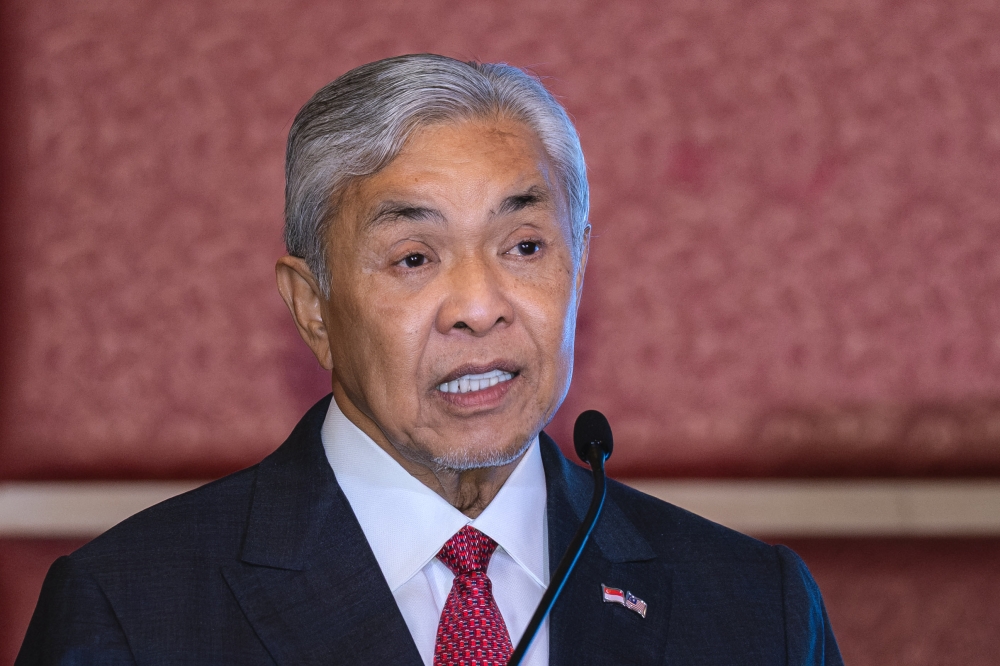
Umno president Datuk Seri Dr Ahmad Zahid Hamidi moved to extinguish mounting speculation about a predetermined alliance between his party and PAS in Negeri Sembilan, insisting no such formal arrangement exists at present. Speaking in the capital, Zahid adopted a carefully measured tone while simultaneously underscoring that political configurations in Malaysia remain inherently unstable, subject to rapid revision based on evolving circumstances and strategic considerations.
The denial comes as Malaysian coalition politics enters another volatile phase, with traditional power-sharing arrangements increasingly contested and renegotiated. Zahid's remarks reflect the fragmented state of Malay-Muslim political cooperation, where Umno and PAS occupy competing spaces despite their overlapping voter bases. The timing of his statement suggests awareness of public perception regarding backroom negotiations, a persistent feature of Malaysian electoral politics that has generated sustained criticism among voters demanding greater transparency in campaign strategies.
Zahid's carefully chosen language—particularly his warning that "goalposts can change anytime"—reveals the precarious nature of contemporary Malaysian coalition-building. Rather than presenting a unified front, the Umno leader appeared to reserve flexibility for his party, suggesting that Umno would maintain independent decision-making capacity regarding seat allocation, candidate selection, and potential partnership terms. This posture carries strategic implications, allowing Umno to distance itself from PAS while avoiding permanent bridges-burning that could prove disadvantageous if circumstances shift unexpectedly.
For Negeri Sembilan specifically, the political stakes involve control of a state assembly with genuine economic importance and historical significance within Malaysia's federal structure. The state has experienced shifting electoral fortunes in recent cycles, with coalitions fragmenting and reforming as parties recalculate their standing among voters increasingly skeptical of traditional arrangements. An Umno-PAS understanding in Negeri Sembilan could substantially reshape the state's political direction, potentially marginalizing Pakatan Rakyat or forcing uncomfortable repositioning among opposition parties already dealing with internal cohesion challenges.
The broader context of Zahid's statement involves deepening tensions within Malaysia's Malay-Muslim political establishment. Umno and PAS have pursued contradictory strategies: Umno attempting to rebuild credibility through institutional positioning and economic messaging, while PAS has consolidated its base through religious rhetoric and organizational entrenchment in specific regions. Their different electoral strategies and competing claims to represent Malay-Muslim interests have produced friction rather than natural alignment, making formal pacts difficult to sustain without internal party dissatisfaction.
Negeri Sembilan represents one arena where these tensions manifest visibly. The state has developed a more cosmopolitan political culture than some Malaysian regions, with voters demonstrating willingness to support candidates and parties based on performance metrics rather than communal allegiances alone. This environment creates disincentives for rigid pre-election pacts perceived as cynical power-sharing divorced from governance capacity or public interest considerations. Zahid's denial may partly reflect calculation that explicit Umno-PAS coordination in Negeri Sembilan could alienate centrist and independent-minded voters whose support both parties require.
The comment about changing goalposts suggests Zahid is preparing Umno members and potential coalition partners for scenario-based decision-making. Malaysian electoral politics have increasingly adopted this fluid approach, where parties negotiate arrangements contingent upon actual electoral results, tactical opportunities, and leverage points that only become apparent during campaign periods. This flexibility frustrates observers seeking predictable coalitional frameworks but reflects rational adaptation to Malaysia's volatile political environment.
For regional observers, Zahid's stance illustrates how Southeast Asian democracies navigate coalition politics under conditions of ideological fragmentation and institutional uncertainty. Unlike systems with established coalition traditions, Malaysian parties operate within frameworks where historical grievances, communal divisions, and competing institutional claims generate perpetual renegotiation. The absence of stable, durable coalitions produces both flexibility and instability—allowing political actors to respond to changing circumstances but generating voter frustration regarding predictability and transparency.
Zahid's careful positioning also reflects Umno's broader strategic challenge: the party seeks to present itself as a pragmatic governing force while managing relationships with partners like PAS that possess strong ideological commitments and organizational bases independent of Umno control. Explicit pacts risk alienating non-Malay coalitional partners and urban constituencies, yet complete independence from PAS generates criticism that Umno has abandoned its communal base. This contradiction runs through contemporary Malaysian coalition politics, forcing leaders toward ambiguous statements that maintain maximum strategic flexibility.
Moving forward, Negeri Sembilan voters face the prospect of political arrangements finalized through post-election negotiations rather than pre-determined frameworks. This approach transfers significant power to elected representatives capable of switching allegiances and party leaders conducting behind-scenes dealmaking. While providing tactical advantages to skilled operators, this method undermines voter comprehension of what they actually select through their ballots, contributing to democratic deficit criticisms that have gained prominence across Southeast Asia.

