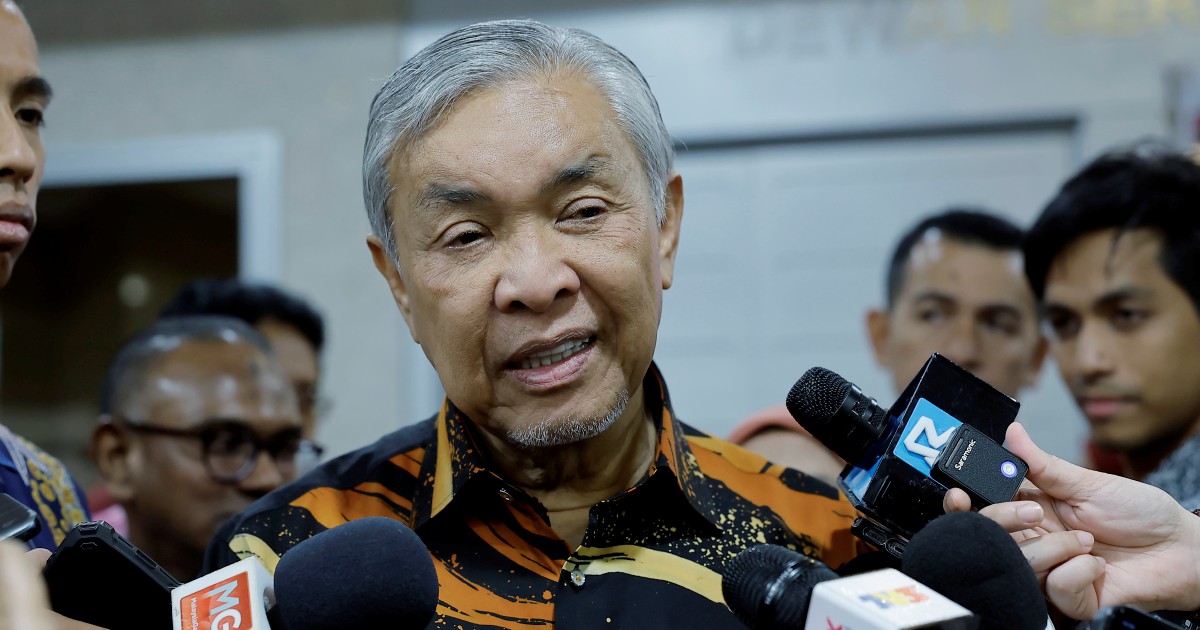
Barisan Nasional's leadership has moved to quash persistent concerns about the appointment process for Negri Sembilan's top executive position, with coalition chairman Datuk Seri Dr Ahmad Zahid Hamidi dismissing allegations of outside interference as misguided commentary from those unfamiliar with how Malaysia's political system actually functions. Speaking in Putrajaya, the senior BN figure rejected the notion that external actors played a role in determining who would assume the Menteri Besar post, framing the debate as fundamentally rooted in a misunderstanding of constitutional governance and coalition decision-making.
The controversy surrounding the Negri Sembilan leadership succession reflects broader tensions within Malaysia's coalition politics. When senior state positions become vacant, the mechanics of selecting successors involve complex negotiations between federal and state-level party structures, considerations about factional balance within BN components, and assessments of which candidates possess the requisite experience and political capital. These processes, while appearing opaque to external observers, follow established protocols within the coalition framework.
Zahid's characterization of his critics suggests a widening gap between political insiders' understanding of how appointments occur and public perception of decision-making transparency. Those questioning the Negri Sembilan selection have apparently suggested that influences from outside the state's immediate political establishment shaped outcomes, a claim that challenges the legitimacy of BN's internal mechanisms. By dismissing such allegations as reflecting ignorance rather than raising substantive concerns, the BN chairman seeks to reassert the coalition's authority over its own personnel decisions.
For Malaysian observers accustomed to transparent meritocratic processes in other sectors, the relative opacity of political appointments remains a point of friction. The assertion that critics simply lack understanding, rather than engaging with their substantive objections, reflects a traditional approach to managing intra-party controversy. Whether this strategy effectively neutralizes skepticism or instead reinforces perceptions of insularity within BN's leadership circles remains an open question.
The Negri Sembilan case carries implications beyond the state itself. Negri Sembilan, a component of Malaysia's economic heartland with significant influence in federal politics, represents crucial terrain for maintaining BN cohesion. The appointment process there sends signals about how the coalition handles leadership transitions in other states and whether established party hierarchies maintain the flexibility needed to adapt to evolving political circumstances. Any perception that appointments occur through shadowy external influence could undermine confidence in BN's institutional stability.
Zahid's intervention also reflects the BN chairman's broader role as coalition custodian during a period of political reconfiguration. Since the 2022 general election, BN has reclaimed significant parliamentary and state-level influence after the Pakatan Harapan interregnum. Managing the coalition's internal dynamics while projecting unity and legitimacy has become central to sustaining this resurgence. Leadership appointments in strategic states like Negri Sembilan must therefore be understood as serving this consolidation agenda.
The timing of such clarifications matters. By actively engaging with criticism rather than allowing allegations to circulate unchallenged, Zahid attempts to maintain narrative control. However, the framing of critics as politically unsophisticated potentially widens rather than bridges the perception gap. Stakeholders concerned about democratic governance might interpret such responses as dismissive of legitimate scrutiny rather than as reassuring explanations of established procedures.
Negri Sembilan's political character further contextualizes this appointment controversy. The state has historically rotated leadership among different BN component parties and factional interests, creating expectations about equitable distribution of top positions. Any deviation from anticipated patterns could spark questions about whose interests the selection ultimately served. Understanding these intra-state dynamics proves essential for interpreting why the appointment process has attracted external commentary at all.
Moving forward, Zahid's stance positions the BN leadership as confident in the legitimacy of its decision-making processes, yet potentially leaves unaddressed the underlying concerns about representation and procedural clarity. For a coalition seeking to rebuild public confidence after years of governance challenges and electoral volatility, greater transparency about how such decisions unfold might ultimately strengthen rather than constrain its position. The present approach assumes that political insiders' comfort with existing mechanisms automatically translates into public acceptance, an assumption increasingly difficult to maintain in Malaysia's contemporary media environment.
The Negri Sembilan appointment ultimately reflects broader questions about how Malaysian political parties balance internal organizational needs with public accountability. Whether BN can sustain its current trajectory depends partly on managing such controversies in ways that reassure both coalition members and the electorate. Zahid's intervention signals confidence in the coalition's institutional strength, yet leaves open whether that confidence proves justified when tested by future leadership transitions across the country.

