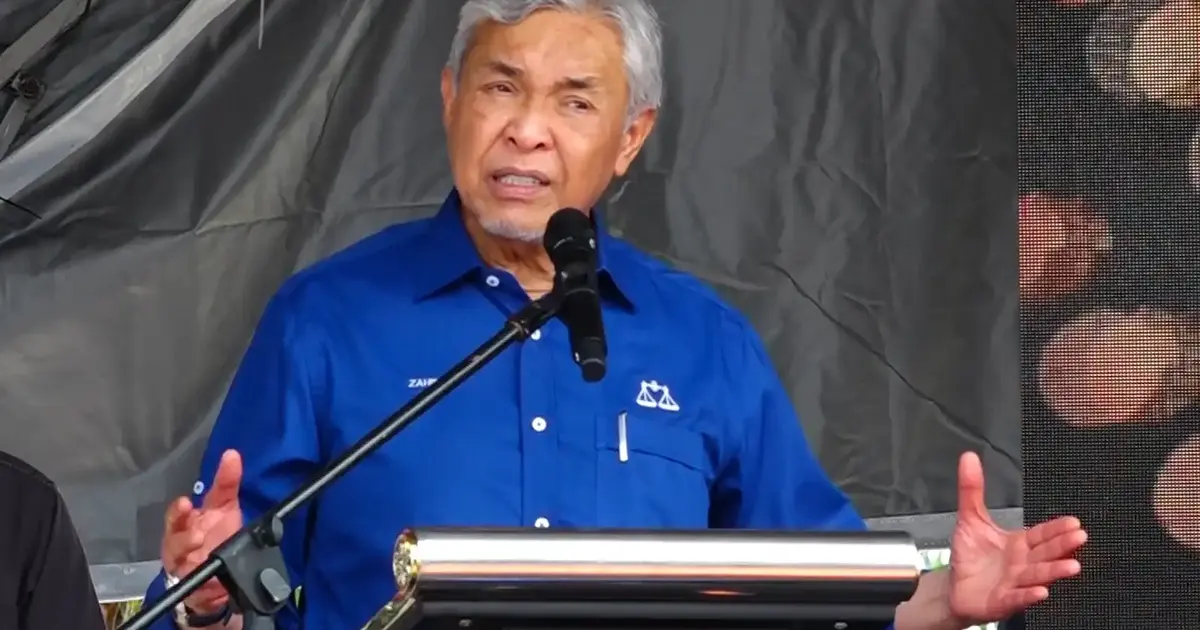
UMNO President Ahmad Zahid Hamidi has directed the party's election machinery to simply overlook any commentary from former party leader Puad Zarkashi regarding Barisan Nasional candidates contesting in the Johor state election, signalling an attempt to move past internal party tensions as the coalition prepares for the electoral contest.
The directive reflects ongoing friction within Malaysia's largest Malay-Muslim party, where differing voices continue to emerge despite efforts to project unity heading into crucial state-level polling. Zahid's approach appears designed to prevent former senior figures from derailing the party's campaign momentum, a critical consideration given UMNO's historical reliance on internal cohesion to maintain electoral dominance in Johor—a state traditionally regarded as the coalition's stronghold.
Puad Zarkashi, who previously held senior positions within UMNO's hierarchy, has maintained a vocal presence on party matters despite stepping back from frontline politics. His willingness to comment publicly on candidate selection and coalition strategies represents the kind of internal dissent that party leadership typically seeks to suppress during campaign periods. By instructing party machinery to disregard such statements, Zahid appears to be attempting a pre-emptive containment strategy rather than engaging directly with the substantive issues Puad may be raising.
The timing of Zahid's intervention carries significance for UMNO's broader strategic positioning. With Johor emerging as a key battleground where the coalition faces challenges from resurgent opposition movements, internal divisions risk undermining campaign effectiveness. The party has previously struggled when factional disputes spill into public view, as competing narratives can confuse voters and create opportunities for opponents to exploit divisions. Zahid's call for the organisation to simply ignore Puad suggests the party president views such criticism as a distraction rather than a legitimate policy disagreement warranting serious engagement.
From a structural perspective, this episode illustrates the inherent tensions within UMNO between its hierarchical decision-making processes and the reality that party figures with experience and credibility may feel entitled to contribute to strategic discussions. Former leaders typically retain influence networks and supporter bases that cannot be entirely neutralised through administrative directives. When party presidents issue instructions to ignore particular voices, they risk inadvertently amplifying those voices by drawing public attention to the underlying disagreement.
For Malaysian political observers, this development underscores the ongoing challenges facing Barisan Nasional as it attempts to consolidate its position following years of electoral setbacks. The coalition's ability to present a united front during campaigns has historically been central to its success, particularly in resource-rich states like Johor where development narratives can sway voter preferences. Conversely, visible internal discord provides opposition coalitions with rhetorical ammunition and suggests to voters that the ruling coalition may lack the focus and direction necessary to effectively govern.
Puad's position as a former party leader who maintains public commentary creates an interesting dynamic within UMNO's internal politics. Unlike anonymous critics, he brings credibility and institutional memory to whatever positions he articulates. This makes Zahid's instruction to simply ignore him a somewhat delicate manoeuvre—it acknowledges that Puad's views carry enough weight to warrant explicit dismissal, even as it attempts to minimise his influence on party decision-making and campaign strategy.
The broader context includes UMNO's ongoing efforts to reassert dominance after the 2018 electoral shock that saw Barisan Nasional lose federal power for the first time in Malaysian history. The subsequent years have involved significant internal reorganisation, leadership changes, and attempts to rebuild the coalition's credibility with voters. In this environment, former leaders like Puad represent both valuable repositories of institutional knowledge and potential sources of complication if they publicly question current strategic choices.
Zahid's approach also reflects a pragmatic calculation about managing competing interests within UMNO's vast organisational structure. The party encompasses numerous faction leaders, regional strongmen, and aspiring politicians, each with their own agendas and support networks. A party president who engages directly with every critical voice risks creating a precedent of ongoing internal debate that could paralyse decision-making. By instead instructing the machinery to ignore dissent, Zahid asserts his authority while maintaining the appearance of unity—though observers familiar with UMNO politics understand that such directives rarely eliminate underlying tensions.
For Johor specifically, the state election represents a critical test of UMNO's electoral machinery and the coalition's capacity to retain control of a traditionally BN-supporting state. Any signs of internal weakness or conflicting signals from party leadership could potentially affect campaign morale among grassroots organisers and party members responsible for on-ground mobilisation. This makes Zahid's instruction particularly important from an operational perspective, as confusion within the party apparatus could translate into reduced effectiveness during crucial campaign phases.
The episode also invites reflection on succession planning and how UMNO manages transitions between leadership eras. When former leaders maintain visible profiles and continue commenting on party matters, it can create ambiguity about who actually drives strategic direction. Zahid's firm stance here suggests he is determined to establish unambiguous control over party direction, particularly as the party approaches the Johor contest where electoral performance will be closely scrutinised by both supporters and critics alike.

