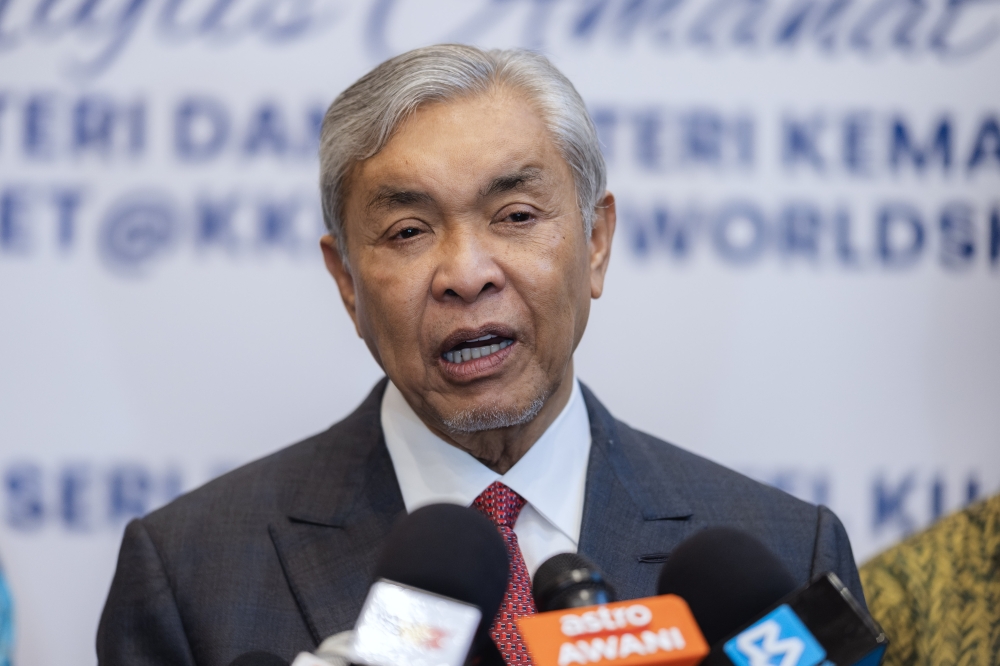
Deputy Prime Minister Datuk Seri Dr Ahmad Zahid Hamidi has announced an ambitious incentive scheme designed to motivate technical and vocational education and training (TVET) students to excel at international skills competitions, offering fully funded Umrah pilgrimages to those who capture gold medals at WorldSkills tournaments. The pledge underscores the government's commitment to elevating Malaysia's standing in global vocational competitions while intertwining achievement with religious observance and national pride.
The initiative represents a meaningful intersection of Malaysia's strategic push to develop world-class technical talent and the country's Islamic values. By tying recognition of international success to a spiritual journey, the government seeks to reinforce the message that professional excellence and religious devotion are complementary rather than competing priorities. This approach acknowledges the demographic profile of Malaysia's TVET population, many of whom come from backgrounds where Umrah represents a significant but financially challenging aspiration.
WorldSkills competitions have assumed increasing importance in Asia-Pacific economies as manufacturing and services sectors compete for skilled workers. Malaysia has participated in these biennial global tournaments since 1983, using them as benchmarks for training quality and as recruitment showcases for employers. Success at WorldSkills brings tangible benefits beyond medals: winning participants typically secure premium employment offers, and their achievements elevate the reputation of their training institutions and the broader TVET system domestically.
The TVET sector has undergone substantial transformation in Malaysia over recent years, shifting from a pathway primarily for lower-achieving students toward a genuinely respected route offering specialisation in high-demand fields. Technical skills shortages affect manufacturing, construction, automotive, and hospitality sectors across Southeast Asia, creating genuine opportunities for graduates willing to pursue vocational qualifications. Malaysia's positioning as a regional manufacturing hub makes this workforce development critical to economic competitiveness, particularly as automation reshapes labour markets and raises the bar for technical competency.
Umrah, the minor Islamic pilgrimage to Mecca, carries profound spiritual significance for Muslims and represents a lifetime goal for many. The typical cost of a sponsored Umrah package ranges substantially, making it genuinely meaningful as an incentive rather than merely symbolic. By removing financial barriers for exceptional performers, the government creates a powerful motivational mechanism that resonates across Malaysia's multicultural society by honouring Islamic principles while advancing secular educational objectives.
This incentive structure also addresses a persistent challenge in TVET recruitment and retention: convincing high-performing students to pursue technical pathways rather than conventional academic routes. Malaysian students and parents have historically harboured status anxieties about vocational education despite changing employment realities. Recognition schemes that combine international acclaim with valued personal experiences can shift perceptions and attract stronger cohorts of students to technical programmes.
The timing of Zahid's announcement reflects broader Malaysian policy emphasis on skills development as an economic imperative. As regional competitors including Vietnam, Thailand, and Indonesia simultaneously invest heavily in vocational training infrastructure, Malaysia must ensure its TVET graduates remain competitive. Supporting medal-winning students through prestigious incentives demonstrates government backing for the sector and signals that excellence in technical fields warrants celebration equivalent to academic achievement.
Implementing such a programme requires coordination between multiple government bodies: the Ministry of Human Resources will oversee TVET training quality, relevant sports or youth ministries will manage WorldSkills participation logistics, and religious affairs authorities will facilitate Umrah arrangements. Clear protocols ensuring transparency in selection and awards distribution will be essential to maintaining the scheme's credibility and preventing perception of political patronage.
Regionally, Malaysia's approach offers a model for other Southeast Asian nations seeking to elevate vocational education status. Singapore and South Korea have long championed skills training as foundational to national competitiveness, but few nations have tied international competition success to culturally resonant personal rewards. The strategy demonstrates how government incentives can be creatively structured to align economic development objectives with citizens' personal aspirations and values.
The scheme may also influence how TVET institutions market programmes to prospective students. Institutions can highlight the prestigious career pathways and potential personal recognition available through excellence, potentially attracting more motivated learners. For participants who do not win gold medals, the existence of such incentives underscores that their field of study commands official recognition and respect.
Successful implementation will require sustained government commitment beyond the announcement phase. Umrah sponsorships must be reliably funded across multiple competition cycles, and the selection process must remain transparent and merit-based. If executed effectively, the initiative could meaningfully influence student aspirations, institutional performance, and ultimately Malaysia's competitive position in global skills rankings.

