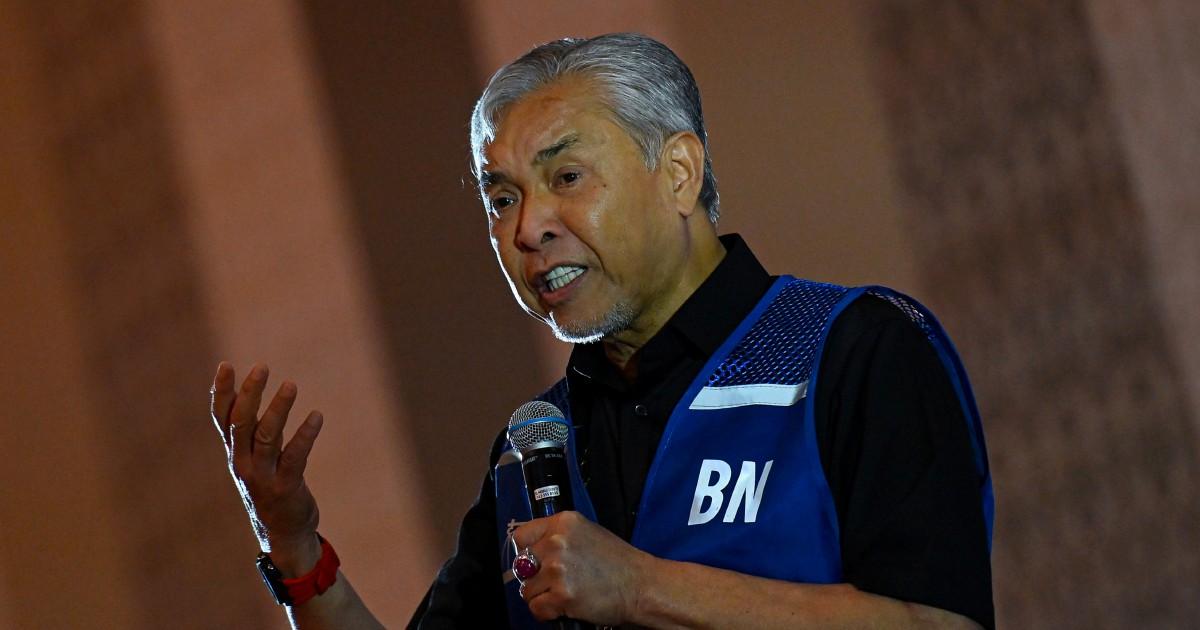
Deputy Prime Minister Zahid Hamidi expressed confidence that the government's decision to make public the Royal Commission of Inquiry findings concerning Tabung Haji would have no bearing on how voters in Negri Sembilan will cast their ballots in the state assembly election scheduled for August 1. Speaking in Tampin, Zahid sought to distance the timing of the report's release from the electoral contest, suggesting that voters would continue to focus on other considerations when evaluating their choice of representatives.
The Tabung Haji pilgrimage fund has been at the centre of considerable scrutiny following several years of financial difficulties and administrative concerns that prompted the government to establish an independent inquiry into its operations. The decision to release the RCI report—which examined the circumstances that led to the fund's deterioration—came amid heightened political activity surrounding the impending Negri Sembilan election, raising questions about the strategic timing of the disclosure. Nevertheless, Zahid maintained that the publication of these findings formed part of the government's ordinary commitment to transparency rather than a calculated move to influence electoral outcomes.
Negri Sembilan represents one of several states where political dynamics have undergone substantial shifts in recent years, with voters demonstrating unpredictable patterns and shifting coalitions reshaping the traditional political landscape. The state assembly election assumes particular importance for tracking broader trends across the nation, as results frequently signal emerging public sentiment that may extend beyond state boundaries. With the August 1 polling date drawing closer, political parties across the spectrum have intensified their campaigning efforts, each seeking to position themselves as the most capable custodians of state development and economic welfare.
The Tabung Haji scandal has generated considerable public frustration, as the institution serves millions of Malaysian Muslims saving for hajj pilgrimages—a core component of Islamic practice that carries profound spiritual and cultural significance. When the fund encountered severe financial losses and governance problems, it triggered widespread disappointment among contributors whose savings had been affected. The RCI's investigation was therefore viewed by many as a necessary mechanism to establish accountability and determine responsibility for the mismanagement that occurred during the tenure of previous leadership.
For ordinary Negri Sembilan voters, however, state-level elections typically revolve around more localised concerns: infrastructure development, education facilities, healthcare accessibility, and employment opportunities within their constituencies. While national issues occasionally permeate state contests, the immediate priority for most electors centres on the capacity of their representatives to deliver tangible improvements in daily living standards. Zahid's assertion that the Tabung Haji report would remain immaterial to voting decisions reflects this understanding that voters compartmentalise between federal-level governance challenges and state-specific priorities.
The deputy prime minister's comments also suggest an attempt to prevent opposition parties from weaponising the Tabung Haji disclosures as a cudgel against the ruling coalition during the Negri Sembilan campaign. Opposition groups have previously leveraged instances of governance lapses or financial impropriety as evidence of mismanagement, seeking to persuade voters that change is necessary. By proactively asserting that the RCI report holds no electoral consequences, Zahid appeared to be inoculating the government against this anticipated line of attack.
Tabung Haji itself has undertaken substantial restructuring efforts aimed at restoring public confidence and stabilising its financial position. The institution has appointed new management, implemented stricter oversight mechanisms, and embarked on a recovery programme designed to protect existing contributions while rebuilding trust among the Muslim community. These institutional reforms suggest that the government recognises the severity of the reputational damage and has committed resources to rehabilitating an organisation central to Malaysian Islamic practice.
The timing of releasing sensitive government inquiries often attracts scrutiny regarding political motivation, particularly when announcements coincide with electoral campaigns. Malaysia's experience with RCI reports has demonstrated the delicate balance between ensuring public access to information and managing the political implications of disclosing sensitive findings. The government faces criticism if it appears to suppress inquiries, yet equally faces accusations of strategic manipulation if release dates align suspiciously with political events.
Negri Sembilan voters, who must navigate multiple candidates and party offerings in their individual constituencies, will ultimately weigh numerous competing considerations beyond the Tabung Haji question. Economic performance, local infrastructure projects, incumbent track records, and broader political alignment with their preferences remain central to electoral decision-making. The extent to which Zahid's prognosis proves accurate will become evident once voting concludes and analysts examine whether the Tabung Haji report influenced shifts in voter behaviour across different demographic and geographic segments within the state.

