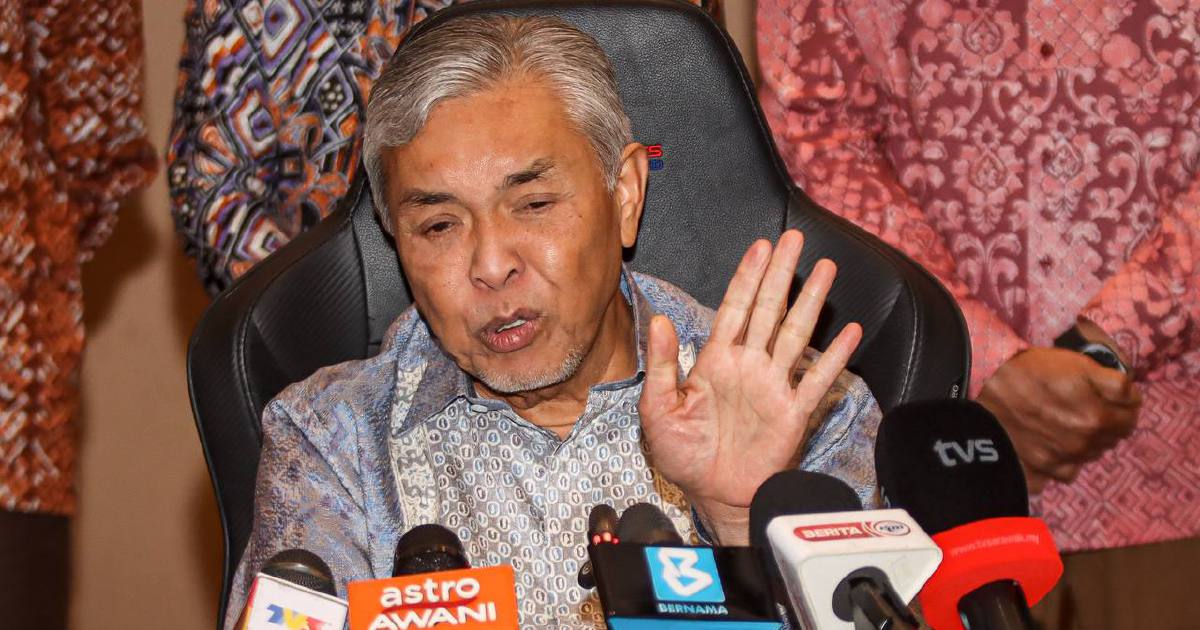
Barisan Nasional's deputy president Datuk Seri Dr Ahmad Zahid Hamidi moved swiftly on Wednesday to quash persistent rumours of political manoeuvring against the Prime Minister, issuing an unequivocal statement from Penang that the ruling coalition remains steadfastly committed to maintaining the current administration. Speaking in George Town, Zahid's declaration represents a significant reaffirmation of stability at a time when Malaysian political observers have grown accustomed to navigating shifting coalitions and whispers of parliamentary realignments.
The timing of Zahid's comments proves telling. Since the formation of Malaysia's unity government in November 2022, which brought together Barisan Nasional, Pakatan Harapan, and other partners under Anwar Ibrahim's leadership, the coalition has weathered considerable pressure from both internal dissent and external speculation. Periodic rumours of defections or strategic withdrawals by component parties have punctuated the government's tenure, creating cycles of uncertainty that ultimately dissipate when senior figures publicly recommit to the arrangement. Zahid's intervention follows this familiar pattern, yet carries particular weight given his position as BN's second-in-command and the coalition's historical importance to Malaysia's political landscape.
Barisan Nasional itself commands a substantial bloc within Parliament, making its continued participation essential to the government's mathematical survival. The coalition, which historically dominated Malaysian politics before the watershed 2018 general election, has positioned itself as a stabilising force in the current parliamentary configuration. By explicitly reaffirming its commitment to the unity government through the completion of the 15th Parliament's term, Zahid signals that BN views this arrangement as preferable to the unpredictability of early elections or alternative coalitions. Such calculations often hinge on both principle and pragmatism, reflecting assessments about electoral prospects and the distribution of ministerial portfolios.
The 15th Parliament's expected lifespan extends roughly until 2027 or 2028, providing a multi-year timeframe within which the current government framework ostensibly operates. This temporal anchor matters considerably for policy continuity and investor confidence, as Malaysia's economy depends partly on perceptions of political stability. Foreign investment decisions, infrastructure projects, and economic planning all benefit from clarity about the government's expected durability. When senior coalition figures commit publicly to completing a full parliamentary term, they acknowledge these broader economic considerations, even if their primary audience comprises parliamentary colleagues and party members.
Zahid's emphatic rejection of speculation about unseating Anwar also reflects the particular sensitivities surrounding the Prime Minister's position. Anwar has navigated a remarkable political journey, ascending to the premiership after periods of imprisonment and opposition. His appointment initially surprised some observers, yet has consolidated considerable support across the coalition's disparate parties. Any serious move to displace him would require extraordinary circumstances and coordination among BN, PKR, and other major partners—an outcome Zahid's statement suggests remains firmly off the agenda.
The dismissal of such speculation carries practical implications for the government's legislative agenda. Malaysia faces substantive policy challenges including economic restructuring, educational reform, and infrastructure development. These initiatives require parliamentary stability and the capacity to forge supermajority support for significant legislation. When coalition leaders publicly commit to the unity government framework, they enable ministers and backbenchers to focus on legislative work rather than defensive political positioning. Zahid's statement therefore functions as both a reassurance to Parliament and a message to Malaysia's bureaucracy about the administration's expected continuity.
For Barisan Nasional specifically, reaffirming the partnership with Anwar's government also serves strategic purposes. The coalition has utilised its role as the largest bloc within the unity government to secure ministerial positions, parliamentary committee leadership, and influence over policy direction. These tangible benefits—combined with the risk that early elections might diminish BN's electoral performance—create incentives for the coalition to maintain the existing arrangement. Zahid's comments articulate this calculation, positioning BN as a responsible force committed to orderly governance rather than destabilising manoeuvres.
The broader regional context adds another dimension to Malaysian political stability. Southeast Asia's largest economy requires a functioning government capable of pursuing coherent foreign policy and managing international relationships. The region's economic competitiveness depends partly on Malaysia's institutional stability and capacity for sustained policy implementation. Extended periods of political uncertainty or parliamentary instability can disadvantage Malaysia relative to regional competitors. By emphatically endorsing the unity government's continuation, Zahid implicitly affirms Malaysia's commitment to regional leadership and economic stewardship.
Rumours of political realignment persist regularly within Malaysia's fluid parliamentary environment, where coalition mathematics shift and minority governments face perpetual vulnerability. Zahid's statement, while definitive, acknowledges this reality by specifically committing BN to the unity government through the 15th Parliament's conclusion rather than offering open-ended guarantees. This formulation provides breathing room for future recalibrations after the next general election, while establishing clear parameters for the present configuration. Such precision characterises sophisticated political communication, signalling commitment while preserving strategic flexibility.
The statement ultimately reflects Malaysia's evolved political culture, where large-scale coalition arrangements have become normative rather than exceptional. Unlike earlier eras when single-party dominance characterised Malaysian governance, the unity government represents a more complex arrangement requiring continuous management and periodic reaffirmation. Zahid's dismissal of destabilisation speculation therefore constitutes a routine maintenance activity essential to the coalition's functioning, even as it reassures investors, voters, and international observers about the government's viability.

