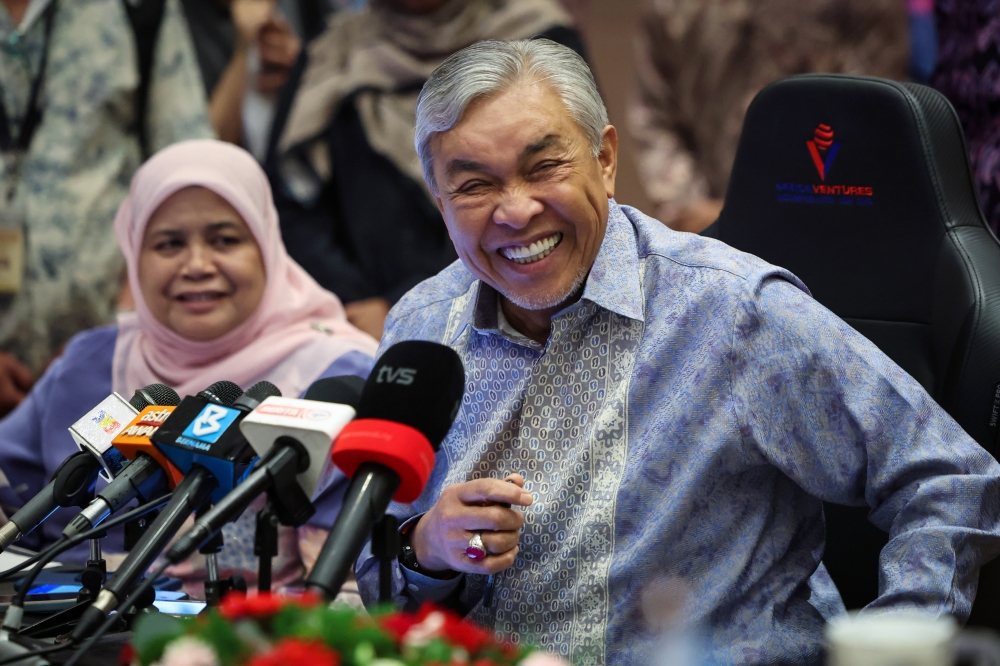
Barisan Nasional has doubled down on its pledge to remain a stalwart partner in Malaysia's Unity Government, with party chairman Zahid Hamidi dismissing any notion of the coalition breaking ranks before Parliament concludes its current term. Speaking in George Town on July 23, Zahid made unambiguous statements about BN's stability within the broader coalition arrangement, effectively closing the door on persistent rumours that have periodically surfaced in Malaysian political circles.
The BN chairman's remarks carry particular significance given the recurring pattern of speculation about potential shifts in Malaysia's political alignments. Every few months, observers and analysts have pointed to various signals—real or imagined—suggesting that BN might explore alternative arrangements or negotiations that could reshape the nation's power structures. Such conjecture naturally feeds into broader anxieties about governmental continuity and the strength of existing coalitions. Zahid's explicit statement serves to anchor BN's position more firmly, at least rhetorically, within the current arrangement.
Zahid's colourful phrasing about ruling out any "Bangkok move" or "Dubai move" appears designed to communicate that BN has no interest in back-channel negotiations or surprise realignments conducted away from public scrutiny. The terminology suggests an awareness that Malaysian political observers closely monitor international travel by senior political figures, sometimes interpreting such journeys as opportunities for clandestine coalition negotiations. By invoking these destinations, Zahid seems to be signalling that BN is not engaged in the kind of secretive manoeuvring that might precede dramatic political shifts.
The Unity Government itself represents an unprecedented arrangement in modern Malaysian politics, bringing together traditionally opposing blocs in a pragmatic response to the fragmented results of the 2022 general election. Comprising Pakatan Harapan, Barisan Nasional, and several other component parties, the coalition has survived longer than many observers initially predicted. However, its continued existence depends substantially on the commitment of its major components, and BN's position as the second-largest coalition member makes its internal cohesion particularly consequential for overall stability.
From a practical standpoint, the Unity Government has delivered certain achievements in governance continuity, budget passage, and legislative momentum that might have been difficult under alternative configurations. Conversely, the arrangement has also generated friction points, as different coalition members press their distinct agendas and constituency demands. For BN specifically, participation in the Unity Government requires accepting positions that might be less powerful than those the coalition might theoretically command through alternative arrangements. This reality makes Zahid's reaffirmation noteworthy, as it suggests BN leadership has calculated that remaining within the current framework serves the party's medium-term interests more effectively than pursuing alternative paths.
Malaysian political dynamics have grown increasingly fluid in recent years, with the traditional two-coalition system giving way to more complex multi-polar arrangements. This fragmentation creates both opportunities and vulnerabilities for established players like BN. The coalition's commitment to the Unity Government can be understood partly as a risk-mitigation strategy, ensuring BN remains relevant in national governance rather than risking exclusion through premature defection. At the same time, such steadfastness also reflects underlying political calculations about voter preferences and electoral viability.
The timeframe Zahid mentioned—continuing until the end of the 15th Parliament—establishes a clear boundary for the commitment. This parliament is expected to run until 2028, assuming no early dissolution. By anchoring BN's pledge to this specific endpoint rather than making open-ended declarations, Zahid has been precise about the coalition's obligations while avoiding language that might be interpreted as permanent or unconditional allegiance. This distinction matters in Malaysian politics, where rhetorical ambiguity sometimes conceals flexibility.
Zahid's positioning also responds to internal BN dynamics. The coalition comprises several components with divergent interests, including UMNO, MCA, and MIC, along with various state-based parties. Maintaining unity within BN itself requires demonstrating clear strategic direction and protecting members' interests within the broader government arrangement. By publicly committing BN to the Unity Government, Zahid provides reassurance to component parties that the coalition will not be suddenly repositioned through high-level negotiations that might exclude or disadvantage particular members.
The broader context for Zahid's statement includes ongoing negotiations over ministerial positions, budget allocations, and policy priorities among Unity Government partners. These discussions invariably generate speculation about coalition durability, particularly when specific parties feel their interests are not adequately protected. Zahid's emphatic statement appears designed to establish negotiating parameters, signalling that while BN will engage constructively on various issues, fundamental questions about coalition membership are not on the table for renegotiation.
From a Southeast Asian perspective, Malaysia's political stability holds broader regional implications. A fractious or unstable government can complicate Malaysia's foreign policy alignment, regional integration efforts, and economic leadership. The Unity Government's continuation, therefore, carries significance beyond domestic Malaysian politics. Other regional actors maintain interest in Malaysia's political coherence as it affects the country's capacity to engage effectively in ASEAN forums, trade agreements, and bilateral relationships throughout the region.
Looking forward, the actual test of BN's commitment will come through demonstrated behaviour rather than statements. How the coalition handles inevitable disputes over resources, policy direction, and electoral strategies will ultimately determine whether Zahid's assurances prove durable or merely represent positioning for immediate political advantage. For now, however, BN has placed clear markers on the political landscape regarding its intentions, at least through to the end of the current parliamentary term.

