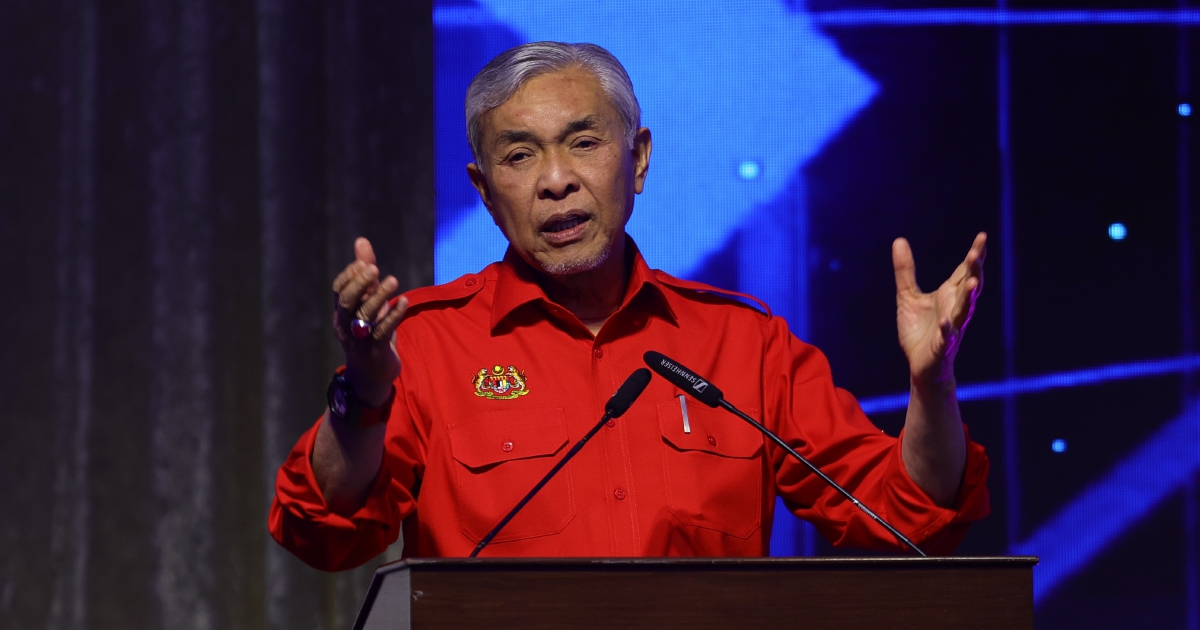
Barisan Nasional chairman Datuk Seri Dr Ahmad Zahid Hamidi has confirmed that Prime Minister Datuk Seri Anwar Ibrahim retains the authority to dismiss ministers from the coalition should their performance prove unsatisfactory. The statement, made in Seremban, represents an explicit acknowledgment of the Prime Minister's executive power within the current ruling coalition framework, signalling that ministerial appointments remain conditional upon demonstrable competence and delivery.
This declaration carries particular weight given the composition of Malaysia's current government, which brought together historically rival political forces under a unity administration. The coalition arrangement between Pakatan Harapan and Barisan Nasional has required careful management of competing interests and expectations, making questions about ministerial accountability increasingly pertinent as the government enters its third year of operation. Zahid's willingness to cede ground on this issue suggests recognition within BN leadership that political survival depends upon maintaining government stability rather than rigid defence of coalition positions.
The backdrop to these comments involves ongoing scrutiny of ministerial effectiveness across various portfolios. Several ministers have faced public criticism regarding implementation delays, policy clarity, and administrative responses to constituent concerns. Such pressures have mounted as Malaysia navigates economic headwinds, inflation, and competition for increasingly scarce budgetary resources. The Prime Minister's ability to enforce standards through the threat of removal becomes a critical tool for maintaining government cohesion and public confidence.
Historically, Barisan Nasional operated as a hierarchical structure where party leadership exercised significant control over ministerial positions and tenure. The transition to a coalition government has necessitated adjustment of these traditional dynamics, with power now distributed across multiple party structures and competing power brokers. Zahid's explicit confirmation suggests BN has adapted its approach, prioritizing the coalition's collective survival over parochial interests in maintaining particular cabinet positions.
For Malaysian political observers, this development reflects broader shifts in how coalition governments function in the contemporary context. The 2020 collapse of the Pakatan Harapan-led administration and the subsequent formation of Perikatan Nasional demonstrated the fragility of arrangements based primarily on personality or narrow electoral calculations. The current unity government, despite its own vulnerabilities, has shown greater institutional coherence partly because participating parties have accepted stricter performance standards.
The implications for BN ministers are multifaceted. While Zahid's statement provides nominal reassurance that ministerial positions depend on proper governance rather than factional loyalty alone, it simultaneously creates uncertainty regarding which ministers might be vulnerable to replacement if the Prime Minister decides action is warranted. This dynamic could encourage greater focus on delivery and constituency service while potentially generating anxiety among ministers uncertain of their standing with the Perdana Mentri.
From the perspective of the broader Malaysian electorate, Zahid's position potentially enhances accountability mechanisms. Citizens who have experienced years of questioning ministerial competence may view the assertion of Prime Minister authority as a positive step toward ensuring that government positions serve public interests rather than functioning as sinecures for political allies. However, such reassurances must be measured against track records of actual implementation and whether Prime Ministers have historically demonstrated willingness to remove underperforming ministers from major parties.
The statement also carries implications for Anwar Ibrahim's positioning within the coalition. By securing explicit confirmation that he can remove BN ministers, the Prime Minister strengthens his hand in negotiations with coalition partners and demonstrates that his executive authority is not merely theoretical. This becomes particularly relevant given that BN maintains significant parliamentary representation and ministerial positions within the cabinet structure, making any potential confrontation consequential.
Looking forward, the practical effect of Zahid's declaration depends significantly on whether the Prime Minister exercises this acknowledged authority. Should ministers from BN or other coalition partners continue performing below expectations without consequence, the statement will be revealed as mere political theatre. Conversely, any ministerial dismissals will be interpreted through the lens of this declaration, potentially generating internal coalition tensions if members conclude that accountability is being applied unevenly across party lines.
The statement also reflects awareness within BN leadership that the party's continued relevance depends on demonstrating that it has adapted to contemporary governance expectations. After decades of dominance followed by electoral defeat and subsequent rehabilitation, BN's future electoral prospects depend partly on projecting competence and willingness to accept modern standards of ministerial accountability. Zahid's comments suggest recognition that clinging to outdated patron-client arrangements would undermine the coalition's credibility with an increasingly demanding electorate.
Ultimately, Zahid's affirmation that the Prime Minister can dismiss underperforming BN ministers represents an important symbolic acknowledgment of meritocratic principles in Malaysian governance. Whether this translates into substantive improvements in ministerial performance and public service delivery remains to be demonstrated through action rather than declaration alone.

