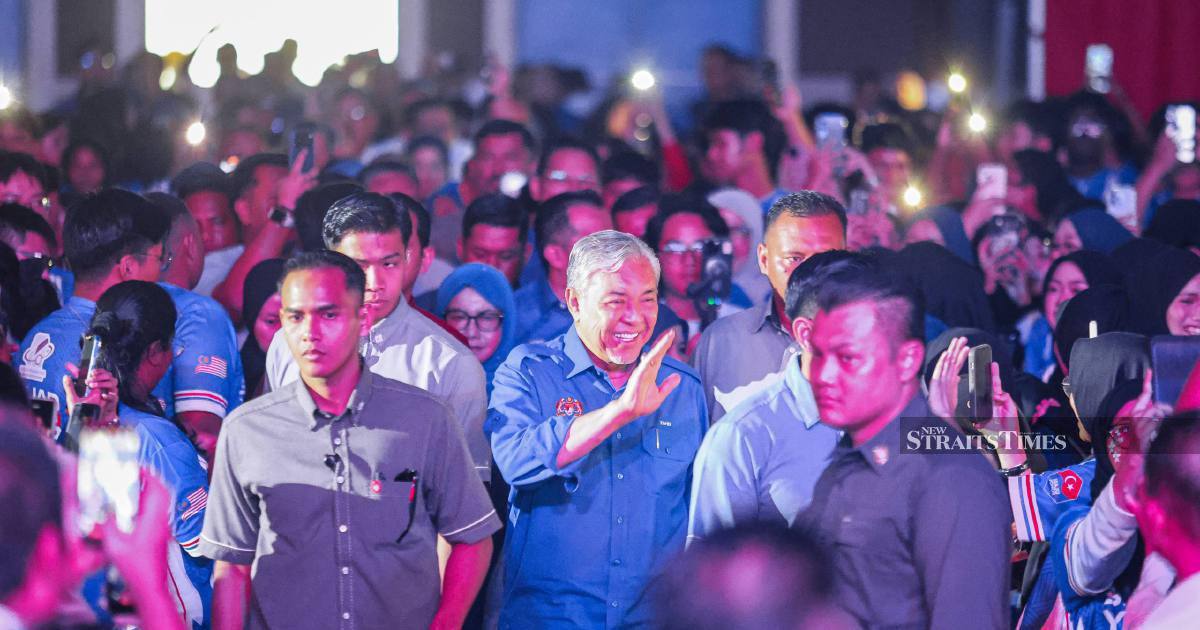
Deputy Prime Minister Zahid Hamidi has made a direct appeal to Johor's younger electorate to sustain their backing for caretaker menteri besar Datuk Onn Hafiz Ghazi as the state heads toward elections on July 11, underscoring the ruling coalition's confidence in the incumbent leader to retain control of the peninsula's southern powerhouse.
Barisan Nasional has positioned Onn Hafiz as the public face of its campaign in Johor, reflecting both his popularity with voters and the coalition's broader strategy to emphasise continuity and development momentum under proven leadership. The messaging resonates particularly among youth voters who have seen infrastructure projects and economic initiatives rolled out across the state during the caretaker's tenure.
Johor's electoral significance extends beyond state boundaries. As one of Malaysia's most economically productive states, controlling its government carries implications for federal policymaking and BN's overall parliamentary strength. A strong performance here would reinforce the coalition's dominance in peninsular politics following its return to power at the federal level in 2021.
The emphasis on youth engagement reflects broader recognition within BN that younger voters increasingly demand substantive development agendas rather than traditional patronage politics. Onn Hafiz's administration has leveraged this by publicising investments in digital infrastructure, educational facilities, and employment initiatives targeting the under-40 demographic who represent a growing proportion of Johor's electorate.
Yet Johor's political landscape remains competitive. Opposition parties, particularly Pakatan Harapan, have mounted credible challenges in recent elections, and the state's ethnic and class diversity means no single coalition can take voter loyalty for granted. Youth voters especially tend to be less tied to traditional party allegiances and more responsive to performance metrics and corruption perceptions.
The timing of Zahid's public endorsement carries significance. As Deputy Prime Minister and BN's point person on campaign coordination, his visible support for Onn Hafiz sends clear signals both to internal party factions and to the broader electorate about where the federal government's priorities lie. This consolidation of leadership figures behind the caretaker menteri besar aims to prevent the kind of internal divisions that have occasionally plagued BN in state elections elsewhere.
Johor's development trajectory under the incumbent has featured prominently in BN messaging. The state has pursued ambitious infrastructure projects, from transportation upgrades to technology parks, with particular focus on areas beyond Kuala Lumpur that are often overlooked in national development planning. These initiatives provide tangible evidence of governance that BN hopes will persuade pragmatically-minded voters that continuity serves their interests better than political change.
The youth-focused campaigning also acknowledges demographic realities facing Malaysia's political parties. Population ageing in urban areas contrasts with younger demographics in growth regions, and Johor's expansion means the electorate is younger on average than in many peninsular states. Mobilising these voters requires addressing concerns about job quality, housing affordability, and climate-related risks that directly affect their futures.
For Malaysian observers tracking broader political trends, the Johor campaign offers insights into how BN intends to operate during its current period of government. The coalition appears confident enough to contest aggressively rather than defend narrowly, and it is investing significantly in portraying its leaders as forward-thinking rather than status-quo-preserving.
The July 11 election will test whether this strategy resonates. Opposition parties have signalled they will contest vigorously, and while BN holds the incumbency advantage, no result is predetermined. The outcome will shape not only Johor's political composition but also the calculus around federal politics heading into the next general election, potentially due within two years.
For residents of other Malaysian states, particularly those in regions where development remains uneven, the Johor campaign demonstrates the increasing importance of state elections as referendums on governmental performance. Youth voters in particular appear willing to switch allegiances if they perceive better development outcomes elsewhere, a shift that may force all political coalitions to elevate the quality of policy proposals rather than relying on traditional mobilisation tactics.

