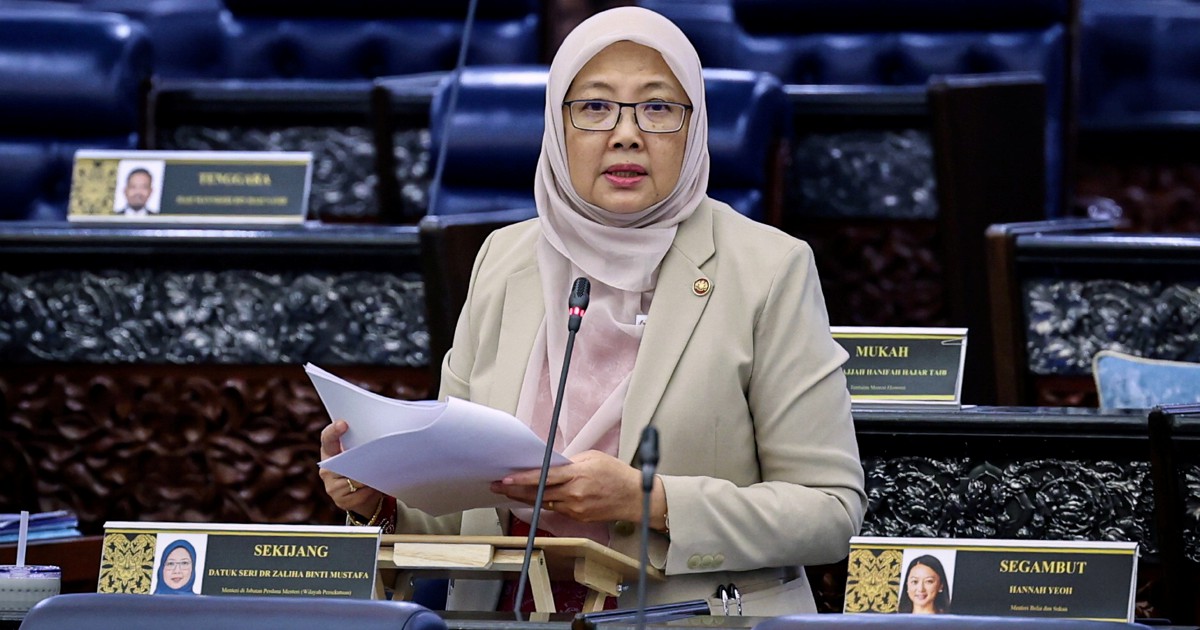
Datuk Dr Zaliha Mustafa, chairman of the Government Backbenchers Club, has condemned Perikatan Nasional MPs for abandoning a special parliamentary session convened to examine the Royal Commission of Inquiry findings into Lembaga Tabung Haji, drawing attention to recurring questions about opposition engagement with matters of public accountability.
The walkout during today's sitting of the Dewan Rakyat marked another flashpoint in increasingly fractious legislative proceedings, as the PN coalition chose to absent itself from deliberations centred on governance and financial stewardship at the Islamic pilgrimage savings body. The timing of the departure underscores deepening polarisation within Malaysia's parliament, where ritualistic boycotts have become a recurring tactic deployed across party lines during high-profile debates.
Zaliha's rebuke carries weight given her position representing government-aligned backbenchers, a constituency whose support remains essential for the administration's legislative agenda. Her intervention signals that even within the ruling coalition's informal structures, frustration is building over opposition parties' apparent unwillingness to engage substantively with inquiries into institutional failures. This dynamic reflects broader governance challenges facing the country, where parliamentary scrutiny—traditionally viewed as democracy's lifeblood—increasingly functions as a stage for political theatre rather than meaningful accountability mechanisms.
The RCI into Tabung Haji represents months of investigative work examining the Islamic pilgrimage fund's operational and financial management. As Malaysia's largest Islamic financial institution managing billions in savings for millions of prospective Hajj pilgrims, the body's integrity carries implications far beyond corporate governance—it touches the religious and financial wellbeing of countless Malaysian Muslim families. Parliamentary examination of the RCI findings should theoretically command cross-party attention, given the non-partisan nature of institutional accountability.
Yet the PN's departure suggests calculations rooted elsewhere. Opposition coalitions frequently employ walkouts as protest mechanisms against perceived governmental overreach or procedural unfairness, though such tactics inevitably dilute their legislative voice when substantive issues require their participation. The absence during the Tabung Haji debate specifically deprives lawmakers representing PN-held constituencies—many containing significant Muslim populations—of the opportunity to voice constituent concerns directly on a matter affecting their constituents' retirement and religious obligations.
The Tabung Haji inquiry itself emerged from longstanding public concern regarding the fund's management and returns to members. Previous controversies surrounding investment decisions, property ventures, and distribution mechanisms had prompted demands for independent investigation. A Royal Commission represents one of Malaysia's highest-order accountability mechanisms, reserved for matters deemed serious enough to warrant such formal scrutiny. That PN MPs chose to absent themselves from examining its conclusions raises questions about their approach to institutional accountability versus partisan positioning.
Parliamentary walkouts, while dramatic, ultimately weaken opposition effectiveness in a system where deliberative engagement remains the currency of influence. When opposition lawmakers voluntarily exit the chamber, they cede the rhetorical space to government speakers, surrender opportunities to place concerns on the Hansard record, and forfeit chances to propose amendments or alternative framings of issues. For voters who elected them specifically to scrutinise authority, such absences represent a failure to discharge fundamental representational duties.
The Malaysian parliament has witnessed numerous such walkouts across different administrations, reflecting a broader institutional culture where dramatic gestures sometimes supersede sustained policy argument. These episodes typically generate headlines but rarely shift substantive outcomes, particularly when the departing lawmakers lack the numbers to block legislation or force procedural changes. Instead, they function as expressions of protest that carry cost for those who deploy them.
Zaliha's public criticism also reflects internal government dynamics. Backbenchers, particularly those from the ruling coalition, occupy a paradoxical position—they support their government but increasingly feel marginalised in cabinet-dominated policymaking. When opposition MPs walk out of debates, government backbenchers lose the opportunity to engage with criticism and demonstrate independent-mindedness to their constituents, instead appearing complicit in an uncontested government narrative. This dynamic explains why backbencher club leadership would publicly censure opposition tactics.
The Tabung Haji RCI debate carries particular resonance in Malaysian politics given Islam's constitutional position and the government's traditional reliance on Muslim voter support. Any inquiry into Islamic financial institutions attracts heightened scrutiny from religious constituencies and Islamist political movements. PN's absence may reflect internal coalition dynamics rather than reasoned objection to the RCI process, yet such calculations often escape public scrutiny until observers like Zaliha direct attention toward them.
Looking forward, the parliament's difficulty in conducting substantive bipartisan examination of institutional accountability challenges suggests deeper structural problems. When opposition participation in governance reviews becomes transactional—present if politically advantageous, absent if presenting reputational risk—the entire system of checks and balances weakens. Malaysian voters, particularly those whose religious and financial interests intersect with Tabung Haji's management, deserve parliamentary scrutiny that transcends coalition politics.
The walkout episode ultimately reflects a parliament struggling to balance partisan competition with institutional maturation. Zaliha's intervention, while shaped by government-aligned interests, nonetheless highlights a genuine tension: meaningful accountability requires engagement from all parliamentary voices, yet Malaysia's increasingly polarised political environment makes such cross-party collaboration increasingly rare.

